Beyond Dialogue: Crafting Unforgettable Scenes with Plotlyn's Node-Based Design
Explore how Plotlyn's flexible nodes and canvas can be used to meticulously plan and execute pivotal scenes—from intense fight sequences to crucial emotional turning points or comedic beats—ensuring they deliver maximum impact, maintain reader engagement, and drive the narrative forward. Learn to break down scene objectives, pacing, sensory details, and character reactions within individual nodes.
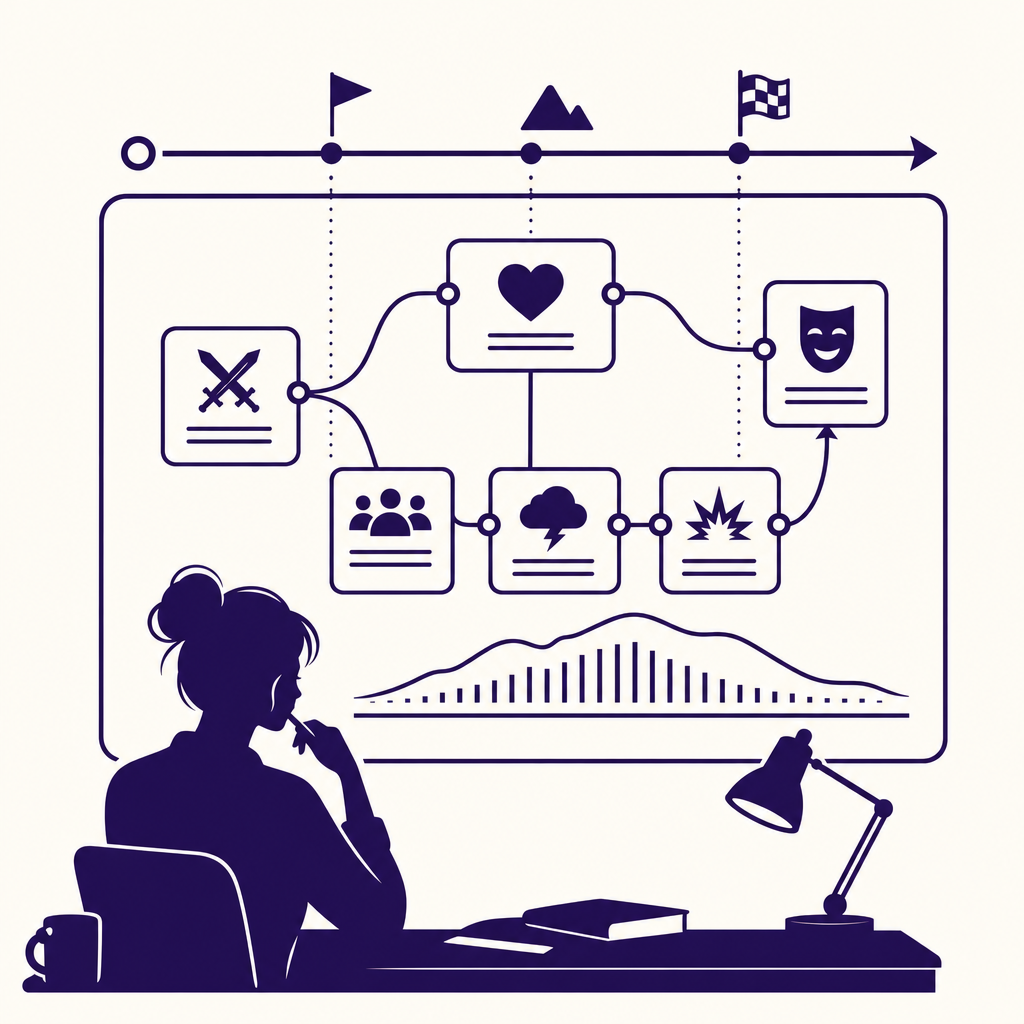
In the intricate dance of storytelling, scenes serve as the essential building blocks that captivate readers and advance the narrative. This article delves into how Plotlyn's node-based design empowers writers to create compelling scenes that expertly blend structure, pacing, and reader engagement, ensuring that every moment resonates and drives the story forward.
Understanding Scene Design
Understanding Scene Design: Explore the foundational elements of scene design, considering how individual scenes contribute to the larger narrative structure.
Each scene serves as a building block in your story, impacting tone, pacing, and character arcs. Conflict is the heart of any scene; it creates tension and propels action. To effectively capture these elements, consider how setting and character motivation intertwine. The backdrop of a scene can enhance emotional stakes or undercut the gravity of a conflict. Characters’ motivations—what drives them and what they risk—inform their actions and reactions in pivotal moments.
Plotlyn's node-based design allows you to visualize these components seamlessly. By creating nodes for conflict, character motivation, and setting, you can ensure that each aspect complements the others. This method allows for a holistic view of how elements interact, shaping the reader's experience. Through meticulous planning, you can maintain a tight grip on pacing, drawing readers into the emotional and narrative stakes of each scene. The flexibility of Plotlyn's canvas lets you adapt and modify these elements as needed, ensuring that every scene plays its role in the larger story arc.
Breaking Down Scene Structure
Examining scene structure is vital to mastering the art of storytelling, especially within Plotlyn's node-based framework. Each scene consists of fundamental components: exposition, rising action, climax, falling action, and resolution. These elements weave together to create a compelling narrative experience, and Plotlyn allows writers to visualize and organize these components seamlessly.
Take rising action in a thriller as an example. The exposition establishes the setting and characters’ motivations, while the rising action builds tension through conflict—whether it’s a ticking clock or an imminent danger. Each node in Plotlyn can represent these elements, allowing writers to see what drives the plot forward. The climax, being the peak moment, must resonate powerfully and cause a visceral reaction; this is where the stakes are highest. Following the climax, falling action serves to ease the tension, but it requires careful balance to maintain reader engagement as the tension dissipates before reaching resolution.
For instance, in a romantic comedy, the resolution may pivot on a heartfelt revelation, while in a sci-fi tale, it might hinge on overcoming a technological crisis. Utilizing Plotlyn's nodes helps clarify how these components fit together, ensuring that the scene delivers satisfaction while propelling the overall narrative. Each moment is crafted deliberately, focusing the writer’s intent on clarity and coherence as they build their story.
Mastering Pacing Techniques
Pacing is a vital component of scene design, influencing how readers experience tension, emotion, and engagement. In Plotlyn’s node-based structure, pacing can be meticulously tailored, allowing writers to manipulate narrative tempo by adjusting the elements within each node. Sentence structure plays a crucial role; shorter sentences and abrupt dialogue can create a sense of urgency, while longer, more descriptive passages can slow the tempo, allowing moments to breathe.
To slow down the narrative, consider employing detailed sensory descriptions or introspective character thoughts, inviting readers to immerse themselves in the scene’s emotional weight. Conversely, action-driven sequences can be accelerated through fragmented sentences and rapid dialogue exchanges. Using Plotlyn, authors can rearrange nodes to experiment with these pacing techniques, ensuring that each scene’s rhythm aligns with its emotional undercurrents.
Moreover, an effective scene should ebb and flow, reflecting the natural cadence of real life. By merging nodes that feature intense dialogue with quieter, reflective moments, writers can create a dynamic interplay that keeps readers engaged. Altogether, the manipulation of pacing not only heightens conflict and drama but also amplifies the reader's connection to the narrative, driving them deeper into the story.
Crafting Conflict for Engagement
Conflict is the heartbeat of storytelling, fueling narrative momentum and deepening reader engagement. Understanding the two primary types of conflict—external and internal—allows writers to craft scenes that resonate. External conflict often manifests through characters grappling with forces outside of themselves—be it antagonists, societal issues, or natural disasters. Conversely, internal conflict presents the emotional battles that rage within a character, driving their personal growth and transformation.
Layering these conflicts can create a rich tapestry of tension. For instance, a protagonist fighting an external foe may also struggle with self-doubt or guilt, compounding the stakes and making victory more profound. When utilizing Plotlyn's node-based design, writers can outline these conflicts in distinct nodes, helping to visualize their interplay and effects on characters’ arcs.
Writers should meticulously analyze each scene's objectives to determine how both types of conflict serve the overarching narrative. By skillfully manipulating these layers, they can ensure that each scene is not only impactful but also a crucial element in pulling the reader into the tumultuous emotional landscape of the story. This strategic incorporation of conflict not only heightens engagement but also elevates the entire reading experience.
Enhancing Sensory Details and Character Reactions
Pivotal moments in a narrative—be it intense confrontations, heart-wrenching revelations, or uproarious comedic exchanges—demand a careful exploration of sensory details and character reactions. These elements are vital in grounding the reader in the scene, immersing them in the emotional landscape and bringing the story to life. Utilizing Plotlyn's node-based design allows writers to systematically integrate sensory descriptions, evoking emotions that resonate deeply.
Begin by defining the sensory details for your scene within dedicated nodes. Consider the sights, sounds, smells, tastes, and textures that your characters experience. For example, in an intense fight scene, describe the clanging of metal, the acrid scent of sweat, and the gritty surface beneath their feet. These details create a vivid backdrop, heightening tension and urgency.
Simultaneously, capture character reactions in adjacent nodes. How does the protagonist feel with every punch landed? Are they fueled by adrenaline or paralyzed by fear? Experiment with different sensory approaches and reactions, exploring how each variation impacts the scene's authenticity. This process helps readers forge emotional connections, amplifying engagement and enabling them to experience the scene as if they were present. With meticulous attention to these details, your scenes can achieve dramatic resonance and keep readers eagerly turning the pages.
Finalizing Your Scene through Revision
Revising your scenes is a crucial step that can transform a good story into a great one. In the iterative process of refinement, a focused approach to dialogue, pacing, and descriptive elements can enhance the emotional resonance and clarity of each scene. Plotlyn's node-based design encourages this meticulous revision by visually representing scene elements, allowing you to discern the structure at a glance.
As you review scenes, consider the scene structure within each node. Ask yourself what the primary objective is—whether it's to escalate conflict, heighten tension, or evoke laughter. Identify any pacing issues that may disrupt the flow. A slow buildup in a fight sequence can add suspense, but ensure it culminates in an explosive crescendo that keeps readers glued to the page.
Examine dialogue critically; it should not only reflect character voice but also drive the narrative forward. Utilize sensory details to reinforce emotional stakes, guiding readers deeper into the moment. In Plotlyn, experiment with different arrangements of nodes to swiftly adapt and enhance these elements, maintaining reader engagement. Each revision will sharpen your scene's impact, ensuring that every word is purposeful and every interaction resonates powerfully.
Conclusions
By leveraging Plotlyn's innovative node-based structure, writers can elevate their scene crafting skills, mastering elements like pacing, conflict, and character reactions. These tools ultimately enhance reader engagement, leading to a more immersive narrative experience. Embrace this method to enhance your writing process and create unforgettable moments in your storytelling journey.