Beyond the Outline: Structuring Your Winning Nonfiction Book Proposal with Plotlyn's Canvas
Demystify the complex process of writing a nonfiction book proposal by leveraging Plotlyn's visual canvas and nested nodes. Learn how to map out your argument, chapter summaries, competitive analysis, and author platform in a structured, compelling way, ensuring your pitch stands out to agents and editors.
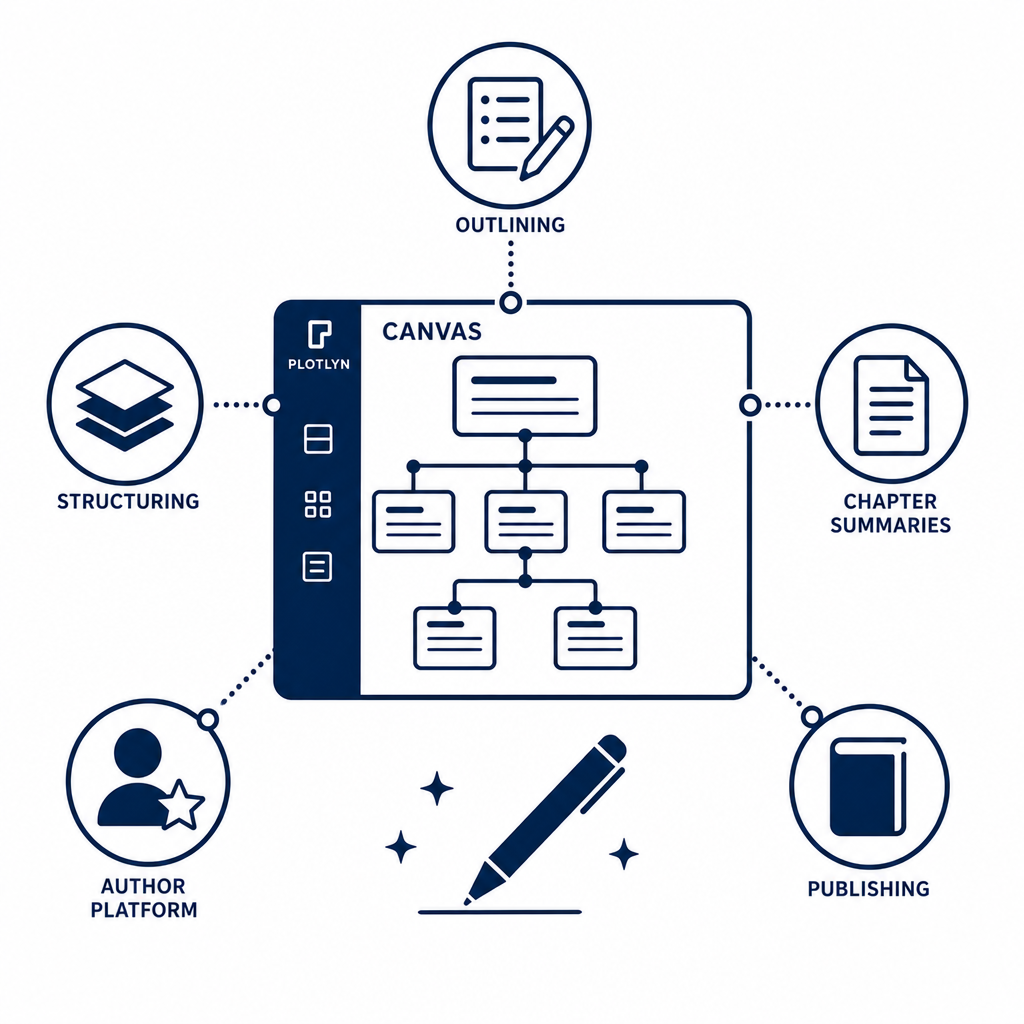
Creating a compelling nonfiction book proposal is essential for writers aiming to capture the attention of agents and publishers. This article explores how to effectively structure your proposal using Plotlyn's visual canvas, enabling you to outline your arguments, chapter summaries, and author platform with clarity and purpose. Let's dive into the process of crafting a standout nonfiction proposal.
Understanding the Nonfiction Book Proposal
Creating a compelling nonfiction book proposal hinges on understanding its fundamental elements. At its core, a proposal serves multiple purposes: it is a persuasive document for potential agents and editors, a functional outline for your writing, and a promotional tool for your creative brand. The structure of a nonfiction proposal typically includes several key components: a gripping overview, a detailed table of contents, chapter summaries, a competitive analysis, and an author platform section. Each section plays a crucial role in framing your project and attracting interest.
What agents and editors seek is clarity—a clear vision that articulates what your book is about, who it's for, and why it matters. They look for a compelling narrative that hints at the unique voice you bring as an author and a demonstration of your expertise in the subject matter. A well-defined proposal not only acts as a roadmap for your writing journey but also serves as an enticing invitation for publishers. It showcases the potential impact of your work while effectively communicating your passion and dedication to the project. Emphasizing the significance of your book in the broader conversation can help capture the attention of industry professionals, making your proposal resonate in a competitive landscape.
Utilizing Plotlyn's Canvas for Your Proposal
Utilizing Plotlyn's Canvas for Your Proposal
Plotlyn's visual canvas emerges as an innovative tool for authors embarking on the journey of crafting a nonfiction book proposal. Its node-based writing environment presents a unique opportunity to structure ideas with clarity and organization. By using distinct nodes, writers can categorize components such as their argument, chapter summaries, competitive analysis, and author platform, creating a holistic view of the proposal.
Navigating the canvas is intuitive. Each new node acts as a building block, where you can dive deeper into concepts or break down complex ideas into manageable segments. When you create nested nodes, you can link supportive details to your main arguments, forming a rich tapestry that highlights the proposal's key points. This format allows you to visualize how various sections coexist and interconnect, ensuring a cohesive narrative emerges.
Incorporating visuals can also enhance your proposal. You can add images or diagrams that symbolize the book's essence or the target audience's needs. This dynamic interplay of text and visuals not only strengthens your pitch but makes it more engaging, ensuring your proposal captures the attention of agents and editors. Embrace Plotlyn's workflow, and your proposal will flourish with clarity and impact.
Mapping Out Your Argument and Structure
To create a compelling nonfiction book proposal, mapping out your central argument using Plotlyn is crucial. Start by distilling your main thesis into a clear statement; this will serve as the foundation of your proposal. Plotlyn’s visual canvas enables you to create linked nodes that represent various facets of your argument. As you brainstorm, ensure that every section—introduction, chapters, and conclusion—relates back to this central theme, reinforcing your message and providing coherence.
Begin with the introduction node, where you can articulate the problem your book addresses and your unique perspective on it. Then, build out corresponding nodes for each chapter, summarizing how they contribute to the overarching narrative. This not only helps clarify your argument but also allows you to see how well each component supports your thesis.
Maintain a strong narrative arc by ensuring that each chapter flows logically into the next. Your structure should guide readers through a journey, using Plotlyn to visually represent transitions between nodes. This strategic alignment will enhance the persuasive nature of your proposal, making your central argument clear and compelling to agents and editors alike.
Chapter Summaries and Competitive Analysis
Well-crafted chapter summaries and a thorough competitive analysis are essential components of a nonfiction book proposal. Chapter summaries serve as a roadmap for potential readers, succinctly outlining the core arguments and key points, while also demonstrating the unique contributions your book makes to its field. Each summary should encapsulate the essence of the chapter, revealing how it supports your main thesis and compels the audience to continue reading. Craft these summaries with clarity and precision; aim for a balance between concise content and engaging narrative that foreshadows the value within each chapter.
In tandem, a comprehensive competitive analysis strengthens your proposal by positioning your book against existing titles. Begin by examining books that share themes, topics, or target audiences with your own. Identify their strengths and weaknesses, and highlight how your work fills gaps they leave unaddressed. This practice not only shows that you've done your homework but also illustrates how your unique perspective or methodology will stand out. By effectively synthesizing both chapter summaries and competitive analysis, you create a compelling proposition that demonstrates your commitment to making a meaningful contribution to the nonfiction landscape.
Building Your Author Platform
Establishing a strong author platform is not just an accessory in your nonfiction book proposal; it is a crucial element that underscores your credibility and marketability as an author. Agents and editors want to see that you have an audience ready to engage with your work, making your platform a significant asset. A well-defined platform demonstrates that you have the ability to promote your book effectively, increasing your chances of successful sales.
To build your author platform, start by engaging with your audience online. Utilize social media channels, such as Twitter, Instagram, and LinkedIn, to share insights relevant to your book’s topic. This not only helps you connect with potential readers but also positions you as an authority in your field. Consider starting a blog or a podcast where you can discuss themes related to your book, further solidifying your expertise.
Leverage your existing networks by reaching out to colleagues, friends, and industry connections. Attend workshops, conferences, or webinars to expand your reach and introduce your work to new audiences. In your proposal, explicitly outline your platform and how it relates to your book, detailing your follower count and engagement metrics. Presenting this information compellingly will make your proposal stand out, showing that you are prepared to take your book to market successfully.
Finalizing Your Proposal and Next Steps
As you move toward finalizing your nonfiction book proposal, it’s essential to view this phase as both a polishing exercise and preparation for your approach to agents or publishers. Revising for clarity and engagement is key. Ensure every sentence carries weight, avoiding jargon while clearly articulating your vision. A well-structured proposal will reflect not just the content of your book but also your passion and expertise.
Your proposal must include all components—descriptive summaries of each chapter, a robust competitive analysis, and your author platform. By integrating these elements cohesively, you help agents grasp not only your book’s unique value but also the market demand it addresses. Use Plotlyn's visual canvas to visualize these relationships, ensuring your narrative smoothly flows from one section to another.
When approaching potential agents or publishers, personalize your pitch. Research their submission guidelines and preferences, ensuring your proposal aligns with their goals. Once submitted, follow up respectfully after a couple of weeks. This signifies your enthusiasm and professionalism. A well-prepared proposal and strategic follow-up can significantly enhance your chances of landing that coveted publishing deal.
Conclusions
In summary, a well-structured nonfiction book proposal can significantly enhance your chances of securing a publisher. By utilizing Plotlyn's canvas, you can visually articulate your ideas, ensuring all elements of your proposal, from content to competitive analysis, are compelling and clear. Take these insights and structure your proposal with confidence.