Beyond the Straight Line: How Plotlyn Empowers Linear Writers to Build Intricate Narratives
For authors who prefer a linear approach to drafting, Plotlyn's node-based system might seem counterintuitive. Discover how its structured flexibility, nested canvases, and sequential organization features can actually enhance your linear writing process, allowing you to maintain focus while building complex, deeply layered stories without getting lost.
Linear writing is a cherished technique for many authors, providing clarity and focus in the drafting process. This article explores how Plotlyn, with its unique node-based structure, can enhance the experience of linear writers, allowing them to craft intricate narratives while maintaining a sense of organization and direction throughout their projects.
Understanding Linear Writing
Linear writing has long been the bedrock of storytelling, tracing its lineage back to some of the earliest works of literature. This method prioritizes a sequential unfolding of events, allowing authors to guide readers through a clear narrative arc. Many authors gravitate toward this approach due to its inherent clarity and focus. It provides a straightforward structure that can be especially advantageous when complex emotional or thematic undertones are interwoven into the story.
The primary appeal of linear writing lies in its simplicity; however, it is often misunderstood as being too simplistic for sophisticated narratives. Contrary to this misconception, linear writing can foster depth. By adhering to a predetermined path, writers can delve into character development and plot progression without straying off course. This method encourages intentional pacing, allowing authors to measure the tension and release throughout the narrative, thus engaging readers on a deeper level.
Moreover, linearity aids in maintaining a cohesive narrative voice and tone, ensuring that every event builds upon the last. As authors master this crafting technique, they discover its transformative power in creating multidimensional stories that resonate profoundly with their audience.
The Benefits of Structured Writing
Structured writing acts as a powerful ally in the creative process, offering a framework that facilitates the organization of ideas, which is crucial for linear writers. By providing a clear pathway through the narrative, structured writing enables authors to maintain continuity across complex storylines. This organization not only helps authors track plot progression but also enhances reader engagement, as an orderly structure allows for a smoother reading experience.
For instance, when drafting a historical romance, a writer might outline key events chronologically—establishing a timeline that incorporates character arcs and setting developments. This approach provides clarity, allowing for layered interactions that build tension and resolve conflicts thoughtfully.
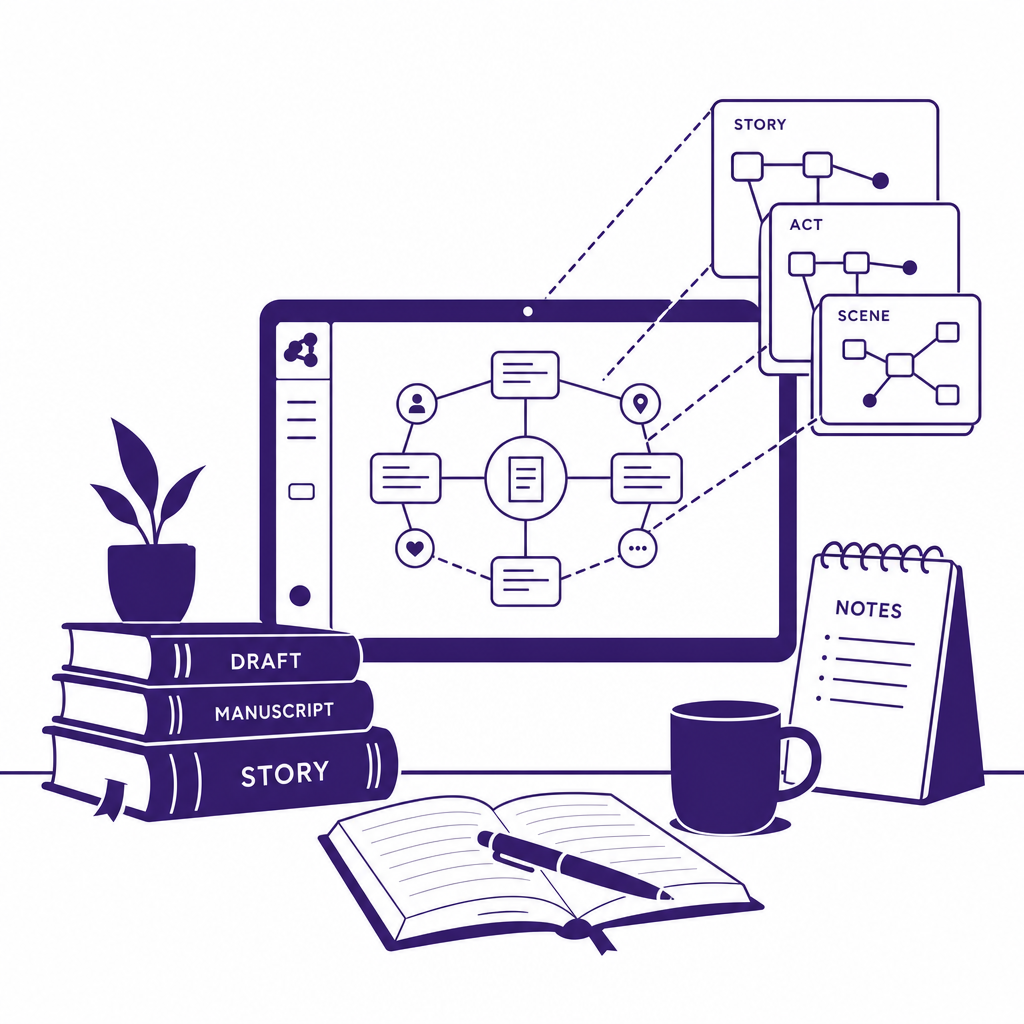
With tools that promote structured writing, such as Plotlyn’s node-based capabilities and nested canvases, linear writers can visualize their plots and relationships between events. They can create focused nodes for each plot point, streamlining their drafting process by revisiting and rearranging ideas as needed without losing sight of the overarching narrative. This structured method cultivates creativity while simultaneously serving as a reliable guide, empowering writers to explore intricate narratives without the risk of becoming overwhelmed.
Introducing Plotlyn and Its Node-Based System
Plotlyn emerges as a transformative writing environment, particularly tailored for authors who thrive on linear drafting methods. At its core lies a unique node-based system that deviates from traditional linear writing styles by offering a flexible framework that enhances focus and creativity. Unlike mere text documents, Plotlyn presents writing in manageable, focused nodes — each dedicated to pivotal elements such as scenes, character arcs, or themes. This approach allows authors to break down complex narratives into simpler components while maintaining the linear progression essential to their storytelling style.
The visualization aspect of the node-based system empowers writers to see their entire storyline at a glance, creating a clear overview that aligns with their sequential approach. Each node can display key details, thereby eliminating the clutter often associated with traditional drafting. Authors can swiftly navigate between nodes, allowing for seamless transitions as they develop their plots. This adaptability ensures that while writers maintain a linear path, they can also explore the layered intricacies of their narratives without losing sight of the overarching story arc. By employing focused nodes, Plotlyn fosters a structured ambiance conducive to rich storytelling.
Utilizing Nested Canvases for Organization
The concept of nested canvases in Plotlyn is a game-changer for linear writers seeking to maintain organization while crafting intricate narratives. These canvases allow authors to segment their work into manageable sections, organizing scenes and chapters in a structured framework. By breaking the narrative into these distinct nested layers, writers can focus on one part at a time without losing sight of the overall plot progression.
To effectively utilize nested canvases, start by creating a primary canvas for your main plotline, then develop sub-canvases for each chapter or significant section. Here, you can visualize and manipulate individual scenes, ensuring that each element aligns with the story's trajectory. This approach not only clarifies your narrative flow but allows for easy adjustments; you can modify one scene without disrupting the entire structure.
Moreover, nested canvases facilitate deeper layering of themes and character arcs. By crafting interconnected scenes, writers can trace emotional developments and plot threads that might otherwise become tangled in a traditional linear drafting process. This method of organization transforms the act of writing into a deliberate journey, where every narrative element serves a purpose, enhancing the richness of the story.
The Plotlyn Workflow: A Step-by-Step Guide
The Plotlyn workflow is a streamlined process that caters specifically to linear writers, enabling them to draft, revise, and export their narratives without losing their focus. Starting with the drafting phase, Plotlyn's node-based system allows writers to create individual nodes for each scene or chapter. This promotes a clear view of plot progression while maintaining the linearity essential to the author’s style.
As you draft, leverage Plotlyn's structured environment to outline your story arc clearly within the nodes. This approach lets you visualize key events and transitions, ensuring a seamless flow from one scene to the next. When encountering a block, take advantage of it's flexible workspace to adjust elements on the fly, rearranging nodes effortlessly to see how changes affect the overall narrative.
During the revision process, utilize Plotlyn’s capabilities for inline commenting and version tracking, which keeps your revisions organized and aids in refining your work. Each round of revisions can be reflected in a new node, allowing you to track changes while preserving the original drafts.
Finally, when ready to export your manuscript, Plotlyn simplifies the process. You can easily compile your worked nodes into a cohesive document, making sure every part of your structured narrative comes together seamlessly. Employing these tools strategically can help you maintain a clear focus throughout the writing journey, ensuring that your intricate story is beautifully presented.
From Draft to Manuscript: Finishing Your Book
The journey from drafting to finalizing a manuscript is often the most crucial yet underestimated phase in a writer's process. For linear writers, revision can seem daunting, as it involves re-evaluating a carefully crafted sequence. However, with Plotlyn's capabilities, this phase transforms into a structured yet flexible undertaking.
As you transition from draft to manuscript, maintaining clarity is key. Plotlyn's node-based system allows you to visualize plot progression effortlessly. By breaking your story into distinct nodes, you can tackle each segment of your narrative independently, ensuring that essential elements like character arcs and subplots are thoroughly addressed without losing sight of the linear timeline.
Nested canvases serve as an incredible tool during this revision stage. You can create separate canvases for different chapters or plot threads, allowing you to focus intensely on specific sections while keeping your entire manuscript organized. As you make changes, retain older versions of nodes for reference, which ensures that you’re not discarding valuable ideas.
Ultimately, the revision process becomes a loop of enhancement rather than a terrifying overhaul. By leveraging Plotlyn's structured workflow, linear writers can transform rough drafts into polished manuscripts, ensuring intricate stories are both coherent and captivating.
Conclusions
Plotlyn empowers linear writers by offering a structured yet flexible environment to craft their narratives. By embracing its node-based system and organizational features, authors can enhance their drafting process, maintain focus, and build complex stories. As you explore Plotlyn, you'll find that linear writing can indeed lead to intricate, captivating narratives.