Embrace the 'Ugly First Draft': How Plotlyn's Nodes Empower Fast, Loose Writing
Many authors struggle with perfectionism, slowing down their first draft. Learn how Plotlyn's flexible, node-based system encourages a 'fast and loose' approach, allowing you to quickly capture ideas, overcome internal critics, and accelerate your initial manuscript completion without getting bogged down in perfect prose. Discover strategies for dumping thoughts into nodes, deferring organization, and embracing imperfection to move your story forward.
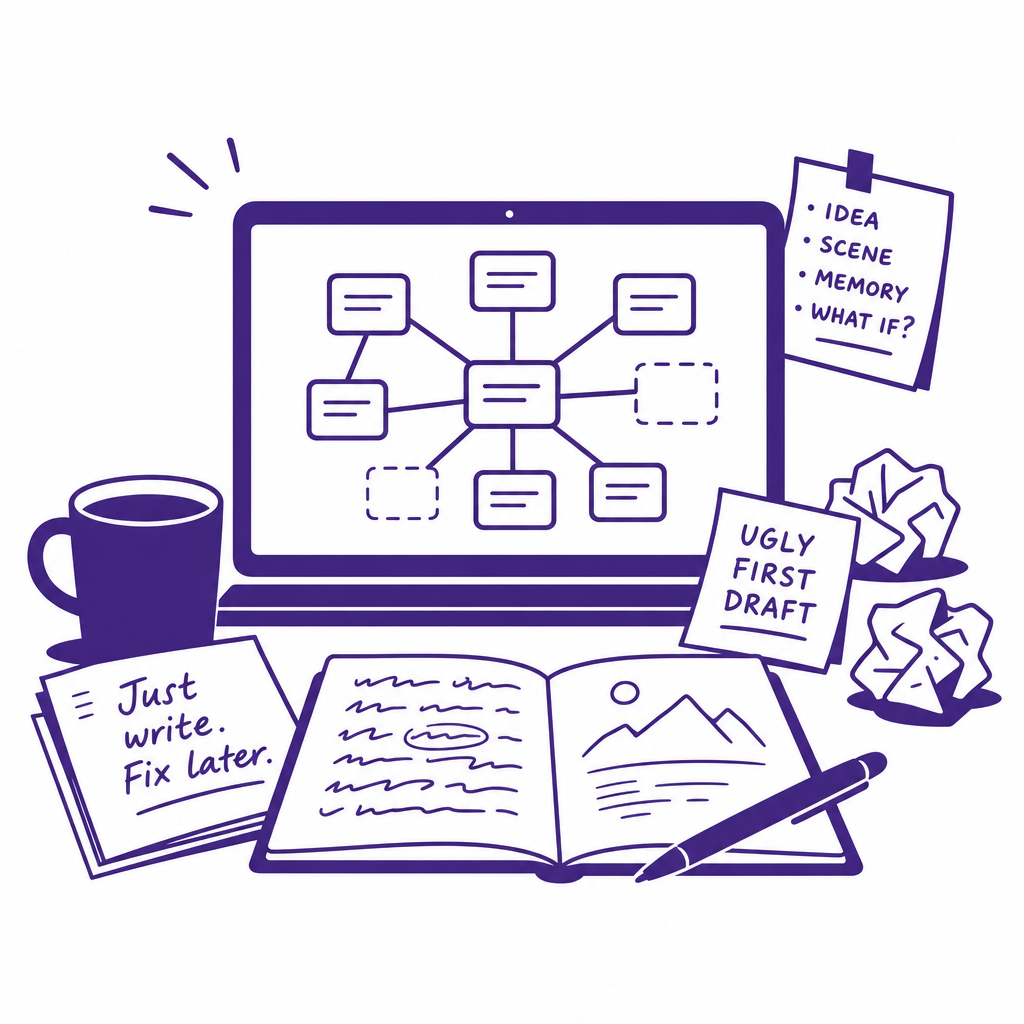
In the world of writing, many authors face the daunting barrier of perfectionism, which stifles creativity and slows the drafting process. This article explores the transformative potential of adopting an 'ugly first draft' mindset through Plotlyn's innovative node-based writing system, encouraging a faster and more flexible approach to capturing your story ideas.
Understanding Perfectionism in Writing
Perfectionism in writing is a double-edged sword. On one hand, it drives authors to produce high-quality work; on the other, it can become a crippling force that stifles creativity. The pursuit of flawless prose often leads to an agonizing cycle of revision, where writers become ensnared in their own expectations. Thoughts like "this sentence isn't perfect" or "who would want to read this?" act as barriers to creativity, resulting in writer's block and stagnation.
Perfectionist tendencies manifest in various ways—some authors can spend weeks agonizing over a single paragraph, while others may avoid starting altogether due to fear of inadequacy. The psychological impact is profound; feelings of doubt and unworthiness creep in, making the writing process feel more like a chore than an enjoyable pursuit.
As this drive for perfection takes hold, the author's natural creative flow is disrupted. Ideas remain unspoken, and potential narratives are left unexplored. Understanding how perfectionism infiltrates writing habits is crucial for any author seeking to break free from its confines and unleash their creative potential. Embracing a more fluid approach to writing can dramatically alter this inhibitory mindset.
The 'Ugly First Draft' Mindset
The 'ugly first draft' mindset is a pivotal release for writers shackled by their own perfectionism. By acknowledging that the initial version of their work doesn’t need to be polished, authors open the floodgates to creative flow. This approach liberates the writing process, encouraging a swift outpouring of thoughts that might otherwise be constrained by internal critics.
Take, for instance, the celebrated author Anne Lamott, who famously advocates for the 'shitty first draft.' Her perspective resonates with many, as she emphasizes that getting thoughts on the page, however flawed, is essential for moving forward. Similarly, novelist John Green has shared his own struggles with perfectionism, which he overcame by allowing himself to write without filters, accepting that editing would come later.
An 'ugly first draft' creates an environment where ideas can evolve naturally. This departure from the need for perfection not only accelerates manuscript completion but also fosters an authentic voice. Writers who embrace this mindset often find that their stories become richer and more genuine when they allow themselves the grace to imperfectly explore their narratives. In doing so, they lay the groundwork for a more inspiring and engaging revision process.
Node-Based Writing and Its Benefits
Node-based writing systems like Plotlyn offer a transformative approach for authors who often feel trapped by traditional linear methods. With the ability to visualize thoughts through interconnected nodes, writers can capture ideas quickly and flexibly, freeing themselves from the shackles of perfectionism. In Plotlyn, each node can represent a story element, a character detail, or a plot twist, making it easy to see how these components relate to one another without being bogged down by strict organization.
The visual nature of node-based writing fosters creative flow, allowing thoughts to spill out organically. Writers can embrace the chaos of their creative process, moving from one node to another without hesitation. Plotlyn's interface encourages exploration; ideas can be rearranged, expanded, or deleted as new insights arise, supporting the fast drafting mindset.
Beneath this freedom lies the power to capture the essence of the narrative without worrying about coherence or mechanical perfection. The process feels less like constructing a rigid structure and more akin to weaving a tapestry, where each node contributes to the whole in a fluid, dynamic way. For authors, this means that an 'ugly first draft' can become a vibrant collection of potential rather than a daunting blank page.
Strategies for Fast Drafting
To embrace the 'Ugly First Draft' using Plotlyn, writers can employ practical strategies tailored to enhance fast drafting. One effective approach is to quickly dump ideas into nodes without filtering or self-editing. When inspiration strikes, open a node and let your thoughts flow freely. This method enables you to bypass the internal critic that often halts the writing process, allowing your creativity to take center stage.
For organization, leverage Plotlyn’s tagging system. Assign relevant tags to your nodes—such as character names, themes, or emotional tones—to create an easily navigable framework. This way, you can categorize your ideas in a non-intrusive manner, keeping the focus on creativity during the drafting phase.
Additionally, concentrate on capturing the essence of each scene. Instead of worrying about coherence or transitions, jot down vivid images, dialogue snippets, or character actions. These incomplete ideas can serve as touchpoints for later refinement without stalling your momentum. Embrace imperfection; remember, your goal is not a polished manuscript but a lively collection of ideas and scenes that can be shaped later. By adopting these strategies within Plotlyn’s node-based system, you’ll find that fast drafting becomes an exhilarating part of your writing process.
Deferring Organization for Greater Creativity
Deferring organization until after the completion of your first draft is a powerful technique that can liberate your creativity and help you break free from the chains of perfectionism. By allowing yourself the freedom to write without the compulsion to structure or polish, you enable your ideas to flow more freely, resulting in a more authentic and vibrant manuscript. This approach is particularly valuable when using Plotlyn's node-based system, where ideas can be captured and stored as individual nodes waiting for later refinement.
Instead of getting bogged down by an overwhelming need for organization, focus on capturing your thoughts and feelings in various nodes. This can be as simple as quickly jotting down dialogue snippets, character sketches, or story beats. Don’t worry about how they’ll fit together initially; just let the ideas flow. Consider using color coding or tags to highlight themes or concepts that resonate, which can assist in sorting them later without imposing a rigid structure during the drafting process.
This method reduces the psychological barrier created by perfectionism, allowing you to embrace the messy process of creation. When your only goal is to get words on the page, you foster a more dynamic writing environment that prioritizes exploration over evaluation, ultimately leading to a stronger foundation for future revisions.
Embracing Revision After the Drafting Process
Once you've completed the "ugly first draft," it’s time to embrace revision as an essential part of the writing process. This stage is about recognizing that your initial draft is merely raw material, a stepping stone toward a polished manuscript. When you approach revision with this mindset, you liberate yourself from the constraints of perfectionism, understanding that transformation rather than correction is the goal.
Utilizing the Plotlyn environment can greatly enhance your revision process. Start by creating nodes for feedback—insightful comments from beta readers or your own reflections. This node-based structure allows you to organize your thoughts fluidly, experimenting with different narrative strands and character arcs without feeling overwhelmed.
As you dive deeper into your draft, focus on structural changes. Identify which scenes resonate, which need expansion, and where elements may be incoherent. You can move nodes around effortlessly, allowing for creative flow while you weave your ideas into a cohesive whole. This flexibility empowers you to reshape your raw material into a refined narrative, ensuring that your final product aligns with the vision you hold for your story. Embracing imperfection in your first draft not only accelerates your journey but prepares you for a transformative revision process.
Conclusions
Embracing the 'ugly first draft' is essential for overcoming the creative blocks imposed by perfectionism. By utilizing Plotlyn's node-based workflow, writers can easily capture their thoughts and maintain creative flow. Ultimately, letting go of the need for perfection enables you to focus on completing your manuscript, paving the way for effective revision and storytelling.