
Finding Your Flow: How Plotlyn Helps Authors Pace Their Drafting, Whether Fast or Measured
Explore how Plotlyn's flexible node-based structure empowers authors to optimize their drafting pace. Whether you prefer 'fast and loose' first drafts or a more deliberate, measured approach, learn to use canvases for broad progress tracking and focused nodes for sprints, maintaining momentum and preventing burnout.
Embarking on a writing journey can be daunting, especially when it comes to establishing a productive pace. This article explores how Plotlyn, a node-based writing environment, supports authors in finding their unique drafting rhythm. From flexible canvases to focused nodes, we’ll dive into strategies for optimizing drafting workflows, maintaining writing momentum, and achieving consistency.
Understanding Writing Pace
Understanding how to pace your writing is crucial for navigating the drafting process. Writing pace refers to the speed at which you generate content, and it can significantly influence both creativity and productivity. Some authors prefer a rapid, "fast and loose" style that allows for an unfiltered flow of ideas, fostering spontaneity. This approach can lead to bursts of creativity, where unexpected twists and character developments emerge. However, it may also result in disorganized content that requires extensive editing later.
Conversely, a more measured approach allows for careful crafting of prose, character arcs, and plot points. This slower drafting style encourages deep reflection and careful construction, which can improve the overall quality of the writing. However, if taken to an extreme, it can lead to stagnation and burnout, as fears of imperfection hamstring progress.
Ultimately, finding your ideal writing pace is about balance. For instance, utilizing Plotlyn's node-based structure allows you to adjust your speed based on the demands of various sections within your narrative. By recognizing how your pace impacts creativity, productivity, and draft completion, you can manipulate your workflow to maintain momentum and achieve consistent output, regardless of your drafting style.
The Role of Structure in Drafting Workflows
A well-defined structure is essential for maintaining a consistent writing pace and can significantly enhance an author's drafting workflow. Without a clear framework, ideas can easily become tangled, leading to creative stagnation or burnout. Outlining and organizing thoughts prior to drafting are crucial steps that can streamline the writing process, allowing authors to map out their narratives and identify key plot points.
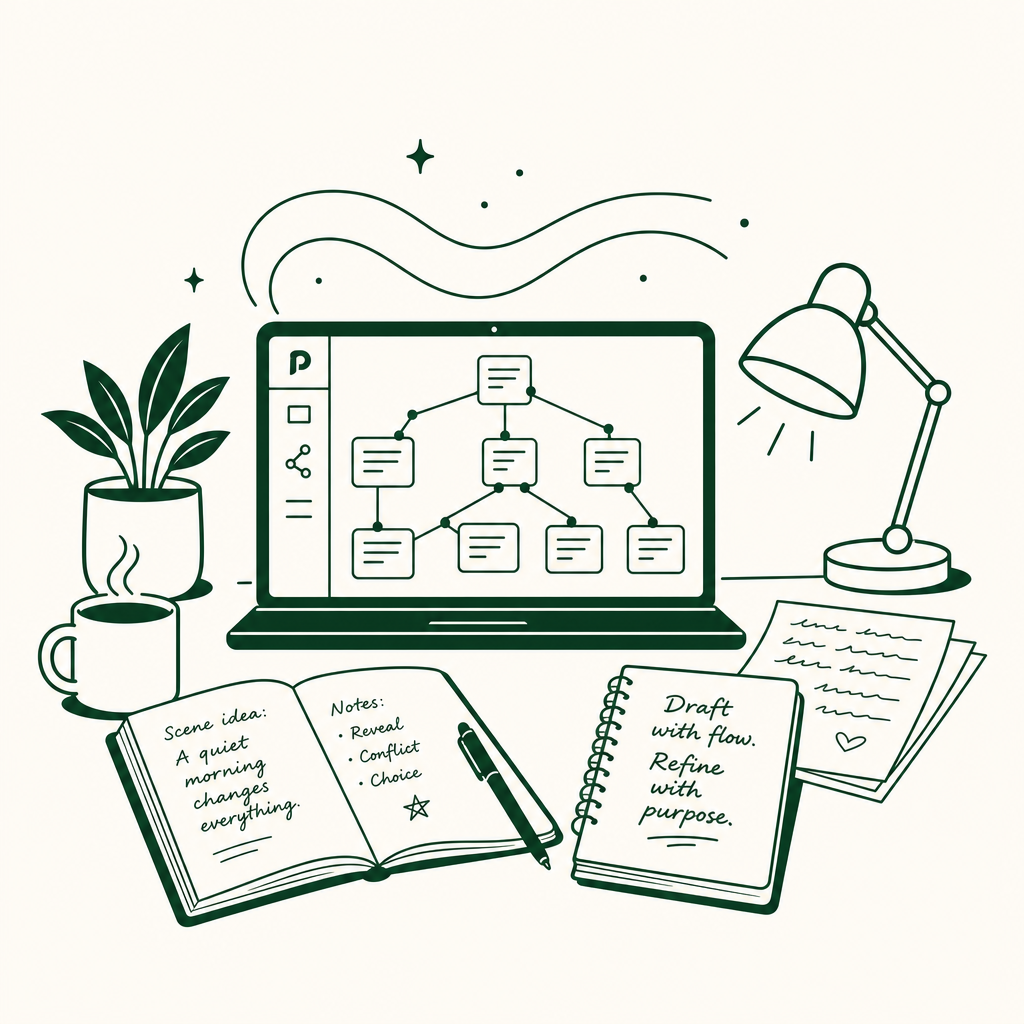
Plotlyn's node-based structure offers a powerful solution for this. By visualizing a story through interconnected nodes, authors can see the logical flow of their plot and characters, ensuring that every element aligns harmoniously. Each node represents a specific idea or scene, allowing for easy adjustments as new concepts arise during the drafting phase.
This flexibility not only supports different writing paces, from methodical to spontaneous, but also helps authors maintain writing momentum. As they branch out from a central idea, writers can focus on one node at a time, making steady progress without losing sight of the bigger picture. Ultimately, Plotlyn empowers authors to craft their narratives more effectively, fostering consistency and clarity throughout their drafting journey.
Strategies for Fast Drafting
For authors who thrive on a fast and loose approach to their first drafts, establishing effective drafting strategies can make all the difference. One effective technique is utilizing timed writing sessions, where authors dedicate a set period—often 15 to 30 minutes—to unleash their creativity without self-censorship. This method encourages a streamlined flow, allowing writers to focus on getting their ideas down rather than perfecting every word.
Freewriting can also serve as a powerful tool in this context. By allowing thoughts to flow unfiltered, authors can cultivate a reservoir of raw material that can later be refined. In this mode, quantity often takes precedence over quality, leading to ideas that might not surface in a more critical environment.
Plotlyn supports this rapid drafting approach through its flexible node-based framework. Authors can quickly create nodes to capture fleeting ideas or sentences, which can later be revisited for elaboration or refinement. This seamless integration of quick node creation encourages authors to move beyond self-editing, maintaining their writing momentum and ensuring that they remain engaged in their storytelling journey. Consistency in this approach cultivates a natural rhythm, allowing writers to generate substantial content without succumbing to burnout.
Sprinting with Focused Nodes
Sprinting with Focused Nodes
For authors looking to boost their productivity, writing sprints can be a game-changer. By utilizing focused nodes in Plotlyn, you can zero in on specific scenes or sections of your draft, turning vague intentions into structured output. These nodes act as dedicated spaces where you can concentrate your creative energy.
To optimize your sprints, start by setting clear, achievable goals. For instance, aim to complete a certain number of words or pages in a 30-minute session. This specificity prevents overwhelm and encourages a steady rhythm. Use the timer feature on your device to enhance urgency—this not only cultivates focus but also builds momentum, pushing you to write faster and more freely.
Tracking your progress is crucial; Plotlyn’s visual interface allows you to monitor your sprint performance in real-time. Celebrate small victories—each completed node adds to your overall progress and keeps motivation high. Implement breaks between sprints to recharge; this balance helps prevent burnout, ensuring that your drafting workflow remains sustainable.
By strategically employing focused nodes and maintaining a sprint mentality, you can harness the power of writing momentum, fueling both productivity and creativity.
The Importance of Reflection and Revision
Reflection and revision are not just afterthoughts in a writing workflow; they are essential components for cultivating a polished manuscript, regardless of whether you prefer a fast and loose or a careful and measured drafting pace. When engaging with your first draft, it's easy to get swept up in the excitement of creation, but taking the time to pause for reflection allows you to step back and evaluate your work critically. It’s in these moments of review that authors can identify areas for improvement—plot inconsistencies, character development gaps, or even missed thematic opportunities.
Plotlyn’s tools facilitate this process by allowing you to compare different versions of your draft effortlessly. With its node-based structure, you can create separate nodes for alternate scenes or character arcs and easily toggle between them to see which direction better resonates with your vision. This flexibility fosters a more dynamic revision process, as it encourages experimentation without the fear of losing previous work. By reflecting on your writing in this way, you maintain not only the integrity of your creative momentum but also ensure that the path toward your next draft is informed and intentional. Engaging in this iterative process lays a strong foundation for achieving consistency, ultimately enhancing the quality of your narrative as you refine your content.
Balancing Speed and Quality
Finding the right balance between speed and quality in your writing is crucial for a successful drafting process. While the excitement of producing a fast first draft can be exhilarating, it’s equally important to ensure that the narrative’s essence and clarity are not sacrificed in the rush. With Plotlyn’s flexible node-based structure, authors can optimize their drafting workflow to cater to both fast-paced writing sessions and methodical revisions.
Using Plotlyn’s canvases allows you to maintain an overall view of your project while breaking down the writing process into manageable sprints with focused nodes. This division enables writers to set specific goals, maintaining momentum without overwhelming themselves. During these sprints, consider allowing your creativity to flow freely; distractions around grammar and style should be set aside for now.
However, once the initial draft is complete, Plotlyn’s tools encourage you to engage in a meticulous revision process, ensuring that the quality of your writing measures up to your vision. By maintaining this equilibrium—balancing speed in your first draft with reflective revision—you minimize the risk of burnout while fostering a consistent writing workflow. This dual focus allows you to create a polished manuscript without sacrificing your creative spirit or productivity.
Conclusions
In conclusion, finding your ideal writing pace is essential for productivity and creativity. By leveraging Plotlyn's versatile features, authors can optimize their drafting workflows, whether through swift sprints or deliberate drafting. Embrace the adaptability of this platform to maintain your momentum throughout the drafting process, ultimately leading to a polished manuscript.