
From Headlines to Narrative: Structuring Real-World Inspiration with Plotlyn
Learn how Plotlyn's node-based system can help you transform intriguing real-world events, historical facts, or even overheard conversations into structured scenes and chapters for your novel or narrative nonfiction. This guide will cover methods for adapting source material, maintaining narrative voice, and weaving factual details into a cohesive story structure without losing authenticity.
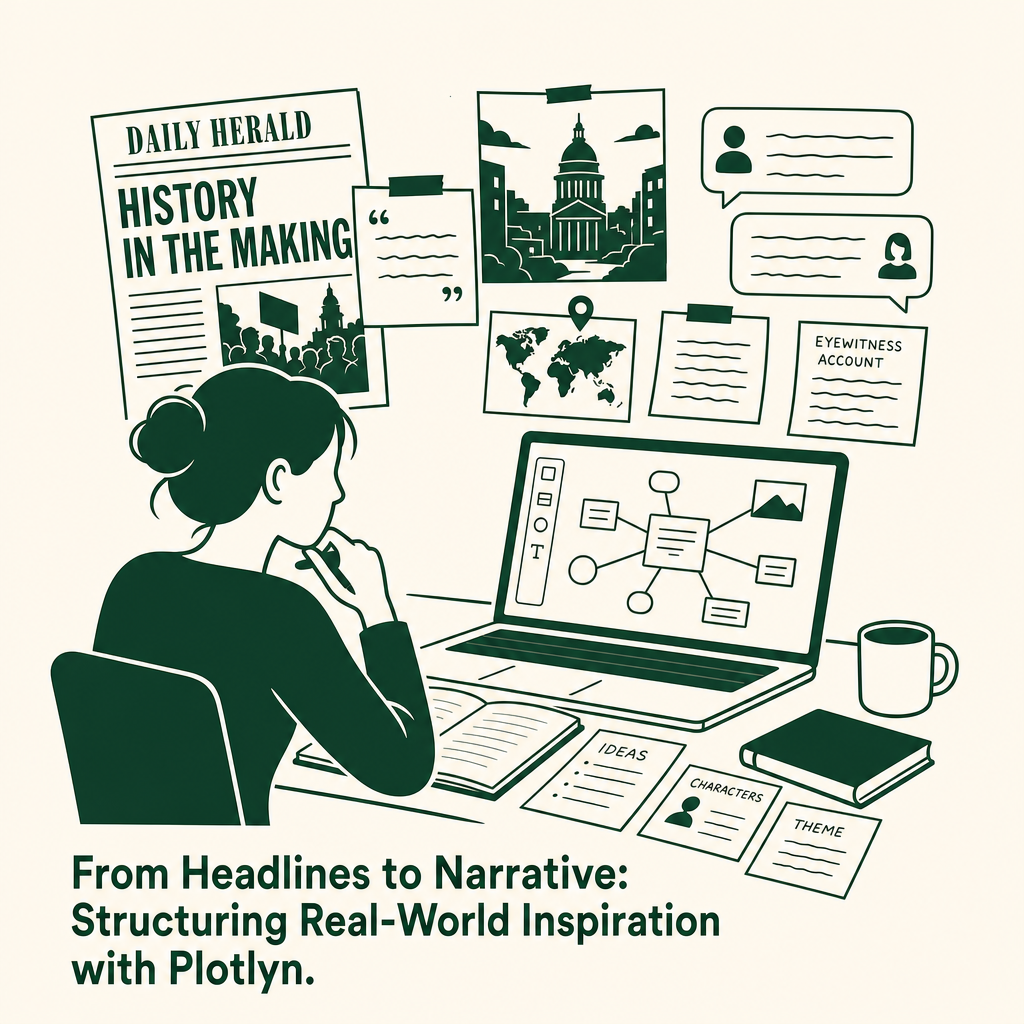
Transforming real-world inspiration into engaging narratives can be challenging for writers. Utilizing Plotlyn's node-based system enhances this process, making it easier to structure captivating stories. This article explores methods to adapt source material effectively while preserving narrative voice and integrating research smoothly into your storytelling.
Embracing Real-World Inspiration
Real-world inspiration is a goldmine for writers, serving as a bridge between fact and fiction. Events from history, societal phenomena, or even casual overheard dialogues can spark the embers of creativity. For example, Khaled Hosseini drew from his own experiences growing up in Afghanistan to craft gripping narratives in The Kite Runner. Similarly, Barbara Kingsolver’s The Poisonwood Bible is rooted in her research into historical occurrences in the Congo, blending personal stories with broader truths.
Identifying suitable material begins with an exploratory approach. Writers should immerse themselves in diverse sources like history books, documentaries, or news articles, remaining attuned to the emotional undertones that resonate with them. Journaling everyday encounters, even snippets of conversation, can unveil compelling plots.
Engaging with real-world sources requires not just gathering information but also reflecting on personal connections to the material. Writers should ask themselves how these elements resonate with their own experiences, beliefs, and values. Ultimately, this method fosters authenticity and depth, ensuring that the stories told are not only inspired by reality but steeped in genuine understanding.
Understanding Narrative Nonfiction
Narrative nonfiction and historical fiction uniquely intertwine fact with the art of storytelling. Writers in these genres must navigate the delicate balance between maintaining factual accuracy and crafting a compelling narrative arc. The key lies in understanding the backbone of each story: real events, meticulously researched details, and the human experience they represent.
Writers can utilize several strategies to enhance their narrative while grounded in reality:
-
Voice and Style: Establish a distinct authorial voice that resonates with the themes and characters. This voice should invite readers into the world being depicted, allowing them to connect emotionally despite the factual framework.
-
Character Development: Infuse real-life figures with depth and dynamism. Through dialogue and internal conflict, writers can present historical figures in relatable light, while ensuring their actions and motivations reflect historical contexts accurately.
-
Cohesive Narrative Arc: Structure the story to include a clear beginning, middle, and end, even if the events are historical. Create tension and resolution that keeps readers engaged, employing narrative techniques typically reserved for fiction.
By strategically blending factual details with narrative technique, authors can illuminate truths about the human experience, encouraging readers to ponder the significance behind the facts.
The Plotlyn Workflow
Plotlyn's node-based system revolutionizes the drafting process for authors working with narrative nonfiction and historical fiction by offering a flexible and intuitive workflow that caters specifically to the challenges of structuring real-world inspirations. By allowing users to create interconnected nodes—each representing a key idea, fact, or narrative element—Plotlyn enables authors to visualize relationships between various components of their stories effortlessly.
One of the standout features of Plotlyn is its brainstorming tool, which provides an interactive space for authors to jot down ideas as they emerge. This encourages organic exploration of thoughts and allows for spontaneous connections to be made between disparate events or details. As authors develop their narratives, they can easily categorize and organize their nodes into hierarchies that reflect the narrative arc, ensuring that both the timeline and flow of the story are coherent.
Moreover, the ability to attach research notes, images, and sources directly to specific nodes enhances the integration of factual material. This not only streamlines the research process but also ensures that the author maintains a clear connection between their narrative voice and the factual backbone of their work. By visualizing how different elements interlink, authors can more effectively manipulate the flow of their narratives, ensuring they remain engaging while staying true to the authenticity of the real-world events that inspired them.
Adapting Source Material
Adapting real-world events into structured narratives requires a delicate balance of authenticity and creativity. To effectively transform historical facts or intriguing incidents into character-driven plots, start by identifying the core truth of the event. Distill this truth into a single emotional thread that resonates with your intended audience, which will guide the development of your characters and plot.
Next, create compelling scenes that not only capture the essence of the event but also reveal character motivations. Use Plotlyn to map out character arcs and intersecting relationships that stem from the chosen event. This visual aid helps maintain coherence while allowing for creative exploration within your adaptation.
In constructing subtext, contemplate the broader societal implications of the real-world inspiration. Allow your characters to navigate these themes through their interactions and conflicts, subtly enriching the narrative without overshadowing it.
Lastly, strive to maintain your authentic voice throughout the adaptation process. Your unique style should shine through in dialogue, descriptions, and pacing, ensuring that readers feel both the gravity of the source material and the individuality of your storytelling. By balancing factual foundation with creative storytelling, you can craft narratives that are both compelling and truthful.
Weaving Research into Narrative
Incorporating research into narrative requires a delicate balance. To achieve this, writers must ensure that factual information enhances the story’s depth without overwhelming the reader. Here are several techniques to maintain that equilibrium:
- Intentional Selection: Choose facts that resonate with your story’s themes. Ask yourself, “Does this detail support character development or reveal thematic layers?” Irrelevant information can distract from the narrative.
-
Seamless Integration: Introduce facts naturally within dialogue or character thoughts. For instance, a character might reflect on a historical event that parallels their own experience. This keeps the narrative flow intact while enriching the reader’s understanding.
-
Narrative Voice Consistency: Maintain your author voice throughout the integrating process. If your style leans toward poetic descriptions, let facts be woven in with similar lyrical tones to avoid jarring shifts that might disengage readers.
-
Contextual Clarity: Offer context for lesser-known facts through concise explanation rather than lengthy exposition. This ensures readers grasp the significance without losing their place in the story.
By thoughtfully weaving research into your narrative, you create a tapestry of authenticity, grounding your story in reality while inviting readers on a compelling journey.
Revising for Cohesion and Authenticity
Revision is an essential phase in transforming real-world inspiration into coherent narratives. During this stage, writers must examine the interplay between reality and storytelling to ensure an authentic experience for readers. Here are strategies to enhance coherence and authenticity before finalizing your draft:
-
Evaluate Voice Consistency: As you revise, pay careful attention to your narrative's voice. Is it consistent with the tone you've established? Use Plotlyn's node-based system to isolate sections that may deviate, allowing for a more focused approach to maintaining your unique author voice throughout the draft.
-
Check Factual Accuracy: Ensure that the historical facts or real events you've woven into the narrative remain accurate. Fact-checking isn't solely about correctness; it involves assessing how smoothly these details fit into the storyline. Utilize your research notes to determine if the information enhances or detracts from your narrative.
-
Assess Overall Structure: A well-structured narrative guides readers effortlessly. Look for redundancies or passages that disrupt the flow. Are the scenes organized logically? Plotlyn can assist in visualizing how each scene contributes to the overarching story arc.
Encourage feedback from trusted peers or writing groups to gain insights into the authenticity of your voice and the effectiveness of your structure. Their perspectives can help bridge the gap between reality and your narrative, enhancing the reader's experience.
Conclusions
Integrating real-world inspiration into your writing enriches narratives and engages readers. By leveraging Plotlyn’s unique features, writers can transform raw ideas into structured stories, preserving authenticity and voice. Remember to blend research naturally into your narratives, ensuring a compelling read that resonates with your audience.