From Scattered Notes to Solid Draft: Accelerating Your First Draft with Plotlyn's Node-Based System
Learn how to leverage Plotlyn's focused nodes and canvas organization to transform raw ideas and research notes into a cohesive first draft faster. This guide covers strategies for capturing inspiration, breaking down your manuscript, and maintaining momentum to complete your initial story or argument.
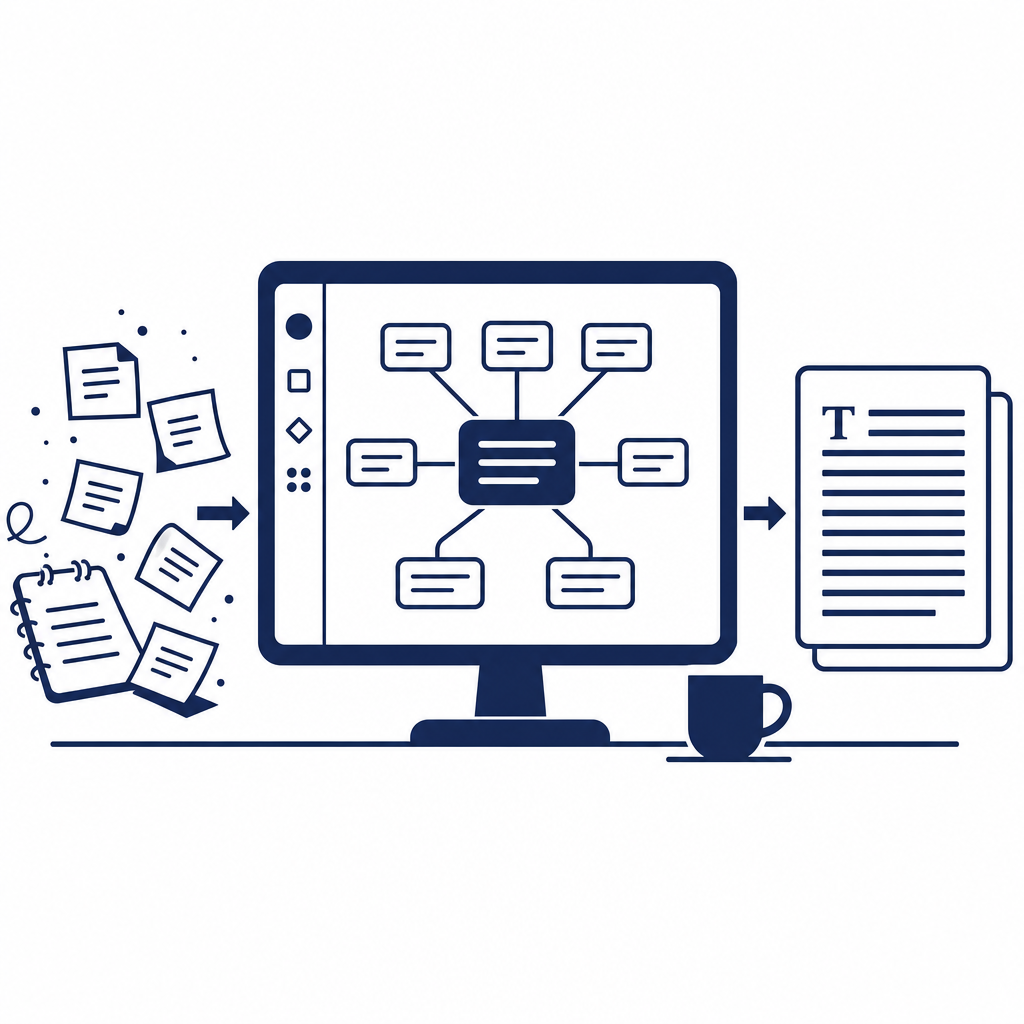
Transforming your ideas into a cohesive first draft can be daunting. In this article, we explore how Plotlyn's node-based writing system can streamline your drafting process. From capturing inspiration to maintaining workflow, we’ll delve into strategies that empower writers to turn their scattered notes into structured narratives efficiently.
Understanding the Node-Based Writing System
Understanding the Node-Based Writing System
A node-based writing system, such as Plotlyn, represents a paradigm shift from traditional linear writing processes. Unlike conventional approaches where ideas and plots are often laid out sequentially, a node-based system allows you to visualize all elements of your narrative or argument as interconnected units or "nodes." Each node can represent a concept, character, plot point, or research note, which can be rearranged and linked in various ways, fostering a more dynamic and flexible writing environment.
One of the major advantages of utilizing a node-based approach is its visual organization. By mapping out thoughts visually, you can see the relationships and connections between ideas at a glance. This not only aids in clarifying your narrative structure but also helps to identify gaps and inconsistencies early in the drafting process.
Furthermore, the node-based structure enhances productivity by allowing writers to capture ideas more freely without the constraints of a linear format. You can easily shift, delete, or expand nodes, adapting them as your work evolves. This fluidity nurtures creativity, helping writers maintain momentum and accelerate their progression from scattered notes to a cohesive first draft.
Capturing Ideas Effectively
Capturing ideas effectively is crucial for transforming your initial sparks of inspiration into a powerful narrative or argument. Techniques like freewriting, mind mapping, and systematic note-taking can significantly augment your writing workflow, especially when integrated into Plotlyn’s platform.
Freewriting allows you to tap into your subconscious and spill out thoughts without self-censorship. Set a timer for 10 to 15 minutes and let your ideas flow onto the page, storing these unfiltered insights directly into a Plotlyn node. This method encourages creativity and can reveal connections to your main theme as you later revisit your notes.
Mind mapping is another effective technique. Start with your central idea and branch out into subtopics or themes within Plotlyn's visual canvas. This method allows you to visualize relationships and hierarchies of ideas, facilitating easier retrieval and synthesis later.
Finally, a structured note-taking system is vital. Create focused nodes for individual ideas or research points, tagging them for easy access. This organized approach makes it simple to gather references and key insights as you progress, ensuring nothing is lost in the shuffle. With Plotlyn, having a robust system for idea storage and retrieval enhances both inspiration and productivity, keeping your momentum steady as you move towards your first draft.
Organizing Your Manuscript Visually
Organizing your manuscript visually in Plotlyn can profoundly influence your drafting process. Utilizing the platform's canvas and node-based system allows you to create a coherent visual representation of your ideas, transforming abstract thoughts into structured narratives. Start by establishing a modular layout for your chapters and scenes. Each node can represent a distinct section, aiding in the breakdown of your manuscript into digestible parts.
To create visual clarity, employ nesting techniques. For instance, a parent node might represent a chapter, while child nodes illustrate key scenes or character arcs within that chapter. This hierarchical structure not only enhances organization but also enables you to see interconnections between story elements, encouraging deeper insights as you develop your plot.
Visual organization aids in clarifying thoughts, revealing relationships that may not be readily apparent in a linear format. As you move nodes around on the canvas, you can experiment with the flow of your narrative—reshuffling scenes, shifting conflicts, or re-evaluating character motivations—ultimately leading to a richer, more cohesive draft. Embrace this visual strategy as a powerful tool in your writing workflow; it can significantly accelerate your journey from scattered notes to a solid draft.
Maintaining a Productive Writing Workflow
Maintaining momentum throughout the drafting process is essential for transforming scattered ideas into a solid first draft. Within Plotlyn, setting achievable writing goals is a key strategy. Aim for daily or weekly word counts that are realistic, allowing you to celebrate small victories and maintain motivation. Break your writing into manageable chunks, aligning each segment with the focused nodes in Plotlyn.
Time management is equally important; use techniques like the Pomodoro Technique to balance focused work periods with short breaks. This method helps sustain productivity while preventing burnout. Establish a consistent writing routine by dedicating specific times during the week for writing, creating a habit that signals your brain it's time to focus.
Minimizing distractions is vital for a productive environment. Use Plotlyn’s features to create a streamlined workspace; hide unnecessary nodes or distractions that clutter your interface and focus on the task at hand. Consider muting notifications and designating a quiet space for writing to enhance concentration. By integrating these strategies within Plotlyn, you can maintain a productive workflow, enabling a smoother transition from your rough ideas to a cohesive draft.
Revising with Purpose
Revision is a critical phase in the writing process that transforms a rough initial draft into a polished manuscript. Utilizing Plotlyn’s node-based system can greatly streamline this process, allowing for a more intentional approach to revision. Start by organizing your nodes; each represents a concept, character, or section of your draft. This visualization enables easy rearrangement, helping you to explore different structural options and identify more effective sequences.
Tracking changes is an essential part of revising. Plotlyn allows you to annotate each node with feedback you've received or insights you’ve developed. This feature ensures you can monitor your progress over time and see how modifications enhance clarity and coherence.
When approaching revisions, methodically tackle one aspect at a time—be it plot development, character arcs, or thematic elements. Break down your nodes based on these categories and assess each for effectiveness. Embrace feedback as a tool for improvement rather than a critique; revising with purpose means harnessing insights to elevate your draft's overall quality. With a structured workflow facilitated by Plotlyn, revisions can become a transformative phase rather than a daunting task.
Finishing Your First Draft
Pushing through to the completion of your first draft can feel daunting, but embracing it as a living document is essential. A first draft is not meant to be perfect; it's a foundation on which to build your final piece. It encapsulates raw thoughts and ideas that can and will evolve, so avoid paralyzing self-doubt during this phase. By viewing your draft with a mindset of growth, you free yourself to explore, to play with characters, ideas, and narratives without fear.
Utilizing Plotlyn’s node-based system is pivotal in streamlining your finishing process. Each focused node acts as a building block, allowing you to easily rearrange ideas, flesh out details, and create connections that may have seemed nebulous at the inception of your project. The visual canvas helps maintain clarity in your writing workflow, encouraging you to see the broader structure of your work while simultaneously honing in on specific elements.
To maintain momentum, set small, achievable goals. Celebrate each completed node or paragraph as a step toward your finished manuscript. As you progress, take pride in your holistic manuscript—it reflects your evolving vision and cultivation of your creativity, setting the stage for transformative revisions down the road.
Conclusions
By embracing Plotlyn's node-based system, writers can significantly enhance their drafting process. The interconnectedness of nodes allows for greater flexibility and structure, fostering creativity while keeping projects organized. As you apply these strategies, you’ll find that your journey from idea to draft becomes not only faster but also more enjoyable.