
From Self-Doubt to Submission Ready: Using Plotlyn to Edit Your Manuscript Like an Agent
Discover how to overcome common self-editing pitfalls and develop an 'agent's eye' during revision. This guide will show Plotlyn authors how to use their canvas to identify where fear or self-doubt might have weakened their story, character arcs, or thematic impact, ensuring their manuscript is robust and ready for submission.
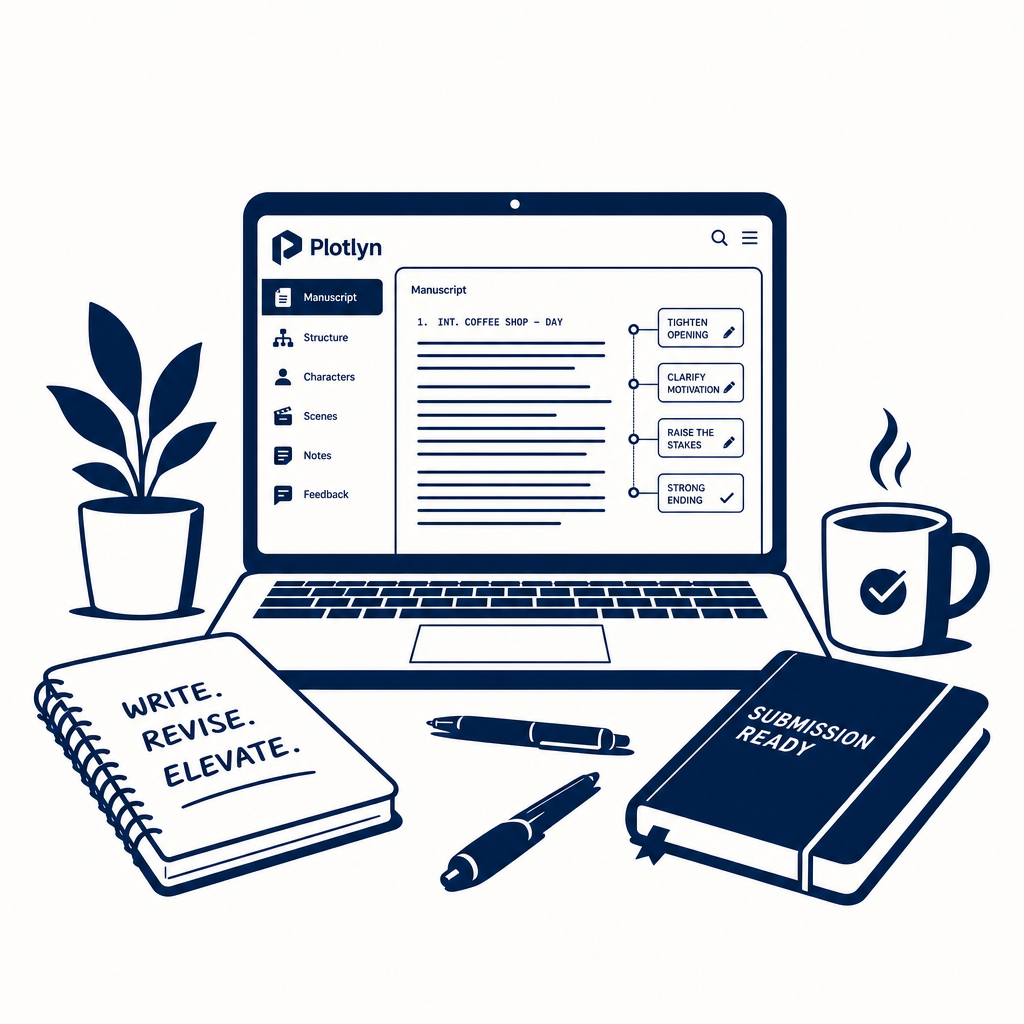
Navigating the self-editing process can be daunting for writers. This guide will equip authors with essential strategies to adopt an agent's perspective during revisions. By leveraging Plotlyn's unique canvas system, you'll discover how to identify weaknesses fueled by self-doubt, enabling you to craft compelling narratives ready for submission.
Understanding Self-Doubt in Writing
Self-doubt is an insidious barrier that grips many writers, often curtailing creativity and stifling confidence. It surfaces from various sources: personal insecurities, fear of judgment, and the ever-mounding expectations of success and validation. When we doubt our abilities, the writing tends to reflect that uncertainty, leading to fragmented narratives or underdeveloped characters that lack the depth they deserve.
Recognizing self-doubt is the first step towards transformation. Writers can benefit from periodic self-reflection to identify moments when fear infiltrates their process. Keeping a journal of emotions felt during writing sessions often reveals patterns that highlight the impact of doubt on creativity.
To combat these feelings, consider these strategies:
- Reframe Negative Thoughts: Challenge the notion that your work is inadequate. Instead of "This will never be good enough," try, "This is a draft and can always improve."
- Positive Affirmations: Reinforce your identity as a writer. Statements like “My voice is unique” can help build confidence.
- Seek Feedback: Engaging with peers or writing communities can provide the external validation needed to overcome inner doubts.
A positive mindset is essential during the revision process, fostering resilience and opening pathways for creativity to flourish through the revisions, ultimately transforming self-doubt into strength.
The Importance of an Agent's Eye
Cultivating an 'agent's eye' is essential for any writer who aspires to successfully navigate the manuscript submission landscape. Agents evaluate submissions with a keen focus on story structure, character development, and thematic consistency—elements that can make or break a manuscript's potential. As a writer, developing this perspective allows you to critically assess your work.
When examining story structure, consider pacing, plot twists, and the overall arc. Are there lulls in action that might cause a reader to disengage? Regarding character development, ask if your characters show growth or if they resonate emotionally with readers. Do they embody clear motivations that advance the narrative? For thematic consistency, reflect on whether your themes are woven seamlessly throughout the plot. Is each scene contributing to the overarching message?
To train your mind to think like an agent during revision, you can take the following steps:
- Read widely: Analyze manuscripts that intrigue you, paying attention to how agents might view them.
- Seek feedback: Join writer’s groups or hire beta readers to provide external perspectives.
- Revise with intention: As you edit, repeatedly ask yourself: "Is this worthy of submission?".
By adopting this mindset, you empower yourself to transform self-doubt into confidence and bolster your manuscript's readiness for agents.
Using Plotlyn for Effective Revision
Using Plotlyn's canvas system can significantly elevate your self-editing process, allowing you to approach your revisions with the clarity of an agent's perspective. Plotlyn's unique visualization tools help you map out your narrative structure, ensuring that each chapter and scene fits seamlessly into the larger tapestry of your story.
The canvas system empowers you to organize ideas and analyze character arcs deeply. With nested canvases for chapters and scenes, you can drill down into specific elements of your manuscript, identifying where fear or self-doubt could have inadvertently weakened your storytelling. This granular focus encourages a more objective assessment, revealing inconsistencies or structural weaknesses that might otherwise go unnoticed.
Features such as comment threads and color-coded annotations facilitate collaboration and feedback, enabling you to keep an agent’s eye sharp. By grouping related scenes or themes, you can easily spot where tension lags or emotional beats falter. Using Plotlyn, you can visualize your character journeys, ensuring every arc is compelling and aligned with the manuscript's overarching themes. Embrace this workflow, and watch your manuscript transform into a polished representation of your vision, ready for submission.
Overcoming Self-Editing Pitfalls
One of the most challenging aspects of self-editing is navigating the common pitfalls that can derail your progress. Writers often find themselves bogged down by minor details, obsessing over word choices while overlooking substantial plot holes or structural weaknesses. This inclination toward perfection can create a barrier to seeing the bigger picture necessary for effective revision.
To navigate these self-editing challenges, leverage Plotlyn’s intuitive features to maintain a broader perspective. Begin by using the canvas' overview functionality, which allows you to assess the flow of your narrative at a glance. This visual representation helps you spot inconsistencies or gaps in your plot that you might miss when focusing too intently on specifics.
Implement a "zoom out" strategy: dedicate sessions to reviewing entire scenes or chapters without getting sidetracked by language. As you do this, ask yourself critical questions: Does this scene propel the story? Are characters consistent in their motivations? Use color-coding to highlight areas needing more depth or clarity, making it easier to identify sections requiring revision.
By allowing yourself to step back, you can overcome the fear of imperfection and approach your manuscript with a fresh, analytical lens, ultimately ensuring your submission is polished and compelling.
Enhancing Character Arcs and Thematic Impact
Robust character arcs and thematic depth are essential for creating a manuscript that resonates with agents and readers alike. Using Plotlyn's canvas, authors can assess these elements during revision by visually mapping character relationships and thematic connections. This method fosters a ‘big-picture’ perspective, allowing writers to see how each character arc contributes to the overall narrative.
Start by identifying your main characters and the key transformations they undergo. Ask yourself:
- Are their motivations clear and compelling?
- Do their actions align with their development throughout the story?
Plotlyn allows authors to create visual nodes for each character, mapping out their journeys and ensuring consistency in their evolution. Look for emotional beats and pivotal scenes that are crucial for growth, and evaluate how main themes interweave with these arcs.
Consider if the themes are consistently represented through dialogue, conflict, and character choices. Are there scenes that feel disconnected or underdeveloped? Using Plotlyn's canvas to highlight thematic threads can reveal gaps and strengthen the manuscript’s coherence. By addressing these elements, authors can elevate their stories, ensuring that every arc and theme adds depth, making their work competitive in the submission arena.
Final Steps Before Submission
In the final stages before submitting your manuscript, it’s vital to ensure every word resonates and reflects your story’s potential. Using Plotlyn, authors can harness a systematic workflow to polish their draft meticulously. Begin by integrating feedback from beta readers—those invaluable perspectives can illuminate areas where clarity, pacing, or emotional resonance may falter. Schedule time to sift through their insights, focusing on recurring themes that might indicate a broader issue.
After gathering feedback, dive into your final revisions. Use Plotlyn’s features to track plot points, character arcs, and thematic elements cohesively. Create visual connections on your canvas that highlight areas needing refinement, which can help maintain coherent narrative threads. This visual approach allows you to see inconsistencies or plot holes that may have eluded you before.
Lastly, conduct a thorough read-through, assessing not just for grammatical errors but for emotional impact and authenticity. Ask yourself: Does my manuscript evoke the intended feelings? By rigorously engaging in this process, fueled by both abounding creativity and analytical foresight, you’ll transform self-doubt into confidence, ensuring your manuscript is not only polished but truly submission-ready.
Conclusions
In summary, mastering the self-editing process through Plotlyn can transform your manuscript from a draft into a polished submission-ready piece. By developing an agent's eye and effectively addressing self-doubt, you empower yourself to create narratives that resonate. Embrace these techniques and take your writing to the next level.