From Spark to Scene: How to Develop Anecdotes into Compelling Story Beats with Plotlyn
Explore how Plotlyn's node-based system can transform simple anecdotes and fleeting ideas into fully fleshed-out scenes and story beats, guiding writers from initial inspiration to structured narrative components.
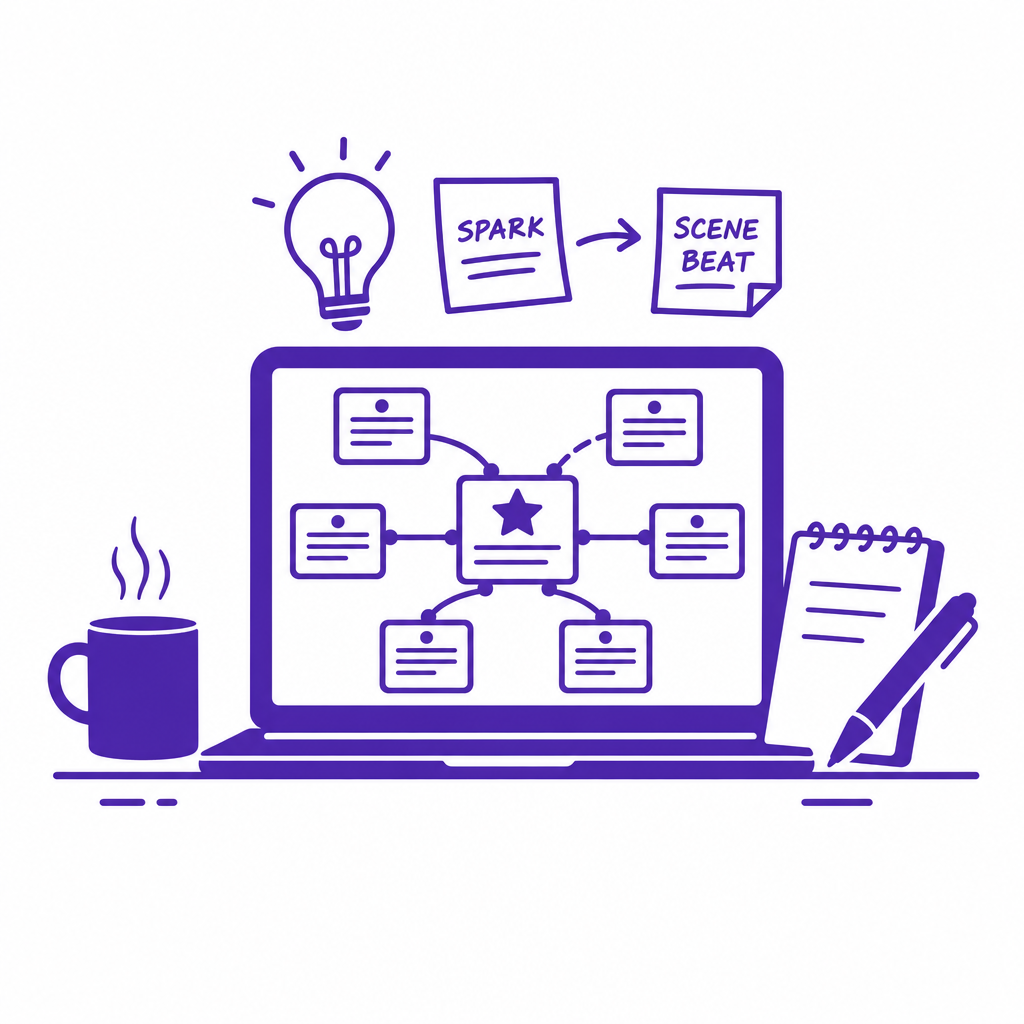
Harnessing the power of anecdotes is essential for writers aiming to craft engaging stories. This article explores how Plotlyn's innovative, node-based system allows authors to expand their fleeting ideas into rich scenes and structured story beats. Discover how to effectively transform your creative sparks into a coherent narrative flow.
The Power of Anecdotes in Storytelling
The power of anecdotes in storytelling lies in their ability to forge a deep connection between the writer and the reader. Personal experiences, often steeped in emotion, provide the foundational essence of a narrative, allowing audiences to see themselves within the story. Anecdotes serve as powerful catalysts, illustrating complex themes and character motivations in a relatable manner.
Literature is replete with examples of how anecdotes have shaped powerful narratives. For instance, in The Things They Carried, Tim O'Brien employs personal stories from his time in Vietnam to explore the burdens of war—not just physically, but emotionally. Each anecdote layers depth to his characters, allowing readers to empathize with their struggles. Similarly, in Fun Home, Alison Bechdel transforms familial anecdotes into poignant reflections on identity and sexuality, suggesting that even the smallest memories can resonate universally.
Such narratives enable writers to tap into shared human experiences, cultivating emotional resonance that enriches the reader's engagement. By embracing the anecdotal form, writers can unlock a wealth of thematic potential, laying the groundwork for scenes that are grounded in authenticity and impact. Through the lens of personal stories, the fabric of a compelling narrative begins to take shape.
Understanding the Node-Based System
Node-based writing represents a paradigm shift in the way stories are constructed and developed. At its core, Plotlyn's unique workflow empowers writers to visually organize their thoughts, making the creative process more fluid and intuitive. Instead of adhering to linear methods that often stifle creativity, writers can utilize nodes, each representing a distinct idea or element of their story.
Each node can encapsulate an anecdote, character trait, or plot point, allowing authors to create a dynamic web of interconnected concepts. This organization provides a clear visual representation of how individual anecdotes can intertwine and evolve into rich scene writing. By connecting nodes, writers can explore variations and hierarchies of ideas, making it easier to identify thematic threads that bind the narrative together.
As thoughts shift and new ideas emerge, the node-based system allows for easy modifications. Writers can add, remove, or reposition nodes with a simple drag-and-drop maneuver, fostering a sense of freedom in the creative process. This visual mapping encourages both brainstorming and structured outlining, guiding authors from initial inspiration through to the establishment of well-rounded scenes and engaging story beats.
Transforming Ideas into Structured Narratives
Transforming a simple anecdote into a structured narrative component requires a deliberate approach rooted in conflict, character, and plot progression. Begin with the raw idea at the core of your anecdote—this is the spark that ignites the creative process. Use Plotlyn's node-based system to expand that idea into individual story beats that explore the nuances of character motivations and the thematic undercurrents of your narrative.
First, identify the central conflict in your anecdote. What stakes are involved? Define your characters clearly; fully fleshed personalities allow for richer scenes. Create nodes for each character, outlining their desires, fears, and transitions throughout the story. This setup not only brings depth but also facilitates natural character development that can intersect with the anecdote's core conflict.
As you progress, consider the physical and emotional journey characters must undertake. Lay out nodes that represent significant turning points, ensuring that each story beat builds upon the last, leading to a dynamic plot progression. This allows you to see potential gaps in the narrative flow and enhance transitions.
Through Plotlyn's visual mapping, the once fleeting idea evolves into a structured framework, guiding you toward crafting engaging, meaningful scenes that resonate with readers.
Creating Compelling Scenes with Plotlyn
Utilizing Plotlyn's node-based system empowers writers to dive deeper into the art of scene creation, transforming loose anecdotes into dynamic moments brimming with depth. The workflow begins by breaking down each scene into distinct layers using nodes, allowing for meticulous outline organization. Each layer can represent crucial aspects—setting, character motivations, conflicts, and resolutions—ensuring that nothing essential is overlooked.
To enhance character interactions, writers can use nodes to track relationships and dialogues, exploring how characters respond to one another and evolve as the plot unfolds. This approach encourages a natural flow that resonates with readers, as it reflects the complexity of human interactions.
Moreover, building tension within scenes can be achieved by layering conflict nodes. Writers can develop escalating stakes by connecting scenes that map out potential crises or setbacks, creating a palpable sense of urgency.
Ultimately, by leveraging the specificity of Plotlyn's node system, writers can seamlessly intertwine these elements, crafting scenes that not only engage but also drive the narrative forward—setting the stage for a satisfying flow that maintains reader investment.
The Revision Process: Refining Your Draft
Revision is an essential phase of the writing process, allowing writers to fine-tune their narratives and enhance their impact. With Plotlyn's node-based system, you can deeply engage with your draft, streamlining your approach to revision. To refine your scenes, focus first on pacing. Plotlyn enables you to rearrange nodes, helping you visualize the flow of your narrative, ensuring that tension builds appropriately and that key moments resonate with emotional weight.
Next, examine coherence. Utilize Plotlyn's visual connections to track thematic threads and character arcs, allowing you to identify inconsistencies or areas that require further development. By linking nodes focusing on specific characters or plot lines, you can maintain logical continuity and deepen character motivation.
Also, embrace feedback as a critical component of this process. Share your Plotlyn nodes with writing peers or beta readers, encouraging them to comment directly on the structured components. This collaborative feedback can reveal insights you may have overlooked, propelling your narrative toward greater clarity and impact.
Ultimately, revising your draft in Plotlyn should be an iterative journey, empowering you to transform your initial ideas into a compelling, polished narrative that resonates with your audience.
Completing Your Manuscript and Beyond
Completing your manuscript demands a strategic approach, particularly when utilizing Plotlyn’s dynamic node-based system. After refining your draft, the next step is to translate your interconnected nodes into a cohesive manuscript. Begin this journey by activating the export functionality within Plotlyn, which allows you to compile scenes, beats, and unique anecdotes seamlessly into a structured document.
As you prepare to finalize your manuscript, keep specific formatting and submission guidelines in mind. Review standard practices for manuscript submissions, including font sizes, margins, and spacing. Each genre may have its own idiosyncrasies, so ensure your document aligns with expectations typical in your chosen category.
Once you have exported your nodes into a unified format, consider next steps carefully. Will you pursue traditional publishing, or perhaps self-publishing? If you opt for the former, research potential agents and their submission preferences. Create tailored query letters that highlight your unique story arc developed through Plotlyn. Embrace each stage of the completion process as an opportunity to reinforce your narrative’s strengths and deliver a manuscript that reflects your voice and vision.
Conclusions
In conclusion, Plotlyn offers an empowering framework for writers to take their inspiring anecdotes and weave them into structured narratives. By utilizing its node-based approach, authors can navigate the complexities of storytelling more effectively, ensuring their ideas evolve into fully realized scenes that resonate with readers. Embrace this creative process to enhance your storytelling journey.