
Mapping the Emotional Landscape: Structuring Dynamic Character Arcs and Emotional Beats with Plotlyn
Go beyond basic character arcs. Learn how to use Plotlyn's node-based system to meticulously map the ebb and flow of emotions within your story, from individual scene beats to overarching character transformations. Discover techniques for visualizing internal conflict, charting emotional cause-and-effect, and ensuring your characters' emotional journeys resonate deeply with readers.
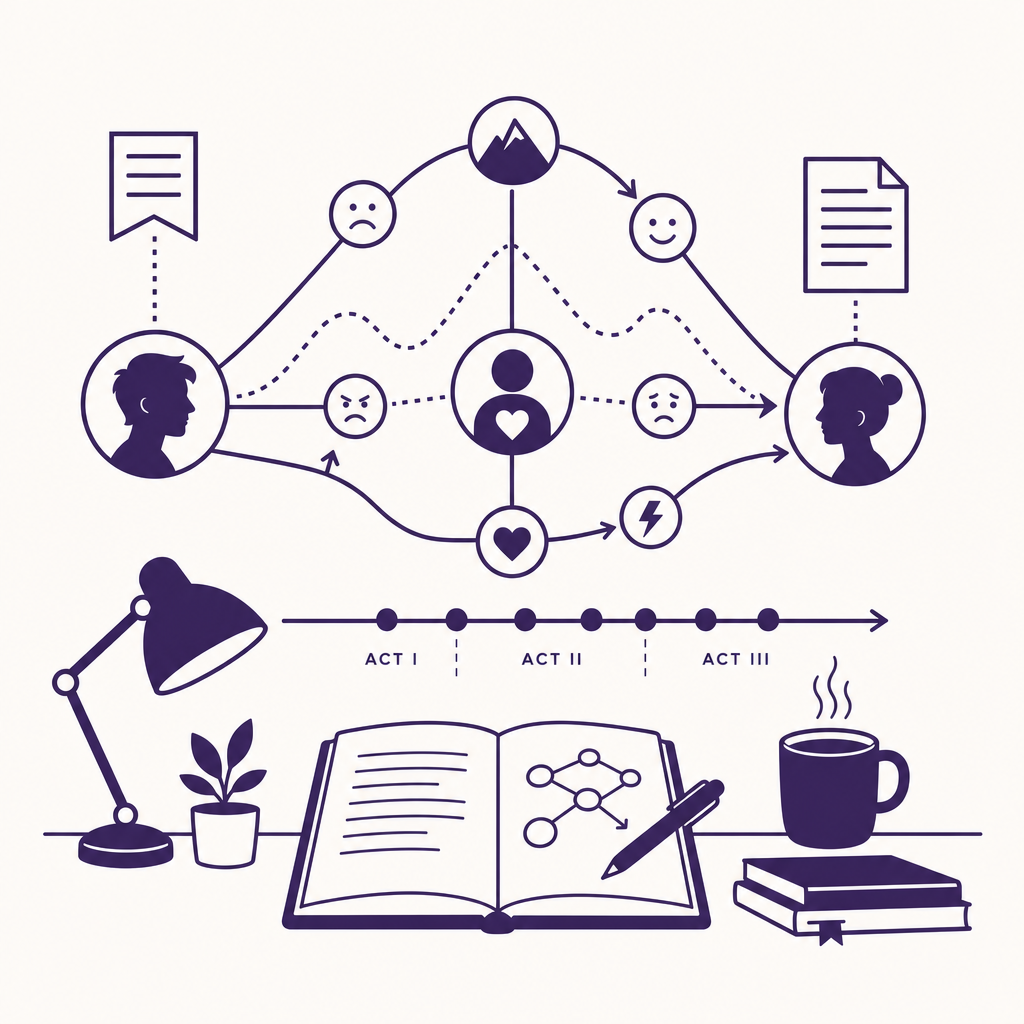
Understanding emotional arcs and character development is crucial for writers. This article explores how to leverage Plotlyn's node-based system to map emotional beats, navigate internal conflict, and strengthen story structure, enriching your narrative. Whether you are drafting or revising, these techniques will enhance your characters' journeys, ensuring they engage deeply with readers.
Understanding Emotional Arcs
Understanding emotional arcs is crucial for character development and enhances narrative structure in meaningful ways. An emotional arc encapsulates the journey a character undergoes, capturing the transformation of their feelings throughout the story. It can be categorized into three primary types: positive arcs, where characters grow and evolve; negative arcs, where characters decline or regress; and flat arcs, where characters remain unchanged but influence others around them.
Consider the positive emotional arc of Elizabeth Bennet in "Pride and Prejudice," who overcomes her prejudices and learns to embrace love. In contrast, Walter White from "Breaking Bad" exemplifies a negative arc, as his descent into criminality leads to tragic consequences for himself and those close to him. Flat arcs, like that of Indiana Jones in "Raiders of the Lost Ark," showcase a character whose core traits remain constant, affecting a world full of change.
These emotional arcs are vital for engaging readers, as they create empathy and investment. When readers witness a character's internal struggles and growth, it deepens their emotional experience, allowing the narrative to resonate profoundly. An effective emotional arc not only complements the plot but serves as the backbone of memorable storytelling.
Mapping Character Development with Plotlyn
Using Plotlyn to map character development alongside emotional arcs provides writers with a powerful tool for enhancing their stories. A visual representation of character journeys can clarify the complex interplay between emotional beats and character growth, allowing for greater organization and insight into narrative structure.
To begin utilizing Plotlyn for this purpose, start by creating nodes for each character. Within these nodes, outline key emotional beats aligned with significant plot points. For instance, when a character faces a turning point, map the corresponding shift in their emotions—be it joy, sorrow, or rage. This connection fosters a deeper understanding of how certain events catalyze emotional evolution.
Next, employ Plotlyn's branching system to illustrate character relationships and their influence on emotional arcs. By visually tracing how one character’s journey impacts another’s, you can create a dynamic web of interrelations that enriches the narrative tapestry.
As you work within Plotlyn, regularly revisit and adjust your nodes to reflect changes in the plot or character development. This iterative approach ensures your characters remain authentic and their emotional journeys resonate with readers, enhancing narrative depth and engagement.
Exploring Internal Conflict
Internal conflict serves as a catalyst for emotional arcs and character development, often illuminating the complexities of human nature. While external events can push characters into challenging situations, it’s their internal struggles—fear, doubt, guilt—that truly shape their emotional journeys. Using Plotlyn, writers can visualize these multifaceted conflicts by mapping emotional triggers alongside pivotal story events.
When a character faces an external challenge, such as a betrayal or loss, it can unveil deep-seated insecurities or desires. For example, if a protagonist must confront an antagonist, their fear of inadequacy might surface, creating a powerful internal conflict. Plotlyn’s node-based system allows writers to establish connections between these external triggers and the ensuing internal struggles, charting the trajectory of the character’s emotional landscape.
To enhance emotional arcs, focus on identifying key internal conflicts and visualizing them through Plotlyn. Use color coding to differentiate types of conflict—self-doubt, yearning, or moral dilemmas—and create nodes that represent moments of realization or change. This mapping technique not only helps clarify a character’s journey but also deepens reader connection, allowing them to empathize with the character’s evolving emotional state.
Crafting Emotional Beats
Emotional beats serve as crucial punctuation points in storytelling, intricately woven into character arcs to shape the reader's emotional experience. These moments encapsulate feelings and reactions that resonate deeply with the audience, allowing them to connect with characters on a visceral level. By identifying core emotional beats, writers can elevate their narratives, ensuring that each beat corresponds meaningfully with the character's transformation.
Using Plotlyn's node-based system, writers can map emotional beats alongside corresponding scenes, establishing a visual representation of emotional highs and lows. For instance, in The Great Gatsby, Jay Gatsby's moment of revelation when he realizes Daisy will never be his captures profound despair; this emotional beat propels Gatsby into a downward spiral. In film, consider the poignant scene in The Pursuit of Happyness where Chris Gardner's moment of triumph resonates as he secures a job—proof of perseverance amid adversity.
By isolating and visualizing these beats within Plotlyn, writers can ensure each character's journey is rich with emotional depth, providing a roadmap not only for character development but for how these emotions influence the overall narrative arc. This strategic approach allows for the seamless integration of emotional turmoil and moments of clarity, thereby enriching the reader's engagement.
Charting Cause-and-Effect Relationships
Understanding the intricate cause-and-effect relationships between emotional beats and character decisions is vital for weaving a compelling narrative. Characters, shaped by their feelings, make choices that propel the story forward, affecting not only their trajectory but the entire narrative structure. Using Plotlyn’s node-based system, writers can visualize these dynamics, creating a comprehensive emotional map of their characters' journeys.
To begin charting these relationships, identify key emotional beats that influence your character's decisions. Create nodes for each beat, linking them to specific choices made by the character. For instance, a moment of profound sadness can lead to impulsive, reckless decisions, while a sense of hope may spur proactive steps toward personal growth. By illustrating these connections, you can clearly see how emotions shape actions and steer the plot.
Technique-wise, consider employing color-coded nodes to represent different emotional states, enhancing your understanding of their interplay. Mapping these complex dynamics not only clarifies character motivations but also illuminates potential internal conflicts. As you build your emotional arc, maintain focus on how decisions stem from the emotional landscape you've crafted, ensuring each choice aligns with the character’s evolving state. This thorough exploration deepens character development and enriches your overall story structure.
Ensuring Resonance with Readers
Ensuring that your characters' emotional journeys resonate deeply with readers is essential for creating impactful stories. As writers, we must carefully revise and refine emotional arcs and beats using Plotlyn to ensure authenticity and depth.
Start by analyzing your character's emotional experiences against the backdrop of their internal conflicts. Use Plotlyn's node-based system to visualize these struggles alongside the story structure, identifying moments where characters fluctuate between states. Ask yourself: How does a particular emotional beat influence the character's decisions? Are there inconsistencies in their reactions that may alienate your audience?
When revising, compare emotional arcs across different scenes, ensuring each beat serves a purpose in the character's overall transformation. Create feedback loops within Plotlyn that highlight emotional consequences stemming from a character’s choices. For instance, if a character makes a pivotal decision, does the subsequent emotional fallout feel authentic and earned?
Consider employing reader feedback to gauge emotional resonance. Host readings or workshops, paying close attention to audience reactions at key emotional beats. This approach can guide you in fine-tuning arcs and enhancing relatability, ensuring that your characters' emotional journeys feel both genuine and impactful throughout the narrative.
Conclusions
In summary, effectively mapping emotional arcs through Plotlyn's unique workflow fosters deeper character development and enhances storytelling. By integrating emotional beats with structured arcs, writers can create resonant narratives. Embrace these techniques to elevate your characters' journeys and captivate your audience, enhancing the emotional impact of your stories.