
Mastering Narrative Perspective: Structuring Point of View Shifts and Deep Immersion with Plotlyn
Explore how Plotlyn's node-based canvases empower authors to strategically plan and execute narrative point of view (POV) — from managing multiple character perspectives across chapters to diving deep into a single character's consciousness within a scene, ensuring consistency and maximizing reader immersion.
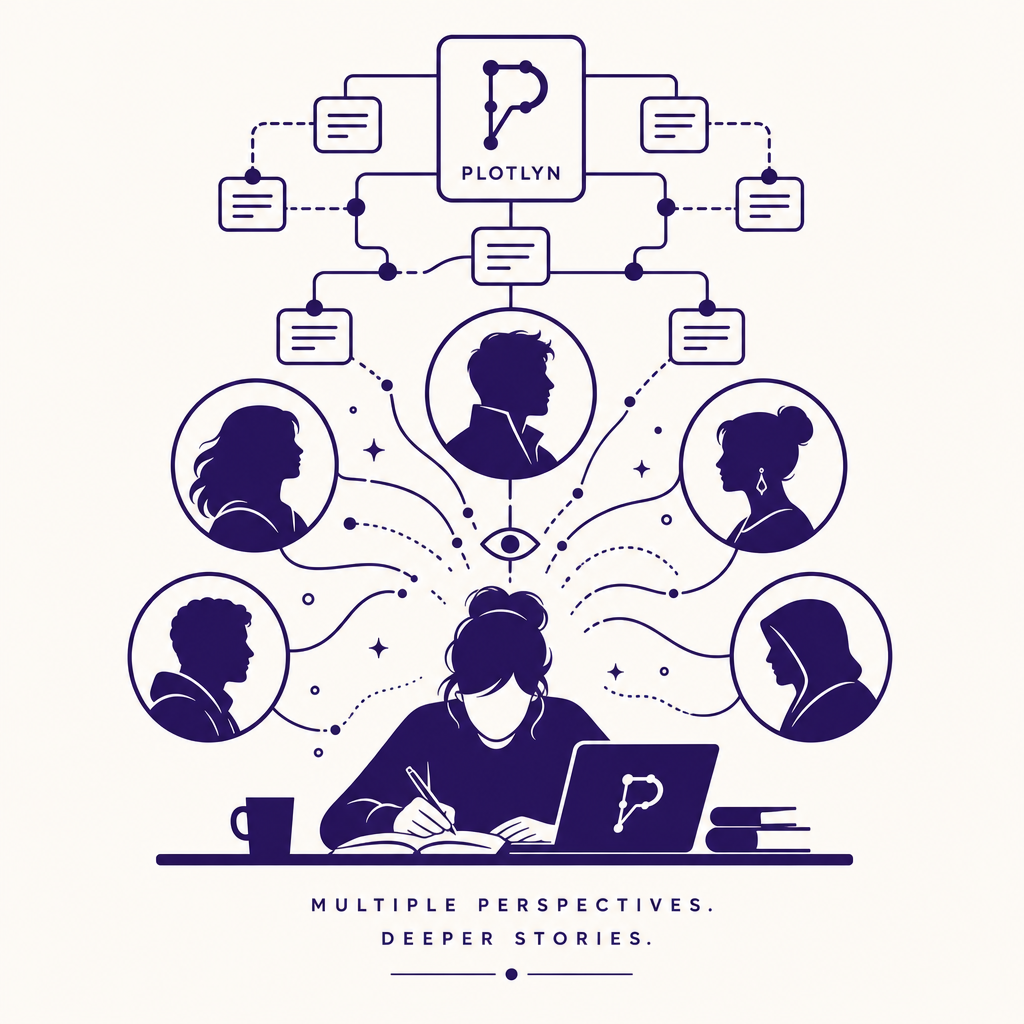
In crafting compelling narratives, the choice of narrative perspective is vital. This article delves into how authors can leverage Plotlyn's unique design to map out point of view shifts effectively. By exploring multiple perspectives and deep immersion strategies, writers can enhance reader engagement and maintain consistency, leading to a more immersive storytelling experience.
Understanding Point of View in Storytelling
Understanding Point of View in Storytelling
Point of view (POV) is the lens through which readers experience a story, dramatically influencing emotional engagement and character development. The three primary perspectives—first-person, second-person, and third-person—each offer unique advantages and constraints.
In first-person narration, the storyteller becomes an active participant, using "I" and allowing readers intimate access to personal thoughts and feelings. This perspective fosters a deep emotional connection, as seen in classics like "The Catcher in the Rye" by J.D. Salinger, where Holden Caulfield's subjective experience draws readers into his turbulent psyche.
Second-person perspective, though rarer, utilizes "you" to immerse readers directly into the narrative. This creates an engaging immediacy, as exemplified by "Bright Lights, Big City" by Jay McInerney. Readers feel as if they are living the story, heightening involvement but also demanding a strong narrative voice to maintain effectiveness.
Lastly, the third-person view can be either limited or omniscient, offering a broader narrative scope. For instance, in "Pride and Prejudice," Jane Austen alternates between characters, allowing insights from multiple perspectives. This flexibility can enhance the overall richness of the story, but requires careful management to maintain coherence.
Ultimately, the choice of POV shapes not only the story's voice but also the reader's experience, calling for strategic planning in authorship to maximize narrative impact.
The Benefits of Deep POV
Deep point of view (POV) transcends traditional narrative perspectives, allowing readers to immerse themselves in a character’s internal world. In contrast to the more detached styles of third-person limited or even first-person, deep POV eliminates the narrative filter, presenting thoughts and emotions directly through the character's lens. This technique fosters an intimate connection between the reader and the character, transforming passive observation into active participation in the character's experience.
When employing deep POV, writers should focus on immersive language and sensory details to create vivid imagery. Instead of stating "She felt scared," engage the reader with, "A tightness gripped her chest, and shadows danced at the edges of her vision." This approach grounds the reader in the character's reality, amplifying emotional resonance.
To effectively harness deep POV, it’s crucial to:
- Limit exposition: Avoid telling readers what characters are feeling; show it through their reactions and thoughts.
- Use active verbs: Choose dynamic verbs that evoke strong imagery, enriching the narrative.
- Immerse in sensory details: Describe sights, sounds, textures, and smells to fully encapsulate the character's experience.
By mastering deep POV, writers create a powerful connection that can elevate narrative impact and deepen reader engagement.
Strategically Planning Multiple Perspectives
Strategically managing multiple perspectives within a narrative can elevate a story's complexity and emotional impact. To choose which character's viewpoint to highlight, consider their relevance to the plot and emotional stakes in each chapter or scene. A thorough understanding of each character's motivations can guide these choices. For example, pivotal moments may benefit from a shift to a character whose internal struggle aligns with the chapter's conflict.
Using Plotlyn's node-based canvas allows authors to visually map out these perspective shifts. Start by creating nodes for each character's viewpoint and linking them to the scenes they’ll cover. This visual representation aids in ensuring distinct voices; consider using color codes or symbols to differentiate perspectives.
Additionally, frameworks like the Three-Act Structure can be employed within your nodes. Act One may establish multiple viewpoints, Act Two deepens conflict through specific character lenses, and Act Three can either converge those perspectives or create powerful contrasts. This approach guarantees coherence while enhancing narrative depth, allowing readers to engage with multiple angles of the story, ultimately fostering a richer, more immersive experience.
Integrating Narrative Perspective into Scene Structure
Integrating narrative perspective into individual scene structure requires a careful balance of POV choices that influence pacing, tension, and emotional resonance. When selecting a perspective for a scene, consider how deeply you wish to delve into a character's consciousness—this is the essence of Deep POV. By deeply inhabiting a character's thoughts and sensations, you can create a more immersive experience for the reader, allowing them to feel the character's emotions and reactions in real-time.
Utilizing Plotlyn’s node-based canvases, authors can map out scenes to strategically visualize perspective shifts. Each node can represent a character’s viewpoint, allowing you to plan how their unique voice will shape the story’s flow. Maintaining consistency within a scene is crucial; abrupt shifts can jolt readers out of the experience and disrupt the intended tension.
By organizing scene elements effectively in Plotlyn, authors can track pacing and emotional beats, ensuring that perspective changes enhance rather than detract from the unfolding narrative. This structure aids in crafting scenes where every emotional nuance resonates, tapping into the full potential of character immersion while keeping the reader engaged.
Maintaining Consistency Across Chapters
Maintaining consistency in narrative perspective across chapters is crucial for cohesive storytelling. When shifting between multiple POVs, writers often stumble over common pitfalls like abrupt transitions or inconsistent character voices. To avoid these missteps, it’s essential to establish clear guidelines for each character's perspective. Define their unique traits, motivations, and narrative styles in advance, allowing readers to navigate smoothly between different voices.
Using Plotlyn’s node-based approach, authors can visualize character arcs and track their emotional journeys across multiple chapters. This enables you to maintain coherence in character development, ensuring that each shift in POV aligns with the overarching plot and character growth. Create nodes for each character's perspective, linking them to key plot points and themes.
Additionally, consider employing a consistent structuring technique, such as alternating chapters dedicated to different characters. This not only enhances clarity but also reinforces their individual arcs. Regularly revisiting your nodes helps identify any inconsistencies or deviations in voice, allowing for seamless revisions. This meticulous approach fosters deeper character immersion and enriches the narrative experience for readers.
Bringing it All Together: Finalizing Your Manuscript
As you approach the final stages of your manuscript, the revision process becomes paramount, particularly concerning narrative perspectives. The key to a polished narrative lies in the meticulous refinement of your chosen POV. By utilizing the insights gathered throughout your writing journey, you can ensure that each shift in perspective serves a purpose, enhancing the story rather than confusing your readers.
The beauty of Plotlyn’s node-based canvases is their ability to allow for a comprehensive view of your narrative structure. Take this opportunity to analyze your POV shifts; ensure that they align with the psychological depth you wish to convey. Focus on deep POV techniques to fully immerse readers in the consciousness of your characters, maintaining a vivid connection between them and the narrative.
As you evaluate your manuscript, consider the following points:
- Consistency: Do all character perspectives maintain their unique voices and arcs throughout the story?
- Clarity: Are POV transitions clear and purposeful, avoiding disorientation for your readers?
- Immersion: Are you effectively employing deep POV to create emotional resonance and investment?
Finally, leverage Plotlyn’s capabilities for drafting and exporting your manuscript. With an organized approach to narrative perspectives, you can elevate your story, leading your readers to experience an engaging and cohesive journey.
Conclusions
Mastering narrative perspective is a crucial element for successful storytelling. Utilizing Plotlyn's node-based system allows authors to visualize and organize points of view seamlessly, ensuring depth and cohesion. By bringing character perspectives to the forefront, writers can create emotionally resonant stories that captivate readers from start to finish.