
Mastering the Hook: Structuring Unforgettable Novel Openings with Plotlyn
The first pages of your novel are make-or-break. Discover how Plotlyn's node-based canvases and flexible outlining tools empower you to plan, draft, and refine compelling openings that grab readers from the very first sentence and set the stage for your entire story. Learn strategies for crafting inciting incidents, establishing character, setting the tone, and introducing your world effectively.
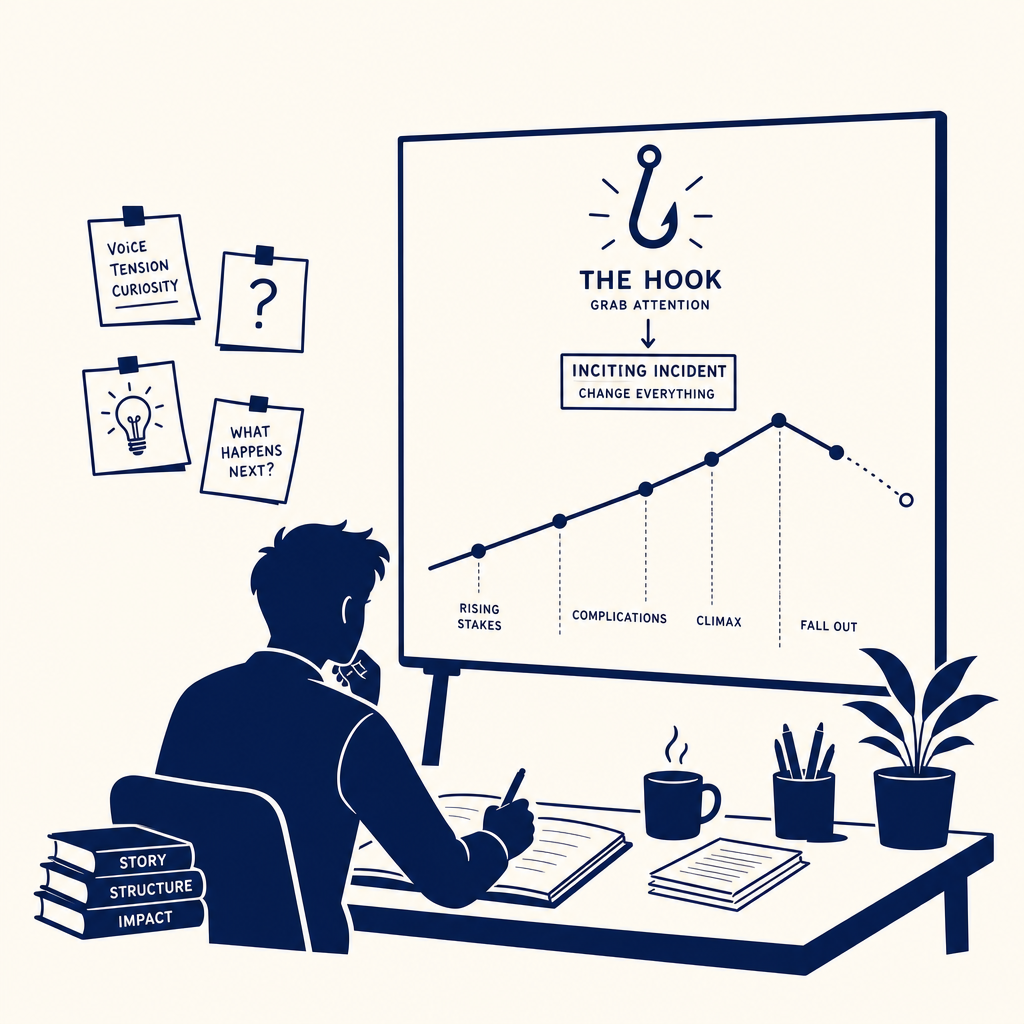
The opening of your novel serves as the gateway into your story, gripping readers from the first word. In this article, we will explore essential strategies for crafting unforgettable openings, focusing on effective hooks, inciting incidents, and the structure that supports a compelling introduction. Using Plotlyn’s innovative tools, you can streamline your writing process and create an engaging start to your narrative.
Understanding the Importance of a Strong Hook
A strong hook is essential for any novel, as it serves to immediately engage readers and draw them into the narrative. A hook can take several forms, including questions that intrigue, bold statements that provoke thought, or character revelations that spark curiosity. These variations effectively tap into human emotion and desire for resolution, prompting readers to want to know more.
For instance, the opening line of "Moby Dick" — "Call me Ishmael" — is a masterclass in simplicity and intrigue. It beckons the reader to wonder who Ishmael is and what story he has to share. Similarly, in "1984," George Orwell's subtle yet impactful opening, “It was a bright cold day in April, and the clocks were striking thirteen,” sets an eerie tone that piques curiosity about the world the characters inhabit.
These successful hooks share a common thread: they raise questions or create a sense of urgency that compels readers to keep turning the pages. By creating a deep emotional connection right from the start, authors ensure that their readers are invested in the unfolding story. This investment is crucial, as it sets the foundation for the entire narrative journey.
Crafting the Perfect Inciting Incident
An inciting incident is the crucial event in a narrative that sets the protagonist on a journey, disrupting their ordinary life and propelling the story forward. It’s the catalyst that introduces conflict and raises the stakes, ensuring that readers are not just interested, but invested in what will happen next. A well-crafted inciting incident can create an urgency that compels the audience to read on, eager to know how the characters will navigate this newfound challenge.
Consider The Hunger Games by Suzanne Collins, where the inciting incident occurs when Katniss volunteers to take her sister's place in the deadly games. This moment not only establishes the stakes—a fight for survival—but also offers insight into her character's bravery and selflessness. The reader immediately understands that Katniss's world will never be the same, laying the groundwork for dramatic tension.
Similarly, in The Great Gatsby, when Nick Carraway witnesses the green light across the bay, it serves as an inciting incident that ignites his fascination with Gatsby, propelling the narrative into themes of desire and the American Dream. Crafting an impactful inciting incident early on is key in using Plotlyn’s structured workflow, as it enables writers to map out the web of conflicts and interactions that will keep readers engaged.
Establishing Character from the Start
The opening pages of your novel serve as the first impression for readers, and establishing character within these early moments is crucial. Characters should resonate deeply, igniting empathy before the plot unfolds. To achieve this, focus on three primary techniques: actions, dialogue, and internal thoughts.
Start with an action that reveals core traits. For example, if your protagonist is brave, showcase them confronting danger or standing up for someone in need. This immediate action cultivates relatability and stakes, aligning the reader’s emotional investment with your character’s journey.
Next, utilize dialogue strategically. Sharp, snappy exchanges can convey personality while providing glimpses into relationships and conflicts. For instance, a witty banter between two friends can highlight levity amidst tension, offering insight into their dynamic and the world they inhabit.
Finally, delve into internal thoughts to deepen connection. Let readers peek into your character’s hopes, fears, and motivations. This technique cultivates intimacy, encouraging readers to root for your character's success.
Balancing character development with plot progression is essential; every interaction should accelerate the narrative while enriching character depth. In these initial moments, you’re not just introducing a character but inviting readers into a journey where they will care about every twist and turn.
Setting the Tone and Atmosphere
The tone and atmosphere of your novel serve as the emotional landscape that invites readers into your story. From the very first line, the words you choose and the emotions they evoke can establish a sense of anticipation and engagement. Employing descriptive language is vital; it paints vivid pictures in the minds of your readers and sets the mood. Consider the power of sensory details—sight, sound, touch, smell, and taste—as they immerse readers in your world, making it palpable and alive.
For example, if your novel opens with a chilling, solitary night, phrases like "the wind howled like a tortured soul" or "the shadows clung to the corners of the darkened room" can evoke a sense of foreboding. Such language doesn't just describe a scene; it creates an emotional response, shaping reader expectations of tension and unease. Conversely, a whimsical tale may start with "the sun danced atop the flowers as laughter twirled in the breeze," setting an entirely different tone of lightness and joy.
Effective mood-setting is crucial as it establishes a consistent emotional thread throughout your narrative. By aligning your tone with the unfolding events, you enhance reader engagement, creating a connection that compels them to linger and discover what unfolds next.
Introducing Your World Effectively
World-building in the opening of your novel is crucial for immersing readers without overwhelming them. To achieve this balance, consider integrating critical information about your setting seamlessly into the narrative. A successful opener introduces the world through the lens of the protagonist’s experience, inviting readers to discover the rules and nuances organically.
For example, J.K. Rowling’s Harry Potter and the Philosopher's Stone opens with a focus on the Dursleys' mundane life, subtly introducing readers to the magical world through the odd occurrences that happen around them. This juxtaposition creates curiosity while grounding readers in a relatable reality.
Another effective strategy is to use sensory details to evoke the atmosphere of your world. In The Night Circus by Erin Morgenstern, the sensory experiences of sight, sound, and touch draw readers into the enchanting experience of the circus, hinting at its magical nature without excessive exposition.
Lastly, consider starting with an action or dialogue that hints at world-specific conflicts or norms. This not only establishes your setting but also presents an inciting incident, sparking intrigue and engaging readers from the very first moment. Through these strategies, your novel’s opening can effectively captivate while laying the groundwork for the unfolding story.
The Plotlyn Workflow for Crafting Unforgettable Openings
Using Plotlyn to craft unforgettable openings begins with its unique node-based workflow, which provides a flexible and visual means for writers to organize their thoughts and ideas. Each node in Plotlyn can represent key elements of your opening, such as character introductions, the inciting incident, or pivotal world details. This method allows you to easily manipulate components of your narrative, making it simpler to see how they connect and evolve.
To begin, consider creating a dedicated canvas for your novel’s opening. Break down the components of your first pages: who your protagonist is, what the inciting incident will be, and where the story is set. Use connecting lines between nodes to map out the dynamic relationships between these elements. As you draft, link relevant thoughts or scenes directly to corresponding nodes, which streamlines the revision process.
Practical tips for maximizing Plotlyn include color-coding nodes for clarity—perhaps using one color for characters and another for events—and utilizing the outlining tool to prioritize your scenes. This helps to maintain focus on the most essential elements that will hook readers from the start while ensuring your opening remains clear and compelling.
Conclusions
In summary, an unforgettable novel opening is pivotal to capturing your audience's attention. By leveraging the strategies discussed, alongside Plotlyn's user-friendly tools, writers can refine their first pages for maximum impact. Remember, your novel's opening sets the tone for the entire journey—make it count!