Micro-Drafting, Macro-Progress: Maximizing Your Writing Output with Plotlyn's Focused Nodes
Explore strategies for high-output writing, even with limited time, by leveraging Plotlyn's node-based system. Learn how to break down your manuscript into manageable 'micro-drafting' sessions, maintain momentum, and connect disparate ideas on your canvas to achieve significant progress on your long-form project.
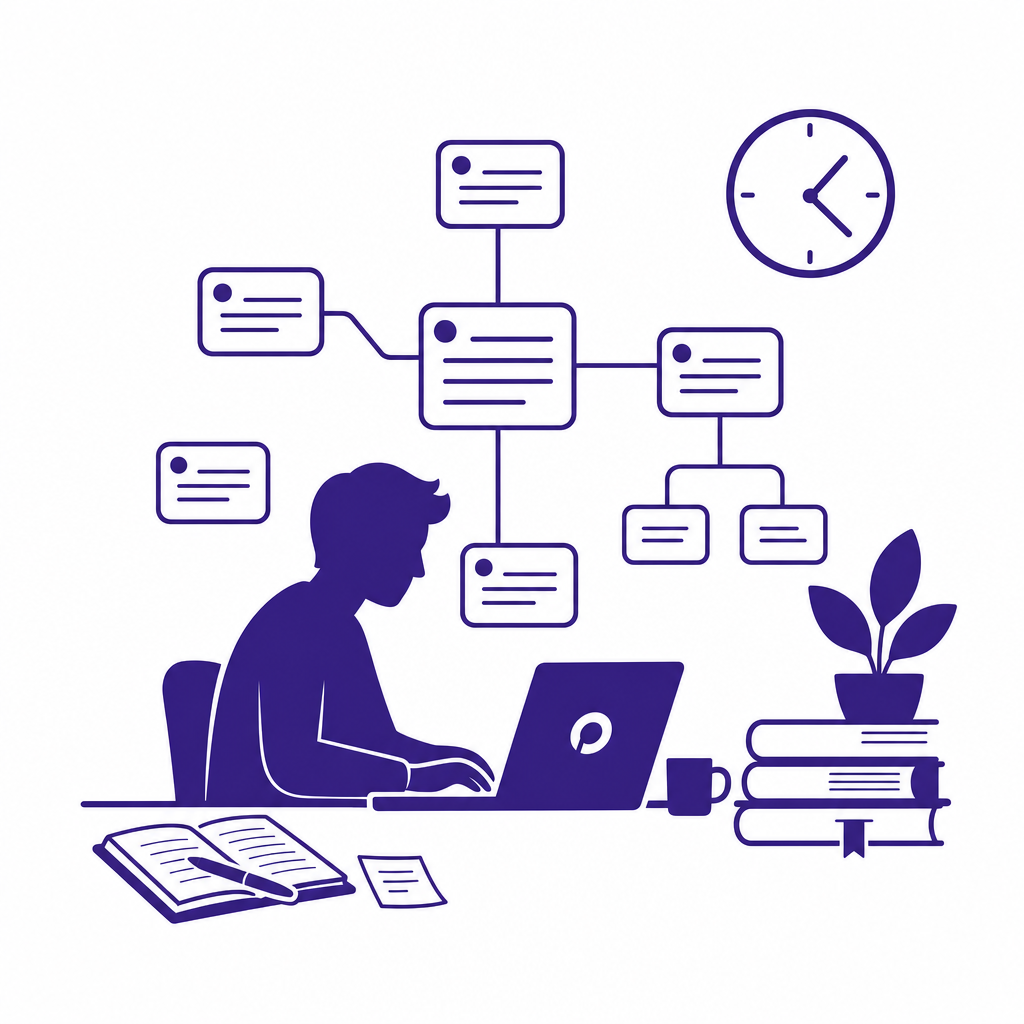
In today's fast-paced world, writers often struggle to find time for their creative projects. This article will explore effective strategies for maximizing writing output using Plotlyn's unique node-based system. By embracing micro-drafting and focused writing practices, you can break down your manuscript into manageable components, maintain momentum, and achieve remarkable progress on your long-form projects.
The Importance of Drafting Habits
Establishing consistent drafting habits is pivotal for any writer aiming to elevate their productivity and enhance their creative process. Drafting habits serve as the backbone of a sustainable writing routine, transforming the often overwhelming task of long-form writing into manageable micro-dursting sessions. A daily writing routine, whether it’s a set time each morning or a designated afternoon block, promotes discipline and motivates writers to engage with their projects regularly.
Setting specific, achievable goals, such as word counts or scene completions, can also significantly impact manuscript development and overall momentum. These small but consistent victories allow writers to track their progress and celebrate milestones, reinforcing a positive feedback loop that fuels creativity and dedication. Additionally, maintaining a focused writing environment, free from distractions, supports the cultivation of these habits, fostering a space where ideas can flourish.
Embracing varied approaches to drafting—such as free writing, structured outlines, or targeted revisions—can cater to different aspects of the creative process. Ultimately, nurturing consistent drafting habits not only streamlines workflow but also instills a sense of purpose, driving writers to forge ahead in their long-form projects with confidence and clarity.
Understanding Productivity in Writing
Understanding productivity in writing can be both subjective and multifaceted. In this context, productivity doesn’t merely equate to word count; it’s about completing meaningful progress on your long-form projects. Setting realistic output goals is crucial—consider how many words or pages you can achieve in a specific time frame without succumbing to burnout. Tracking writing sessions, whether through time logs or word count, helps you assess what works and what doesn’t.
Many successful writers advocate for clarity in their productivity definitions. For instance, author Anne Lamott emphasizes the importance of “bad first drafts,” focusing on the act of writing rather than perfection. Similarly, Neil Gaiman has often shared how he commits to writing consistently, regardless of the output quality, allowing for greater creative exploration.
Moreover, optimizing your writing environment plays a pivotal role in productivity. This means crafting a space that minimizes distractions and fosters creativity. Utilizing Plotlyn’s node-based system can aid in this effort, as it allows you to visualize and connect ideas flexibly, promoting a streamlined writing process. Ultimately, understanding productivity in writing is about fostering both the habit and the method that works best for you.
Creating an Efficient Writing Workflow
Creating an efficient writing workflow hinges on leveraging Plotlyn’s node-based system to maximize clarity and execution. By structuring your manuscript into visual segments, you can facilitate both your creativity and organization. Each node represents a specific idea, scene, or chapter, allowing you to break down your project into easily digestible elements.
To begin, outline your main themes and subplots, assigning each to different nodes. This helps establish a clear hierarchy of ideas, enabling you to connect disparate narratives without losing sight of their interrelation. As you draft, focus on one node at a time during your micro-drafting sessions. This focused writing approach allows for deeper exploration while maintaining momentum.
Visual mapping enhances clarity, making it easier to rearrange nodes as your vision evolves without the chaos often associated with traditional outlines. As you progress, track your productivity within each node, refining your workflow to identify which segments are most efficient for drafting.
Utilizing Plotlyn’s features promotes a disciplined yet flexible approach, setting the stage for significant progress on long-form projects through structured creativity and strategic organization.
Time Management for Writers
Time management is crucial for writers seeking to maximize their productivity, especially within the constraints of everyday life. One effective approach is the Pomodoro Technique, which encourages writers to work in short, focused bursts—typically 25 minutes—followed by a five-minute break. This method not only enhances concentration but also combats fatigue by ensuring regular intervals for rejuvenation.
Another powerful strategy is time blocking, where specific periods of your day are dedicated to writing. This can be visually represented on a calendar or planner, making it clear when writing takes precedence over other tasks. By reserving these blocks solely for writing, you eliminate the feel of being pulled in multiple directions.
Prioritizing your writing tasks is equally essential. Identify your most critical writing objectives and tackle those first when your energy levels are highest. Once you know what to prioritize, use Plotlyn’s node system to link these urgent tasks to their corresponding ideas and chapters, ensuring that each session remains meaningful and aligned with your larger project goals. Implementing these strategies allows writers to make the most of their limited writing time, creating significant progress without feeling overwhelmed.
The Power of Focused Writing Sessions
Focused writing sessions are instrumental in tackling long-form projects. In a world full of distractions, carving out time for undisturbed writing can yield remarkable results. Establishing focused writing sessions requires setting clear goals for each block of time. Specify what you wish to achieve—be it a word count, a paragraph, or developing a particular scene. This clarity can boost motivation and structure your efforts.
To further enhance productivity, eliminate distractions from your workspace. Turn off notifications, close irrelevant tabs, and consider using noise-canceling headphones to create an immersive environment. A clean, organized space can fuel your creativity and keep you centered on your writing.
Additionally, leveraging Plotlyn's node-based system can change how you approach these focused sessions. Create nodes for each writing goal and connect them to visualize your narrative structure. During sessions, concentrate solely on developing individual nodes, allowing unrelated thoughts to fade into the background. As you build your ideas in small increments, you maintain momentum, making significant strides in your overall project.
Ultimately, the discipline of focused writing not only enhances productivity but also nurtures a deeper engagement with your craft, allowing creativity to flourish even within time constraints.
Maximizing Plotlyn's Features for Your Writing Journey
To maximize Plotlyn's potential in your writing journey, it's crucial to harness its unique features. Begin by leveraging node connections, which allow you to visualize relationships between ideas. Each node acts as a micro-drafting session—focus on one thought, branch out to related ideas, and create a web of concepts that can transform your manuscript into a cohesive whole. This method eliminates the overwhelm of a blank page.
Use nesting canvases to segregate different segments of your project, whether they be chapters, character arcs, or thematic elements. This segmentation helps you allocate time more effectively, allowing you to dive deep into specific areas without losing sight of the larger picture.
Exporting capabilities in Plotlyn can streamline your drafting process. Whenever you finish a micro-draft, quickly export it into your preferred format for easy integration into your manuscript. This practice not only maintains momentum but also gives you a tangible output to assess after each focused writing session. By effectively combining these tools, you enhance project management and elevate your overall productivity while developing your long-form work.
Conclusions
As you implement the micro-drafting techniques and focused strategies discussed in this article, remember that consistent progress, even in small doses, leads to significant achievements. By utilizing Plotlyn's powerful tools, you can enhance your writing workflow, overcome time constraints, and ultimately bring your manuscript to completion with confidence.