
Smooth Transitions, Seamless Narratives - Using Plotlyn to Eliminate Choppy Storytelling
Many authors struggle with a story feeling disjointed or choppy, even when the plot beats are present. This article will show Plotlyn users how to leverage node-based planning and nested canvases to analyze pacing, identify transition gaps, and restructure scenes for a smooth, cohesive narrative flow that keeps readers immersed.
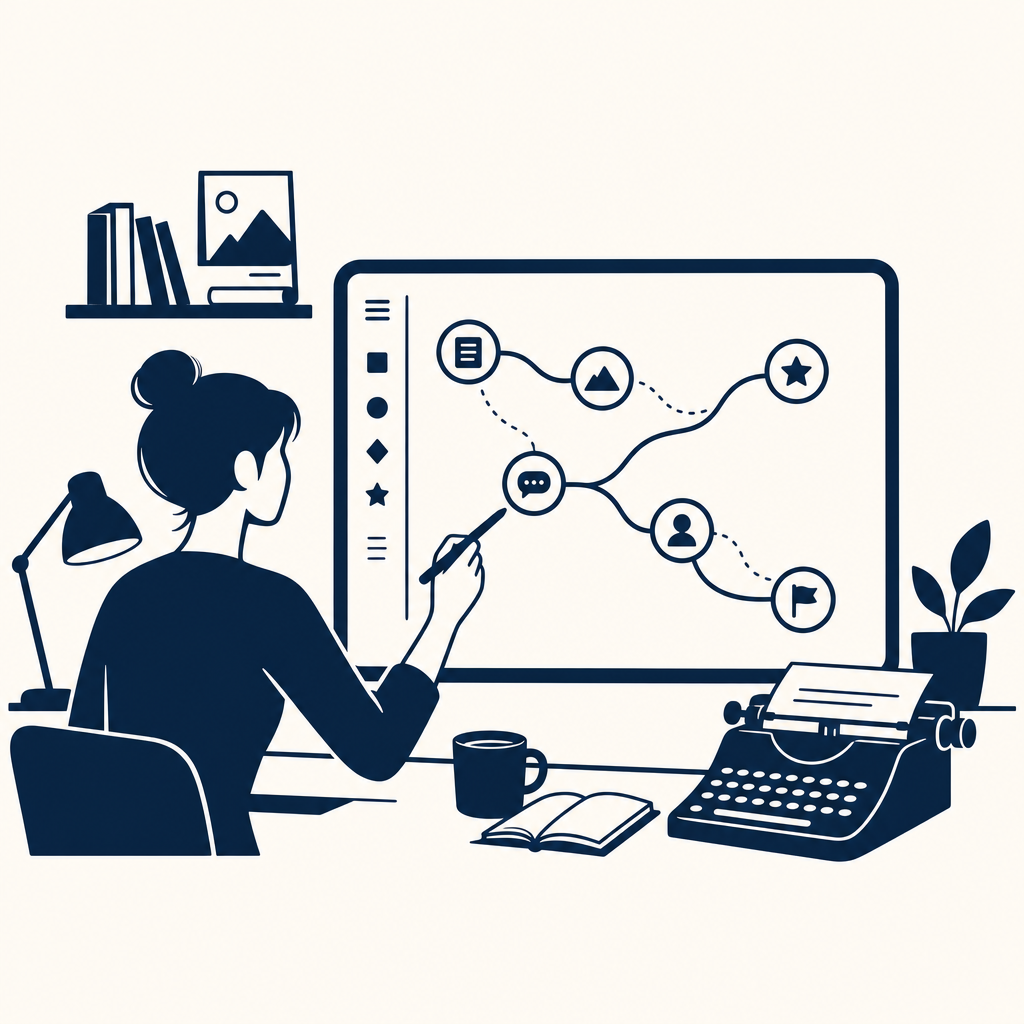
Crafting a narrative that flows seamlessly is an essential skill for any writer. Many authors face the challenge of disjointed storytelling, even amidst well-planned plot points. This article will explore how Plotlyn can empower writers to improve pacing and transitions, ultimately fostering a smoother narrative that captivates readers from start to finish.
Understanding Narrative Flow
Understanding narrative flow in storytelling is fundamental for creating a compelling and immersive experience for readers. A fluid narrative allows readers to easily follow the story, while a choppy narrative disrupts engagement and pulls them out of the experience. Key elements contributing to narrative flow include pacing, character development, and thematic coherence.
Pacing plays a crucial role: when a story moves too quickly, readers may feel disoriented or overwhelmed, but when it drags, they risk losing interest. Character development also affects flow; well-developed characters with clear motivations allow for smoother transitions as readers can understand their actions and decisions. Lastly, thematic coherence ties scenes together, creating a consistent thread that enhances reader immersion.
Examples from literature illustrate this concept well. In "The Great Gatsby," Fitzgerald masterfully blends atmospheric detail and character insight, resulting in a fluid narrative that captures attention. Conversely, some novels fail to maintain flow, leading to disjointed storytelling. For instance, sections of "The Hobbit" feel disjointed due to irregular pacing and shifts from action to exposition that can disrupt immersion. By focusing on these elements, writers can refine their narrative flow for a more impactful reader experience.
The Importance of Pacing
Pacing plays a crucial role in maintaining reader engagement and momentum throughout a narrative. When pacing is handled effectively, it can propel the story forward, drawing readers deeper into the world you've created. A well-paced narrative balances action and reflection, allowing readers to absorb significant events while maintaining a sense of urgency. If either element is neglected, the story may feel uneven, leading to a choppy reading experience that can disengage the audience.
To manage pacing, authors can modify sentence structure—short, punchy sentences heighten tension during action scenes, while longer, more complex sentences can slow down the narrative for introspection. Scene length also influences pacing; brief scenes can accelerate the rhythm, while extended scenes offer space for character development and thematic exploration. The distribution of action versus reflection is key; too much action can overwhelm, while excessive reflection can bring momentum to a halt.
Using Plotlyn's node-based planning allows writers to visualize pacing across scenes and chapters. By analyzing node lengths and adjusting their content, authors can identify pacing gaps and restructure scenes to achieve a balanced flow. This structured approach leads to a smoother narrative that keeps readers enthralled from beginning to end.
Crafting Effective Transitions
Crafting effective transitions is vital for maintaining a fluid narrative and ensuring reader comprehension. Transitions serve as connective tissue between scenes and chapters, facilitating movement through your story. There are different types of transitions, including literal, thematic, and temporal transitions, each playing a distinct role in guiding readers.
- Literal transitions help in smooth geographical or situational shifts, ensuring the reader easily follows the characters as they navigate new settings.
- Thematic transitions reinforce the emotional or intellectual threads weaving through your narrative, enriching the reader’s understanding of underlying motifs.
- Temporal transitions indicate shifts in time, allowing readers to adjust their perception of the story's timeline without confusion.
Utilizing Plotlyn's node-based structure, authors can visualize their narrative's flow, identifying potential rupture points where transitions may falter. By creating nested canvases for each scene, writers can plan and refine transitions strategically. For example, if a scene ends with tension and the next begins in a calm setting, incorporating a thematic transition that mirrors emotional resonance can preserve reader engagement. By considering and experimenting with various transition types, authors can ensure smoother narrative flow and foster deep reader immersion.
Structuring Scenes for Continuity
Each scene in a narrative acts as a building block, contributing to the story's overall flow and impact. To achieve continuity, an effective scene must incorporate critical elements such as conflict, stakes, and character dynamics. The conflict serves as the heartbeat; it's what propels the scene forward and engages readers. High stakes elevate this conflict, providing urgency and motivation for characters and readers alike.
Character dynamics enrich scenes, revealing relationships and emotional investments that resonate deeply with the audience. By focusing on how characters interact, authors can craft moments that feel organic and necessary to the story.
Using Plotlyn's canvases, you can map each scene, visually tracking these essential elements. By organizing scenes into nodes that highlight their specific contributions to narrative continuity, you can easily identify which scenes function effectively and which may require revision. Analyzing interconnections between nodes helps ensure that transitions from scene to scene maintain natural flow.
This method not only aids in recognizing where scenes might fall flat but also clarifies how better structuring can enhance overall pacing, keeping readers engaged in a seamless storytelling experience.
Identifying Choppy Writing and Revision Techniques
Choppy writing often arises from abrupt scene transitions and disjointed character arcs, disrupting the reader's immersion in the story. Authors might find their narratives feel jagged due to inconsistencies in pacing, forcing readers to adjust suddenly between moods, settings, or points of view. Recognizing these signs is essential for enhancing narrative continuity.
Using Plotlyn, you can effectively pinpoint areas of your manuscript that may exhibit choppy writing. Begin by mapping out your plot using the node-based planning feature. Look for abrupt scene changes that don’t flow naturally; consider how one scene leads into the next. Are there emotional beats that feel rushed or unresolved? Inconsistent character arcs can also create friction; they may reflect sudden changes that don’t have a foundation in previous actions or motivations.
Once you identify these gaps, utilize Plotlyn's nested canvases to restructure scenes. Group connected scenes and examine their transitions. Ask yourself if the emotional or narrative thread is strong enough to connect them. By refining your narrative structure with the insights gained from Plotlyn, you can create a seamless flow that engages readers and maintains their focus throughout the story.
Finalizing Your Manuscript with Seamless Flow
As you reach the final stages of your manuscript, maintaining a seamless narrative flow becomes paramount. An effective editing process will highlight this importance and involve meticulous attention to scene structure and pacing. Using Plotlyn during this phase allows you to visualize the connections between plot threads while ensuring narrative continuity.
Begin by reviewing your nodes and canvases to evaluate the overall pacing across your manuscript. Look closely at the transitions between scenes; are they logical and engaging, or do they disrupt the reader's immersion?
In this walkthrough, ensure each scene builds on the last to create a rhythm that feels natural. Use Plotlyn's node-based system to categorize your scenes as 'fast-paced,' 'slow-burn,' or 'climactic.' This categorization will help you identify potential pacing issues. If certain scenes feel rushed, consider expanding on character interactions or internal thoughts to deepen the reader's connection. For slower sections, tightening the narrative by trimming excessive exposition can elevate engagement.
Finally, consider feedback from beta readers focusing specifically on flow and transitions. Their insights, combined with Plotlyn's visual tools, will help finalize a polished manuscript that captivates readers through a seamless storytelling experience.
Conclusions
In summary, achieving smooth storytelling requires a careful examination of pacing and transitions. By utilizing Plotlyn's versatile node-based planning tools and nested canvases, writers can refine their narratives, alleviate choppy writing, and enhance reader engagement. The journey to a cohesive story may be complex, but with the right tools, authors can master it effectively.