
Streamlining Your Manuscript: Using Plotlyn to Identify and Eliminate Unnecessary Scenes and Descriptions
Learn how to leverage Plotlyn's visual structure to pinpoint and prune redundant descriptions, digressions, and entire scenes that slow down your narrative and detract from reader engagement. This guide focuses on refining your manuscript for better pacing and impact.
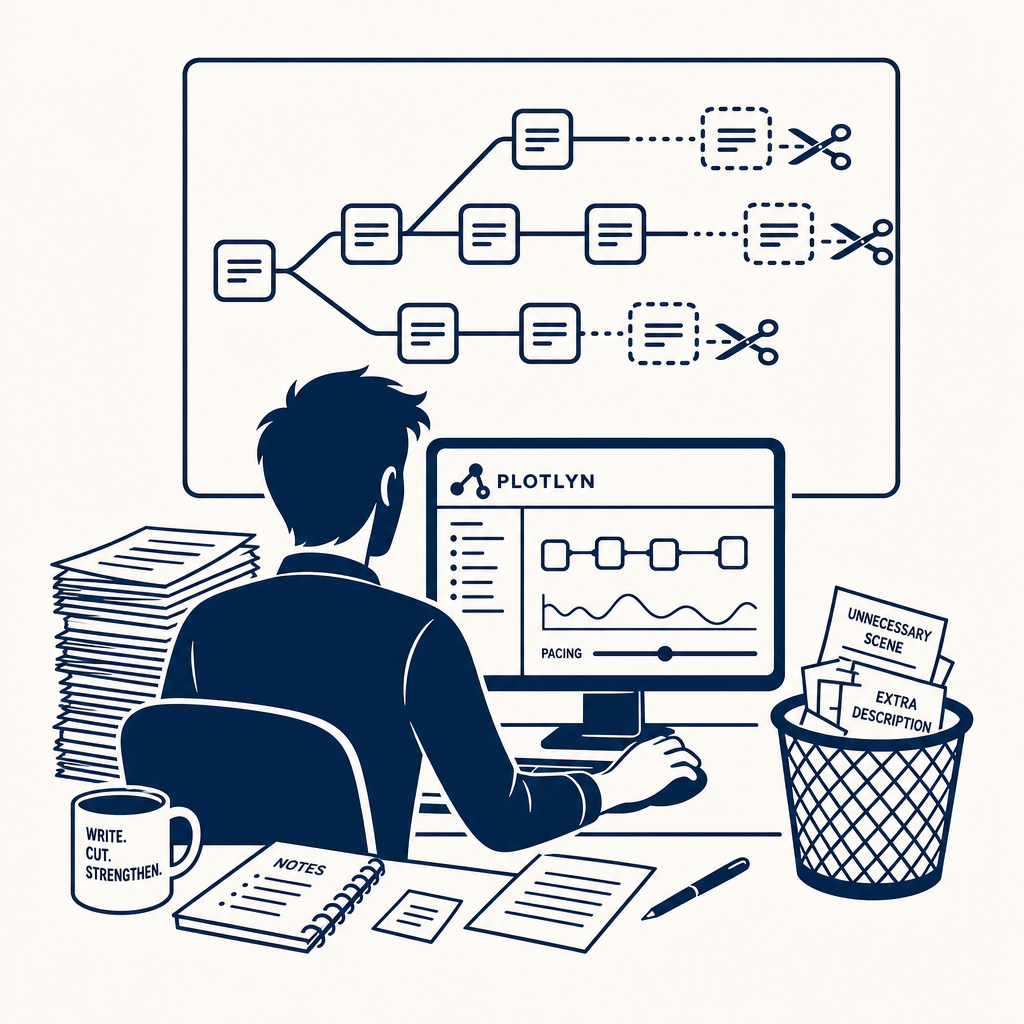
Streamlining your manuscript is crucial for maintaining reader engagement. In this article, we will explore how Plotlyn can assist writers in identifying and eliminating unnecessary scenes and descriptions. Discover strategies to enhance narrative pacing and refine your revision workflow, leading to a more impactful final draft.
Understanding Manuscript Structure
Understanding manuscript structure is crucial for effective storytelling. A well-defined structure acts as the skeleton of your narrative, supporting pacing and ensuring reader engagement. When scenes and chapters flow logically, they help maintain the tension and intrigue that keep readers turning pages. Conversely, a disjointed structure can confuse readers, leading to disengagement.
Plotlyn provides an excellent tool for visualizing your manuscript's structure. By using nodes and canvases, you can create a clear map of your scenes and chapters. Each node represents a scene, allowing you to see how they interconnect. This visual representation highlights where your manuscript excels and where it falters. Is there a scene that feels too long-winded? Or perhaps a chapter that disrupts the flow? With Plotlyn, these issues become easier to identify and address.
As you visualize your narrative structure, consider how each component contributes to the story. Streamlining your manuscript involves not just cutting unnecessary scenes but understanding how their removal—or the reshaping of descriptions—affects the overall pacing and impact of your narrative. This insight is invaluable in honing your revision workflow and ensuring your readers remain captivated from start to finish.
The Role of Pacing in Narrative
Pacing plays a crucial role in shaping the reader's experience, directly influencing emotional engagement and tension throughout the narrative. At its core, pacing refers to the speed at which a story unfolds, impacting how events, emotions, and descriptions are felt by the audience. In a tightly woven narrative, moments of high tension are often balanced with quieter intervals, guiding the reader through peaks and valleys that enhance their connection to the story.
Common pitfalls that disrupt pacing include excessive exposition, prolonged digressions, or scenes that linger without purpose. When a narrative meanders, it risks losing momentum, leaving readers disengaged and frustrated. Identifying these pacing issues is where Plotlyn shines. By visualizing your manuscript, you can clearly see which scenes may be dragging down the narrative flow.
Utilizing the node and canvas features in Plotlyn allows authors to pinpoint areas of redundancy and understand the interplay between scenes. By examining transitions and scene duration, writers can tighten their pacing, ensuring that each element of their story serves a distinct purpose. This iterative process of self-editing and revising becomes an essential part of enhancing narrative impact and crafting a more compelling reading experience.
Identifying Unnecessary Scenes
Identifying unnecessary scenes can significantly enhance the pacing and impact of your manuscript. To recognize scenes that may detract from your narrative, start by evaluating their relevance to character development and plot advancement. Ask yourself:
- Does this scene drive the plot forward or provide crucial insights into character motivation?
- Does it introduce new obstacles or conflicts that complicate the protagonist’s journey?
- Are the emotional stakes high enough to warrant the scene's existence?
Utilizing Plotlyn’s visual structure can illuminate connections between scenes, making it easier to identify redundancies. By mapping out your manuscript, you can see how each scene connects to the overall narrative. Look for clusters of scenes that contribute little to the progression or add unnecessary layers.
For instance, if multiple scenes serve the same plot point or character arc, you might consider consolidating them into one more impactful moment. Additionally, scenes that elicit a "pause" from the reader may signal sluggish pacing. Use Plotlyn’s features to track these slow spots and assess their contribution to the story’s rhythm, ensuring every scene serves a purpose that resonates with your audience.
Pruning Redundant Descriptions
Pruning overly detailed descriptions is essential for maintaining a brisk narrative pace. While vivid imagery can enrich a scene, excessive detail can bog down the reader and detract from the overall momentum of your story. To evaluate descriptions within scenes, consider their functional contributions: do they enhance character insight, evoke emotion, or propel the plot? If a description lacks relevance to these elements, it may be time to reconsider its place.
Using Plotlyn, you can visualize how descriptions weave into the overall narrative structure. By mapping scenes and their accompanying details, you can easily identify areas where surplus detail may accumulate. Look for clusters of descriptions that do not serve multiple purposes—these are prime candidates for cutting. Furthermore, think about the emotional resonance of each description and how it aligns with your characters’ arcs and conflicts.
Notice if descriptive passages detract from key action or dialogue; if so, plotlines may become muddled. By strategically pruning redundant descriptions while employing Plotlyn’s visual tools, you can sharpen your prose, enhance pacing, and engage your readers more effectively.
Streamlining Your Revision Workflow
To create an efficient revision workflow utilizing Plotlyn, follow these structured steps:
- Visualize the Narrative: Begin by creating a visual representation of your manuscript in Plotlyn. Use its features to map out your scenes, identifying key plot points, character arcs, and thematic elements. This overview will help you understand the overall structure and flow of your story.
-
Identify Redundant Scenes: Review your visual plot structure to spot scenes that may contribute little to character development or narrative advancement. Ask questions like: Does this scene propel the plot? What purpose does it serve? Mark these with annotations for further evaluation.
-
Assess Descriptions: Once unnecessary scenes are flagged, turn your attention to descriptions within those scenes. Use Plotlyn to isolate specific passages and evaluate their impact on pacing. If the descriptions don’t enhance the scene or serve a direct purpose, consider cutting them.
-
Logical Flow: Ensure that your scenes connect logically. Check the transitions and pacing using the visual layout. If a scene feels out of place or disrupts the narrative rhythm, it may be time for a revision or elimination.
-
Iterate and Refine: After making initial cuts, revisit your scenes. Plotlyn’s visual organization allows you to continuously refine your manuscript, providing clarity on how changes affect the overall narrative. Repeat this process as needed until the pacing feels just right.
By combining Plotlyn’s visual tools with a systematic approach, you can streamline your revision workflow, enhancing focus and efficiency while maintaining a captivating narrative.
Finalizing Your Manuscript
Finalizing your manuscript requires meticulous attention to detail, especially after streamlining your narrative. With a sharpened focus on pacing and engagement, it’s time to incorporate peer feedback, which can illuminate blind spots that you may overlook. Sharing your work with trusted readers can provide invaluable insights into areas that still feel sluggish or unclear, ensuring your story resonates with its intended audience.
Utilize Plotlyn during this final stage to visually map out the manuscript's elements once more. As you gather feedback, revisit your Plotlyn visuals to identify scenes or descriptions that might still distract from your core narrative. This dynamic approach allows you to refine not only the storyline but also the emotional arc, ensuring that every component works harmoniously towards a cohesive experience.
Implement multiple rounds of revision based on feedback, concentrating on specific elements each time—whether it’s dialogue, character development, or narrative pacing. With each pass, leverage Plotlyn to maintain that clear perspective on your manuscript’s structure, allowing you to see how adjustments impact the overall flow. This structured approach will help guarantee that your finalized manuscript is both polished and engaging, ready for readers to savor.
Conclusions
By strategically using Plotlyn to streamline your manuscript, you can enhance pacing and reader engagement. As you eliminate redundancies, focus your narrative, and refine your scenes, you empower your writing process, making your manuscript shine. Remember, effective self-editing is key to creating a compelling and polished book.