
The '15-Minute Manuscript' Method: How Plotlyn Helps Busy Authors Make Consistent Progress
Discover how to integrate the '15-Minute Manuscript' approach into your daily writing routine using Plotlyn's structured nodes and nested canvases. Learn strategies for breaking down large projects into manageable sprints, maintaining momentum, and consistently progressing towards your book, even with a demanding schedule.
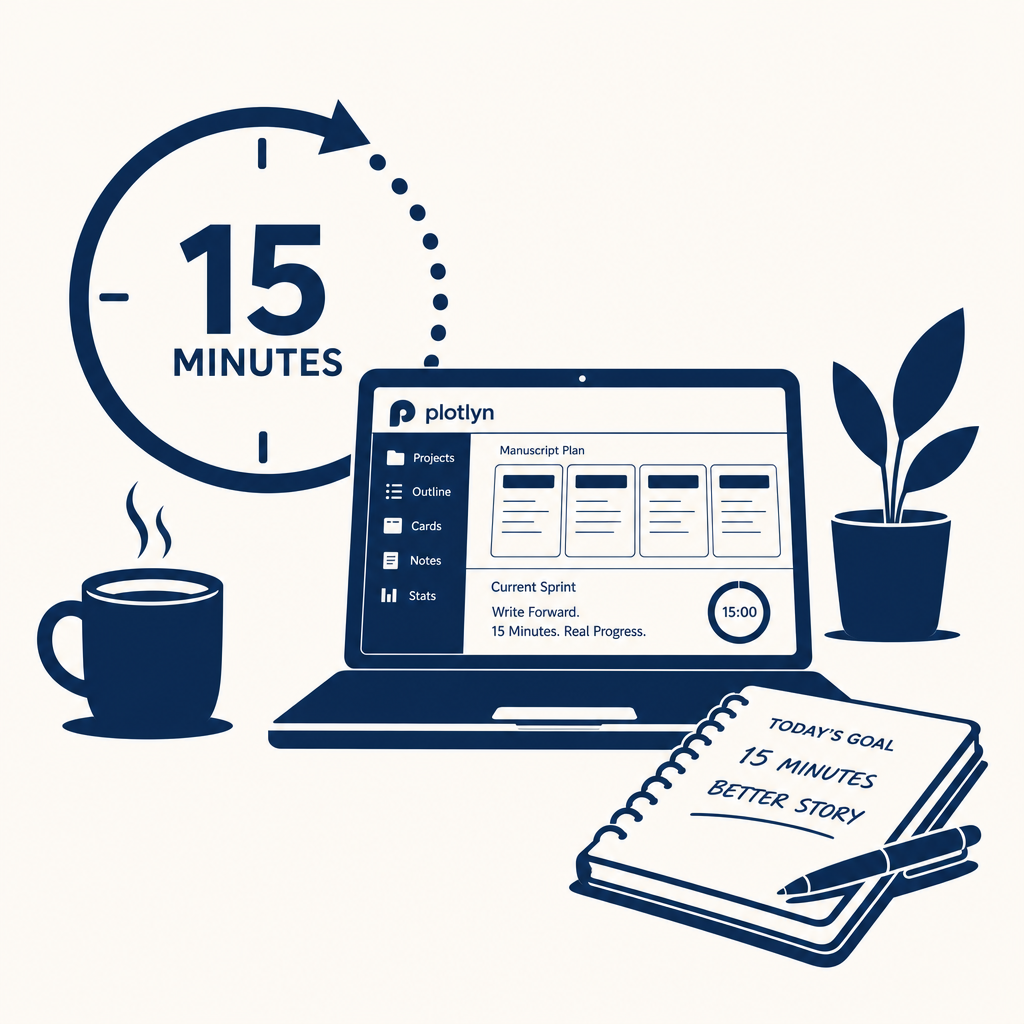
In today’s fast-paced world, busy authors often struggle to make substantial progress on their writing projects. The '15-Minute Manuscript' method provides a practical solution, enabling writers to harness short bursts of focused writing using Plotlyn's innovative tools. This article delves into effective time management strategies and how to create a productive writing routine, ensuring consistent progress.
Understanding Time Management for Writers
Time management is a critical skill for writers, especially those balancing busy lives with the demanding pursuit of crafting their manuscripts. By honing time management techniques, authors can create dedicated windows for writing, ultimately leading to consistent progress. One effective strategy is to carve out specific time slots for writing each day. This could mean dedicating even just 15 minutes to jot down ideas or refine drafts.
Setting realistic goals is essential. Instead of aiming to write an entire chapter in one sitting, break it down into smaller, actionable tasks that can be achieved within these short writing sessions. Prioritizing tasks also plays a vital role—identify what requires immediate attention or holds the key to pushing your project forward, such as character development or plot outlining.
Recognizing the psychological aspects of time management can further enhance productivity. Embrace the notion of flexibility; if a planned writing session doesn’t fit into your schedule, reschedule it without guilt. Understand that consistency does not mean rigidity. By fostering a mindset that prioritizes progress, however small, busy authors can seamlessly integrate writing into their lives, transforming fleeting moments into substantial advancements in their manuscripts.
The Power of Writing Sprints
Writing sprints are a powerful tool for enhancing productivity, especially for busy authors utilizing the '15-Minute Manuscript' method. These short, focused bursts of writing can significantly elevate your creative output while fitting seamlessly into your daily routine. To make the most of each session, structure your sprints around clear objectives. Start by defining a specific goal: whether it’s to draft 200 words, outline a chapter, or brainstorm ideas. This clarity will help you stay focused.
Create a conducive environment by eliminating distractions. Turn off notifications, use noise-canceling headphones, or play instrumental music to foster concentration. Timing is crucial—consider using a timer to enforce dedicated writing periods. For maximum efficiency, try practicing focused sprints lasting anywhere from 10 to 25 minutes, followed by a short break to recharge.
Stay motivated by celebrating small wins. Each completed sprint brings you closer to your larger goals, reinforcing a sense of accomplishment. Utilize Plotlyn’s structured nodes to easily visualize your progress during these sprints. This method not only keeps you on track but also empowers you to maintain momentum, ensuring consistent strides toward your book, even amidst a packed schedule.
Creating Effective Drafting Habits
Establishing strong drafting habits is pivotal in the '15-Minute Manuscript' method, as they enable writers to maximize efficiency and maintain a steady trajectory toward their goals. To create an environment conducive to writing, designate a specific space free from distractions, ensuring it is equipped with all necessary materials. Consider ambient music or white noise to enhance focus while also making the area inviting with personal touches.
Developing a routine is equally important. Identify the time of day when you feel most creative and align your writing sprints accordingly. Whether it’s early mornings or late nights, consistency is key. Use Plotlyn’s structured nodes to outline what you want to accomplish in each session, breaking larger tasks into bite-sized chunks that fit within your 15-minute slots.
Utilize the nested canvases feature to organize your ideas seamlessly. By visualizing your project’s components, you can quickly jump back into the flow of writing after each sprint. This integrated workflow not only fosters strong drafting habits but also transforms your writing process into a fluid, manageable venture, ensuring you make meaningful contributions to your manuscript even amidst a packed schedule.
Maintaining Consistent Progress
To maintain consistent progress in your writing, implementing a few solid strategies can make all the difference. One effective method is tracking your word counts. By keeping tabs on your daily output, you’ll gain insights into your writing pace and can set realistic milestones. Within Plotlyn, you can easily record this data within each node, creating a visual accountability that will motivate you to push forward.
Setting deadlines is another key strategy. Break your larger project into smaller, manageable goals with specific deadlines to create urgency and focus. With Plotlyn’s nested canvases, you can assign timelines to each section of your manuscript, making it easier to visualize your path to completion and adjust as needed.
Additionally, celebrating small victories can significantly boost your motivation. Every time you finish a writing sprint or meet a word count goal, take a moment to acknowledge your achievement. This practice helps to build positive momentum over time. By combining these methods within Plotlyn’s structured environment, you will not only keep your writing sessions productive but also stay engaged and accountable throughout your literary journey.
Navigating the Plotlyn Workflow
Understanding the Plotlyn workflow is essential for busy authors who want to make meaningful progress on their manuscripts. Plotlyn’s unique interface utilizes structured nodes and nested canvases, which can significantly enhance your writing experience, especially when you only have short bursts of time to dedicate to your craft.
Using these structured nodes, you can break down your manuscript into manageable sections—think of each section as a puzzle piece. This approach allows you to focus on one idea or scene at a time, effectively reducing the overwhelm that often comes with large projects. Nested canvases offer a layered organization that enables you to create detailed outlines or subplots without losing sight of your overall narrative arc.
As you draft, you can easily rearrange nodes to explore different plot paths or character developments, fostering creativity within a structured framework. This flexibility is vital for maintaining productivity during writing sprints. By integrating the Plotlyn workflow into your routine, you will discover that organizing ideas becomes second nature, allowing you to maintain momentum and make consistent progress toward your goals.
From Draft to Completion
As you transition from a first draft to a polished manuscript, embracing a structured revision process is crucial. This phase often requires multiple cycles of feedback and refinement, allowing you to elevate your work to meet your vision. Start by utilizing Plotlyn’s capabilities to organize your revisions. Create specific nodes for each revision cycle, categorizing feedback and implementation tasks. This will keep you focused on the core elements requiring attention.
In this stage, seek out beta readers or critique partners and gather their insights. Incorporate their feedback in manageable sprints, allowing you to tackle each suggestion without feeling overwhelmed. As you refine your manuscript, remember that perfection is a journey, not a destination. Focus on clarity, pacing, and emotional resonance in your revisions.
Finally, as you approach the finishing touches, use Plotlyn’s checklists to track elements like formatting, grammar, and scene consistency. By maintaining your workflow within this organized framework, you’ll ensure that each draft evolves smoothly into its final form. These actionable steps, combined with your commitment and Plotlyn’s systematic approach, will guide you from a rough draft to a manuscript you can be proud of.
Conclusions
Implementing the '15-Minute Manuscript' method allows busy writers to integrate writing into their daily lives effectively. By utilizing Plotlyn’s structured approach, authors can maintain momentum, break down projects into manageable tasks, and ultimately complete their manuscripts. Embracing these strategies will lead to richer, more fulfilling writing experiences, even in the midst of a hectic schedule.