
Weaving Light and Shadow: Structuring Humor and Gravitas in Emotionally Complex Narratives with Plotlyn
Explore how to intentionally integrate moments of humor and levity into stories dealing with serious, tragic, or tumultuous themes without undermining their emotional weight. Learn to use Plotlyn's node-based canvases to map out your narrative's emotional arc, ensuring a balanced reader experience that resonates with both wit and profound insight, connecting individual scenes to the overarching tonal goals of your manuscript.
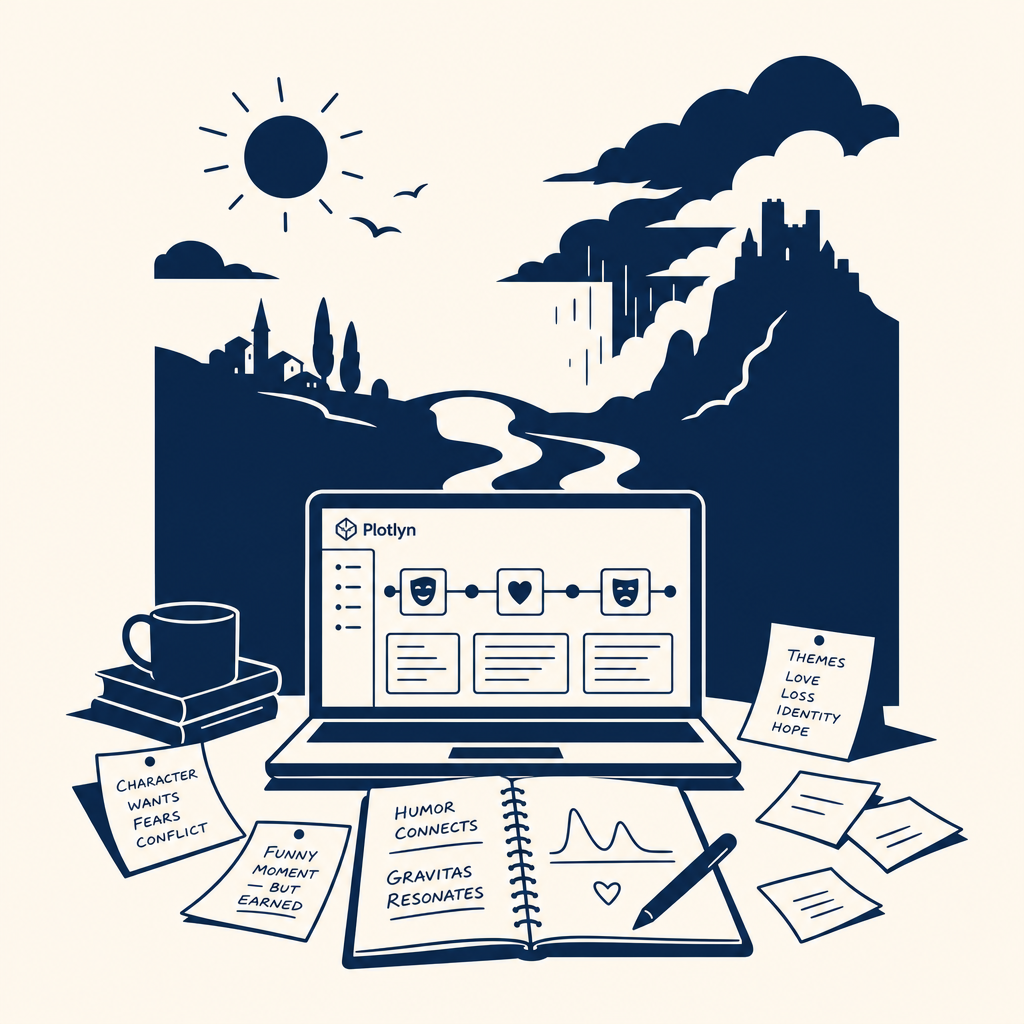
In crafting narratives that balance humor and gravitas, writers can create a rich emotional tapestry. This article explores how to integrate levity in serious themes using Plotlyn's node-based structure, helping authors maintain an emotional arc that resonates with readers while preserving the depth of their stories.
Understanding Humor and Gravitas
Understanding the emotional arc is crucial in shaping engaging narratives. It serves as the backbone for character development and reader investment. An emotional arc is the journey a character undergoes, often marked by significant highs and lows that evoke emotional responses from the audience. When wielded effectively, this arc can deepen the reader's connection to the narrative, particularly when woven intricately with elements of humor and gravitas.
Using Plotlyn, writers can visually map emotional trajectories, allowing for strategic placements of humor that enhance rather than undermine gravitas. Think of a character facing profound loss—the tension is palpable. Introducing a moment of lightness, perhaps through a beloved quirk or awkward interaction, can provide a necessary breath of relief. This relief doesn't trivialize the gravity of the situation; rather, it highlights the bittersweet reality of life, making the serious moments resonate more deeply.
In stories like The Fault in Our Stars, humor exists alongside tragedy, illustrating that laughter can coexist with sorrow. In The Office, moments of levity during emotional episodes reveal the complexity of human experiences. These examples demonstrate how humor, when integrated thoughtfully into the emotional arc, enriches the reader's journey through complexity, enhancing the overall narrative tone and emotional depth.
The Emotional Arc and Its Importance
The emotional arc is a foundational element in storytelling, guiding readers through the myriad highs and lows of a character's journey. As characters navigate their experiences, the emotional landscape they traverse becomes critical to engaging readers, allowing them to invest in the narrative deeply. Within this trajectory, moments of humor can serve as pivotal touchpoints, reinforcing or contrasting the gravitas of serious themes without undermining their weight.
Utilizing Plotlyn's node-based canvases enables writers to visualize these arcs effectively. By mapping out emotional responses scene by scene, authors can identify where strategically placed humor enhances a moment rather than detracting from it. For example, a character wrestling with loss might find a fleeting joy in a humorous memory, subtly reminding readers of the multifaceted nature of grief.
These moments of levity become essential in maintaining reader engagement, allowing them to breathe amidst tension while still respecting the narrative's gravity. Crafting humor that feels organic—rooted in character or situational dynamics—further ensures that tonal shifts support, rather than disrupt, the emotional arc, ultimately offering readers a richer, more nuanced experience.
Building Moments of Levity
Building moments of levity within emotionally charged narratives requires a fine balance to ensure that humor adds depth rather than detracts from serious themes. Various types of humor, such as situational or character-driven, can serve as effective tools for this integration. Situational humor, arising from unexpected circumstances, can create a temporary respite from tension. For example, a character trapped in a dire situation might inadvertently trip over a banana peel, eliciting laughter that diffuses the heaviness of the moment while still acknowledging the character's predicament.
Character-driven humor, rooted in quirks or flaws, can add layers to personalities, making them relatable amidst their struggles. For instance, a grieving protagonist might share darkly comedic anecdotes about their loved one, showcasing their pain while celebrating the deceased's eccentricities.
To craft these light-hearted moments, consider placement within the emotional arc. Use Plotlyn's node-based canvases to visualize scenes where humor can punctuate bleakness. Pay attention to the scene's emotional stakes—placing humor after a particularly heavy moment can yield a cathartic release. By deliberately weaving humor that complements the narrative's gravitas, writers can create a balanced reader experience that resonates on multiple emotional levels.
Maintaining a Cohesive Narrative Tone
Maintaining a cohesive narrative tone amidst the interplay of humor and gravitas is fundamental in crafting emotionally resonant stories. The challenge lies in ensuring that humor serves to enhance rather than undermine the emotional weight of the narrative. Utilizing Plotlyn's node-based canvases can facilitate this process, allowing you to visually map how each scene contributes to the overarching tone.
To maintain consistency, pay attention to the context in which humor arises. Situational humor can thrive within moments of tension if rooted in character perspective, while character-driven wit should align with the protagonist's journey—reinforcing rather than detracting from their experiences. A well-placed humorous moment can act as a release valve, offering readers a breather before plunging back into deeper emotional waters.
As you structure your narrative, consider how each scene interacts with the emotional arc. Use Plotlyn to track tonal shifts, ensuring that even the most comedic scenes echo the narrative's gravitas. By doing so, you create a tapestry where humor and seriousness intertwine, elevating both the comedic elements and the emotional stakes. This delicate balance not only enhances reader engagement but also enriches the overall impact of the story.
Revising for Balance
Revising for balance in narratives that intertwine humor and gravitas is an essential yet nuanced endeavor. When evaluating your scenes, focus on how each moment contributes to both comedy and depth. Assess whether the humor undercuts serious themes or, conversely, if the gravity dampens your intended levity. A scene filled with wit should still allow emotional moments to shine; consider the emotional stakes involved and how humor can serve to underscore or relieve tension.
Soliciting feedback from beta readers is invaluable in this process. Their insights can reveal whether the humor feels organic or forced within the narrative’s emotional arc. They might highlight a scene that shifts the tone unexpectedly, leading you to reassess its placement or execution. Utilize Plotlyn’s node-based canvases to visualize how humor and gravitas interact across your narrative. By mapping out emotional highs and lows, you can pinpoint where adjustments are needed to achieve an authentic balance.
Incorporating humor should feel like a natural extension of the characters and their experiences, ensuring that when they face gravitas, the humor does not dissipate their struggles but rather enriches them, creating a textured reading experience.
Finishing Your Manuscript with Emotional Resonance
As you move toward the final stages of your manuscript, the balance between humor and gravitas takes on a new level of significance. At this point, it’s critical to assess not only the individual scenes, but also how they contribute to the cumulative emotional resonance of your narrative. Integrating humor into serious themes requires intentionality. Each laugh should feel earned, a moment that enhances rather than detracts from emotional depth.
Utilize Plotlyn to visualize your story's emotional arc. This node-based structure allows you to map connections between scenes, establishing how humor can punctuate gravitas and vice versa. For example, if you have a particularly heavy scene, consider positioning a lighter moment immediately after to offer the reader a reprieve while still reflecting on the meanings underlying both moments.
In the finalization process, read through your manuscript focusing on the reader's experience. Ask yourself whether each humorous moment feels organic within the emotional landscape you're crafting. Gather feedback from your beta readers, specifically soliciting their thoughts on how these moments land. This feedback can illuminate whether your balance is working, giving you tools to refine your manuscript until it sings with both laughter and tears.
Conclusions
Mastering the art of weaving humor and gravitas allows for nuanced storytelling that captivates readers. By applying the principles outlined in this article and utilizing Plotlyn's tools, writers can effectively balance moments of levity with profound emotions, enriching their narratives and achieving a meaningful impact.