
Beyond the Conventional Outline: Structuring Your Memoir or Novel with Unconventional Frameworks in Plotlyn
Explore how authors can leverage pre-existing structural frameworks—like the stanzas of a poem, a musical composition, or even an architectural blueprint—to provide a unique backbone for their memoirs or novels. Learn how to map these unconventional structures onto Plotlyn's canvases and nodes to guide your narrative, emotional beats, and thematic development, moving beyond traditional outlines for a fresh approach to story planning.
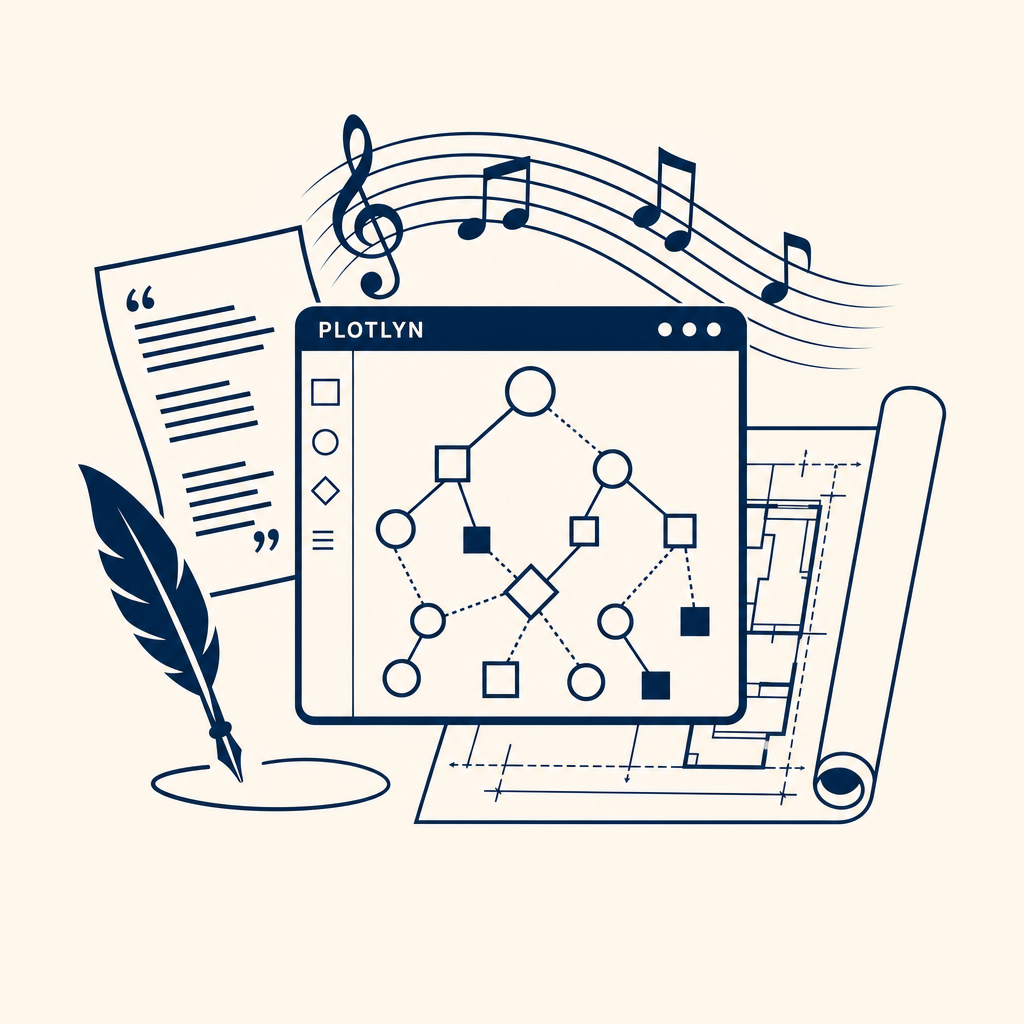
In today's writing landscape, authors are seeking innovative ways to structure their stories. This article will delve into how unconventional frameworks, such as poetry, music, and architecture, can invigorate memoir and novel writing. By leveraging Plotlyn's unique node-based environment, you'll learn to navigate these structures for a deeply resonant narrative experience.
Understanding Unconventional Structures
Understanding unconventional story structures can significantly enhance your memoir or novel, driving deeper emotional connections with your readers. By exploring frameworks from diverse mediums—such as poetry, music, and architecture—you can create a unique narrative that resonates on multiple levels.
In poetry, stanzas serve as both structural units and thematic segments, enabling writers to compress ideas into focused bursts of emotion and imagery. These units can mirror the arcs of human experience, allowing you to capture the ebb and flow of life. Music, with its compositions divided into verses and choruses, can inspire a rhythmic cadence in your prose, creating a melodic journey that hooks readers in. Similarly, architectural blueprints lay out a plan for space that can translate into narrative pacing, organizing your storyline with a solid framework that holds emotional weight.
Such unconventional structures lend themselves to more profound narratives, prompting reflections that weave seamlessly through experiences, themes, and character arcs. By utilizing Plotlyn's visual mapping, you can experiment with these frameworks, aligning your narrative beats, emotional crescendos, and thematic development into a cohesive and impactful story. This approach fosters creativity while providing a clear guide to elevate your writing beyond traditional literary forms.
The Power of Poetry in Storytelling
The rhythmic nature of poetry offers a distinct framework for storytelling that can enhance the emotional resonance of your prose. By utilizing stanzas, rhythm, and vivid imagery, writers can craft narratives that transcend mere linear progression. Each stanza functions like a significant moment in your narrative, encapsulating emotional beats that contribute to the overall arc of the story.
Authors like Mary Oliver and Ocean Vuong have effectively infused poetic elements into their prose, demonstrating how imagery can evoke deep feelings and create a vivid tapestry of experiences. For instance, in Vuong's novel On Earth We're Briefly Gorgeous, the lyrical quality of his language mirrors the cadence of a poem, which serves to amplify the emotional weight of his story.
To map these poetic structures onto Plotlyn's canvas, begin by breaking your narrative into stanzas that represent key emotional moments or thematic shifts. Assign nodes to each stanza that capture specific imagery or rhythm, allowing you to visualize how these elements interact. This approach not only enriches your writing but also provides a unique outline that guides your narrative flow, weaving a cohesive story that resonates on multiple levels.
Musical Composition as a Narrative Framework
When exploring the intersection of music and narrative, we find a compelling structure in the form of musical composition. Just as a symphony is composed of movements that evoke different emotions, a story can be structured to mirror these variations, creating a dynamic flow that resonates with readers.
Consider the role of movements: each section of your memoir or novel can shift in tone and focus, akin to the distinct parts of a symphony. Using motifs, recurring themes or images can be interwoven throughout your narrative, providing coherence and depth. Aspects like harmonies can translate to character relationships, where tensions and resolutions mimic musical dissonance and concordance, enriching the narrative arc.
For instance, in his memoir "Just Kids," Patti Smith employs a lyrical structure reminiscent of a musical composition, with its rhythm and thematic variations enhancing the emotional depth of her reflections.
In Plotlyn, you can visualize your narrative using these musical elements. Map out your story's movements, identify motifs to resonate across chapters, and create emotional harmonies through character dynamics. By embracing this framework, your storytelling can achieve a unique cadence that captivates readers, engaging them in a symphonic experience that transcends traditional structures.
Architectural Blueprints as Narrative Guides
Architectural blueprints provide a compelling metaphor for narrative structure that can profoundly influence how writers conceive their stories. Like a well-designed building, a narrative requires thoughtful consideration of space, flow, and design principles. Each section of your plot can be mapped onto the architectural components: the foundation, walls, corridors, and rooms, each serving a distinct purpose in the overall structure.
When considering a narrative as an architectural blueprint, think about the emotional "space" your characters inhabit. What allows them to thrive? What constricts their emotional growth? By ensuring that each character's journey has its own room for development, you can create a more intricate interplay of arcs. Similarly, the flow between scenes can be visualized as hallways leading from one room to the next, guiding the reader through the story's space.
In Plotlyn, you can integrate this architectural approach by designing your nodes and canvases to reflect these elements. Use the layout to sketch out various 'rooms' of your narrative. Each node can represent a scene or chapter, detailing how it connects and transitions to the next. This method facilitates a comprehensive view of your narrative's architecture, fostering clarity and purpose in your writing process.
Integrating Structural Elements in Plotlyn
Integrating structural elements into your Plotlyn project involves mapping unconventional frameworks onto nodes and canvases, thereby reshaping the narrative experience. To leverage a poetic structure, begin by breaking your story into stanzas, each representing a significant moment or theme. In Plotlyn, you can create nodes for each stanza, linking them with arrows to illustrate emotional beats, transitions, and progression. This allows you to visualize rhythm in the narrative, akin to verses in a poem.
For a musical composition framework, consider structuring your story around movements. Identify sections such as exposition, development, and recapitulation. In Plotlyn, these can translate to distinct canvases, with nodes detailing key events, character arcs, and thematic strains. Each movement can open a dialogue about emotional dynamics, allowing you to track the interplay between conflict and resolution throughout your work.
By employing these frameworks, writers can embed deeper meaning into their memoirs or novels. The emotional arcs that emerge can then be mapped visually within Plotlyn, enhancing the overall workflow and offering clear checkpoints for thematic development. This method encourages a holistic view of your narrative, inviting creativity while remaining anchored in intentionality and structure.
Revising with Unconventional Structures
Revising your narrative with unconventional structures requires a keen eye for how these frameworks illuminate both strengths and weaknesses within your draft. When you map out your narrative against a poetic form, musical composition, or architectural plan, you unleash new avenues for exploration in your revision process.
First, identify the emotional beats and thematic elements that resonate most strongly within your existing structure. For example, using a sonnet's rhythm can help clarify where a narrative peaks emotionally, revealing potential areas for deeper exploration. Conversely, recognizing structural dissonance—where themes clash instead of harmonize—can pinpoint sections needing more coherence.
Consider employing a visual tool within Plotlyn to track these elements alongside your narrative flow. Create nodes that focus on key thematic and emotional moments, allowing you to see patterns or gaps. This will not only emphasize where your story shines but also where it falls flat.
As you revise, keep these strategies in mind:
- Realign scenes to follow your chosen framework, ensuring smoother transitions and a cohesive narrative arc.
- Infuse your prose with cadence reflective of your structural model, enhancing its emotional impact.
- Seek feedback from peers using comparative examples, asking them to assess how well your revision aligns with the unconventional template you've chosen.
By embracing these unique structures during revision, you can craft a compelling narrative that resonates with both your vision and your readers' experiences.
Conclusions
Embracing unconventional frameworks can revolutionize your writing process. By utilizing structures from poetry, music, and architecture within Plotlyn, you transform your memoirs and novels into layered, emotional journeys. Integrating these elements not only enriches your narrative but also enhances your creativity, offering a fresh approach to planning and writing your book.