The Plotlyn blog
Guides on story structure, nested planning, and focused writing workflows from the Plotlyn team.
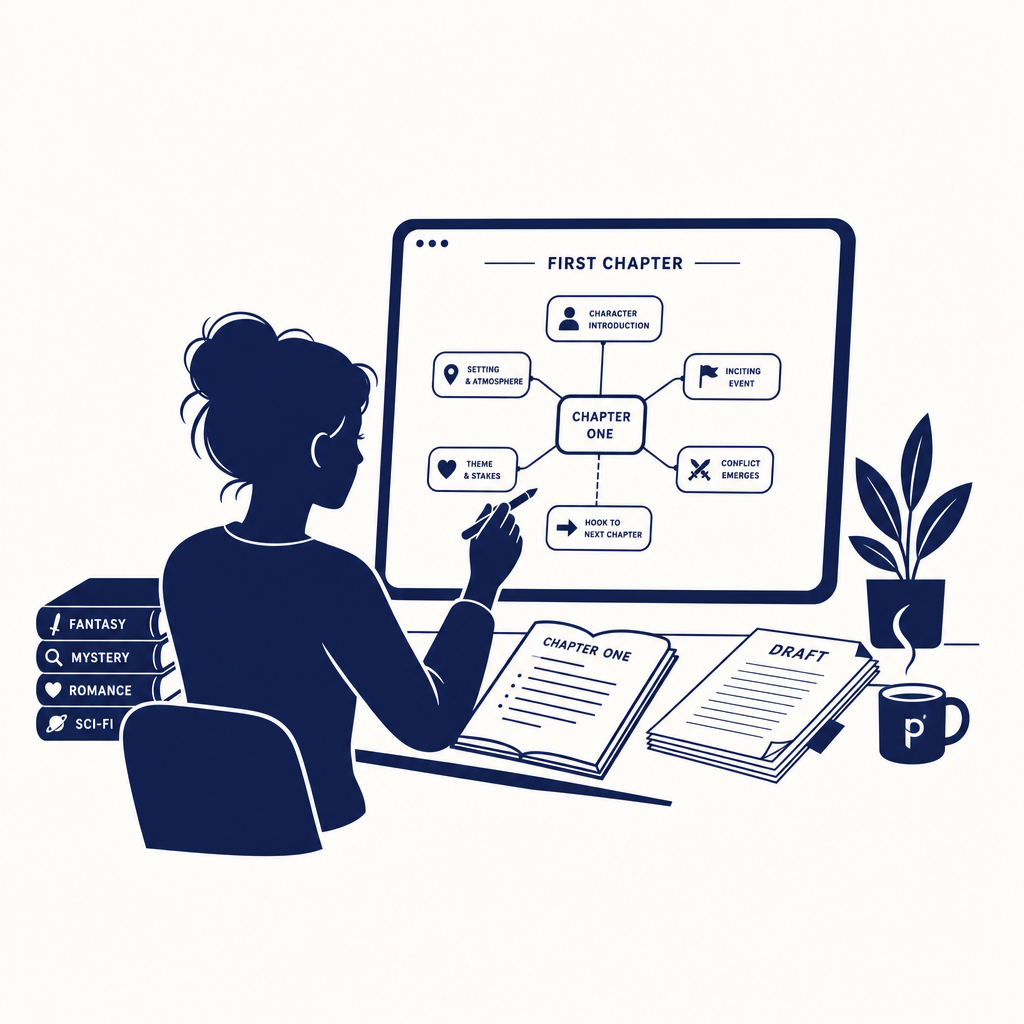
Beyond the Opening Line - Structuring Your First Chapter for Market Readiness and Lasting Reader Engagement with Plotlyn
In today's crowded book market, a compelling first chapter needs to do more than just hook readers—it must strategically set genre expectations, establish your voice, and compel long-term engagement. Discover how to leverage Plotlyn's node-based system to structure a first chapter that not only grabs attention but also positions your book for success, ensuring readers commit to your entire story.
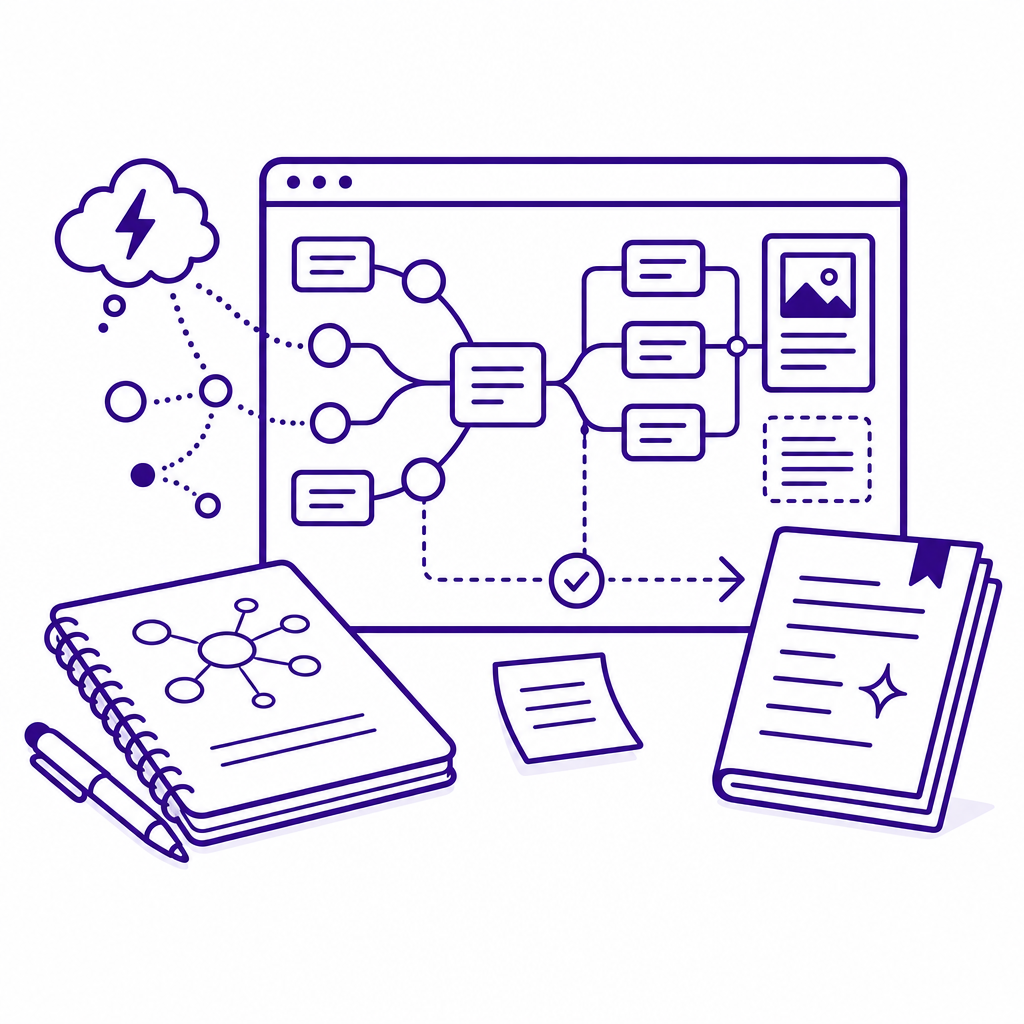
Beyond Brainstorming: Structuring Your Wildest Ideas into a Coherent Narrative with Plotlyn
Every author asks, "Where do ideas come from?" This guide helps Plotlyn users not just brainstorm, but capture, connect, and develop their raw, fragmented ideas—from fleeting thoughts to historical facts—into a structured blueprint using Plotlyn's visual nodes and nested canvases, ensuring no brilliant spark is lost.
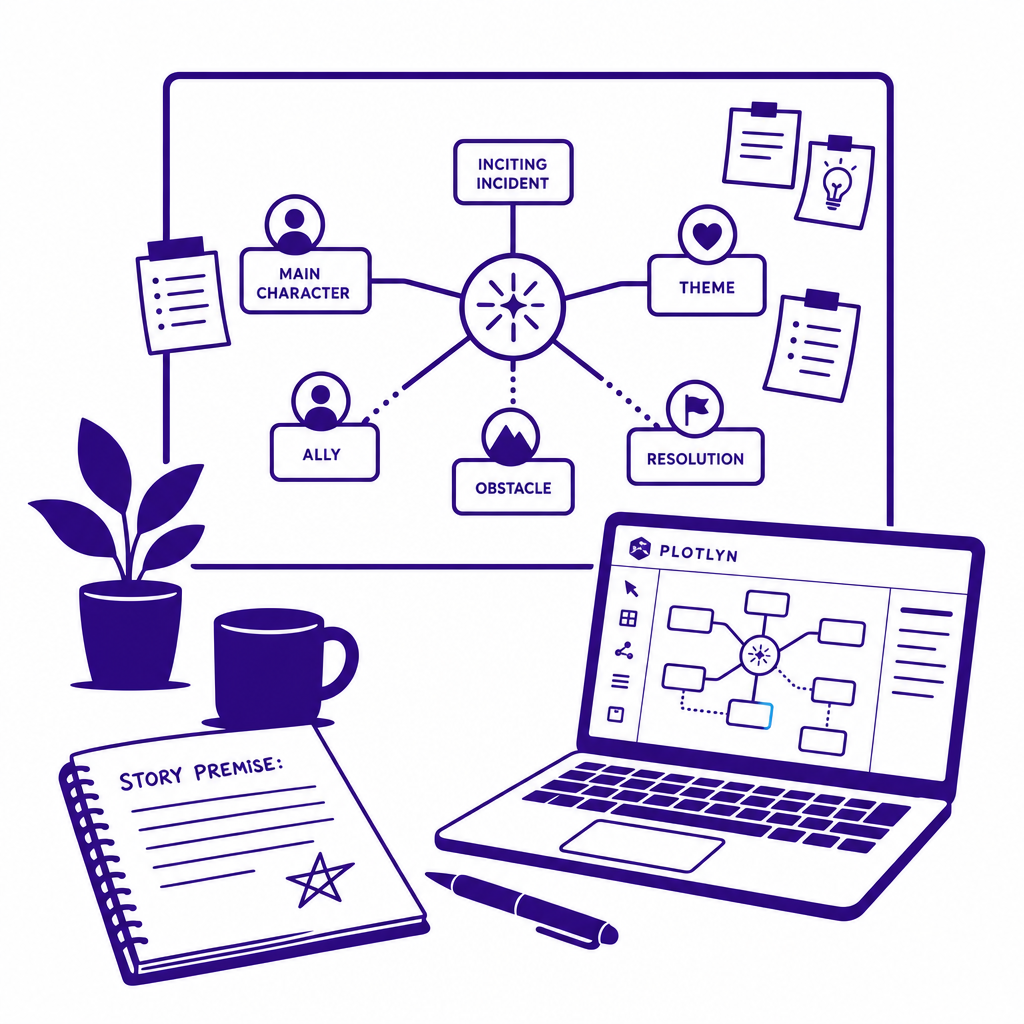
From Spark to Blueprint: Crafting a Bulletproof Story Premise with Plotlyn's Node-Based System
Explore how a compelling story premise serves as the bedrock of your novel, guiding every structural decision. This article will show Plotlyn users how to ideate, test, and integrate their core premise throughout their narrative using nodes and nested canvases, ensuring thematic consistency and driving reader engagement from concept to conclusion.
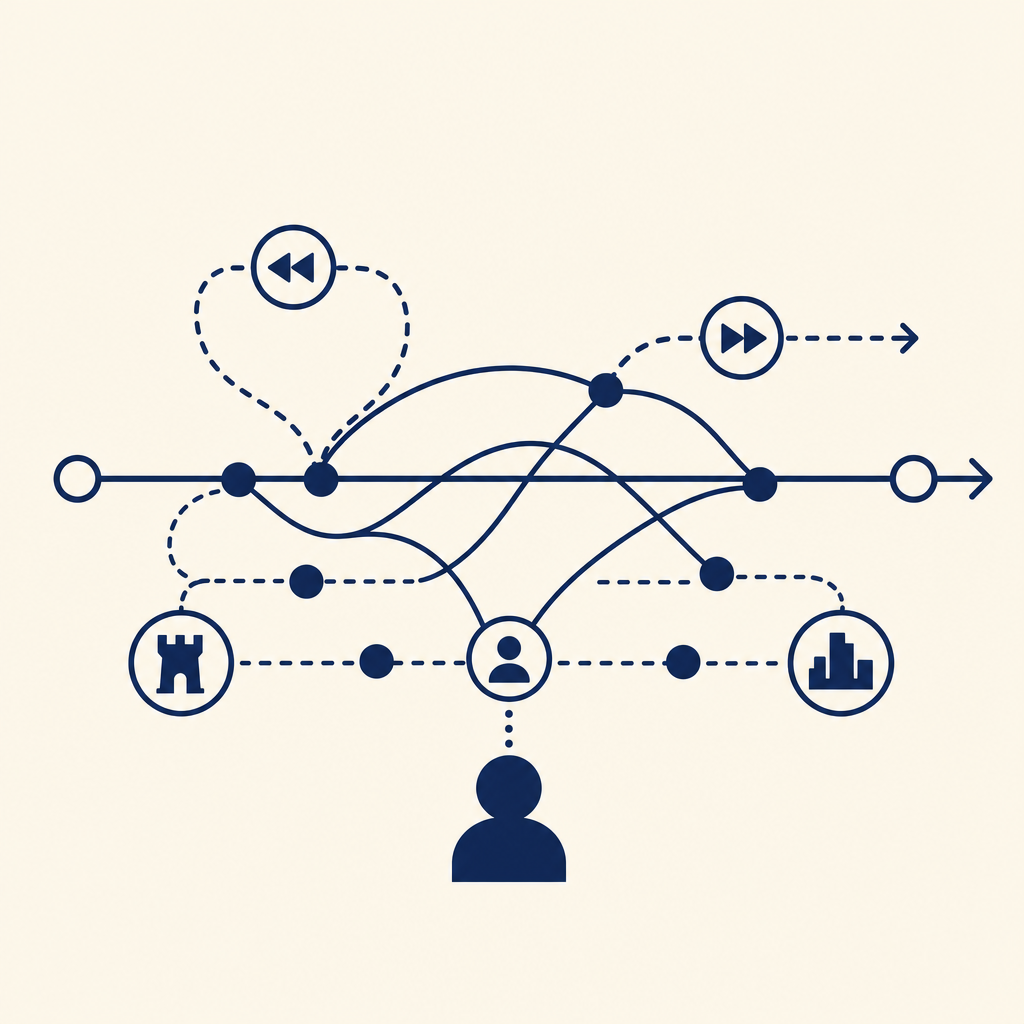
Mastering Narrative Time: Structuring Non-Linear Storytelling with Plotlyn's Canvas
Explore how Plotlyn's node-based canvases empower authors to intricately map non-linear narratives, from flashbacks and flashforwards to parallel timelines and fragmented perspectives. Learn strategies to maintain clarity, build suspense, and ensure emotional impact when your story doesn't follow a straight line.
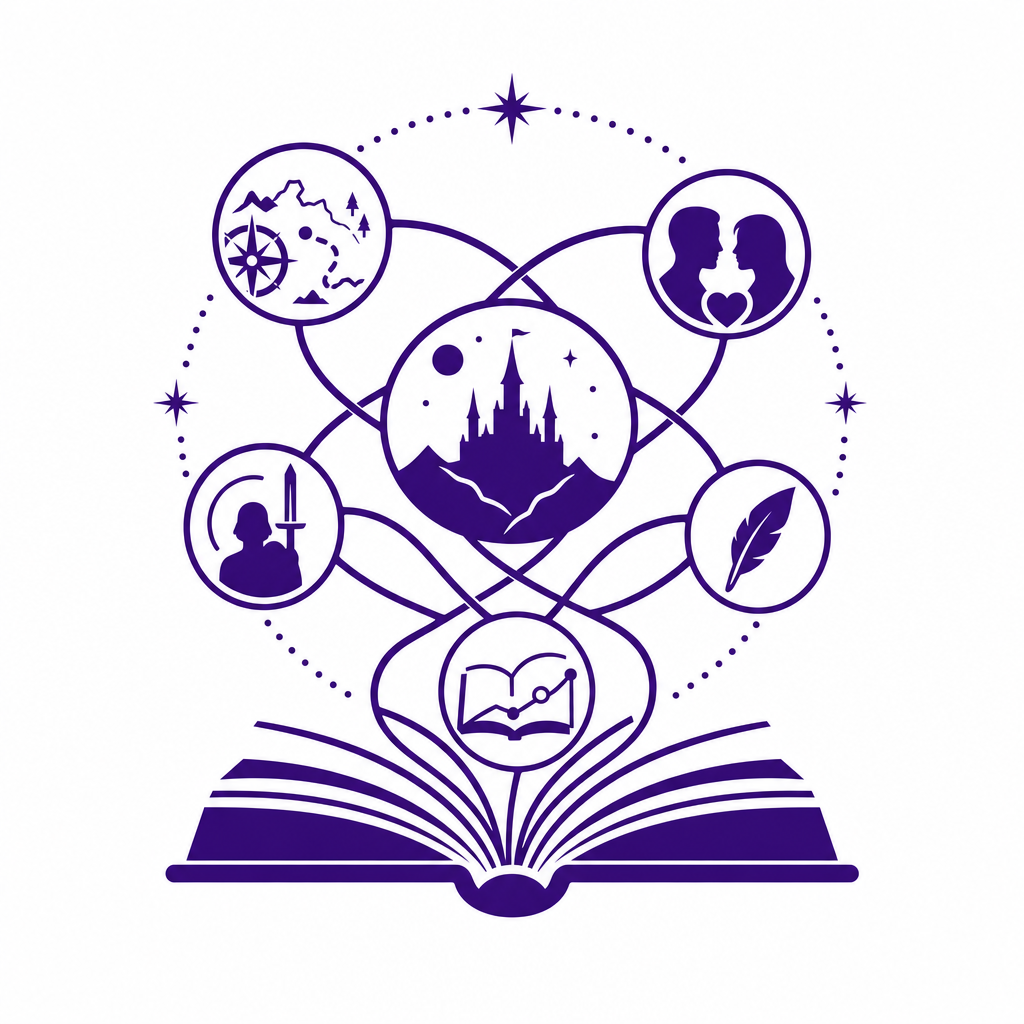
Weaving an Interconnected Universe: Using Fandom Principles to Structure a Standalone Series with Plotlyn
Explore how authors can adapt 'fandom principles' — consistent worldbuilding, recurring characters with evolving arcs, and satisfying individual stories that contribute to a larger narrative — to craft an interconnected book series where each novel can stand alone. Learn to map character throughlines, worldbuilding consistency, and overarching plot arcs across nested canvases in Plotlyn, ensuring reader satisfaction for both new and returning readers.
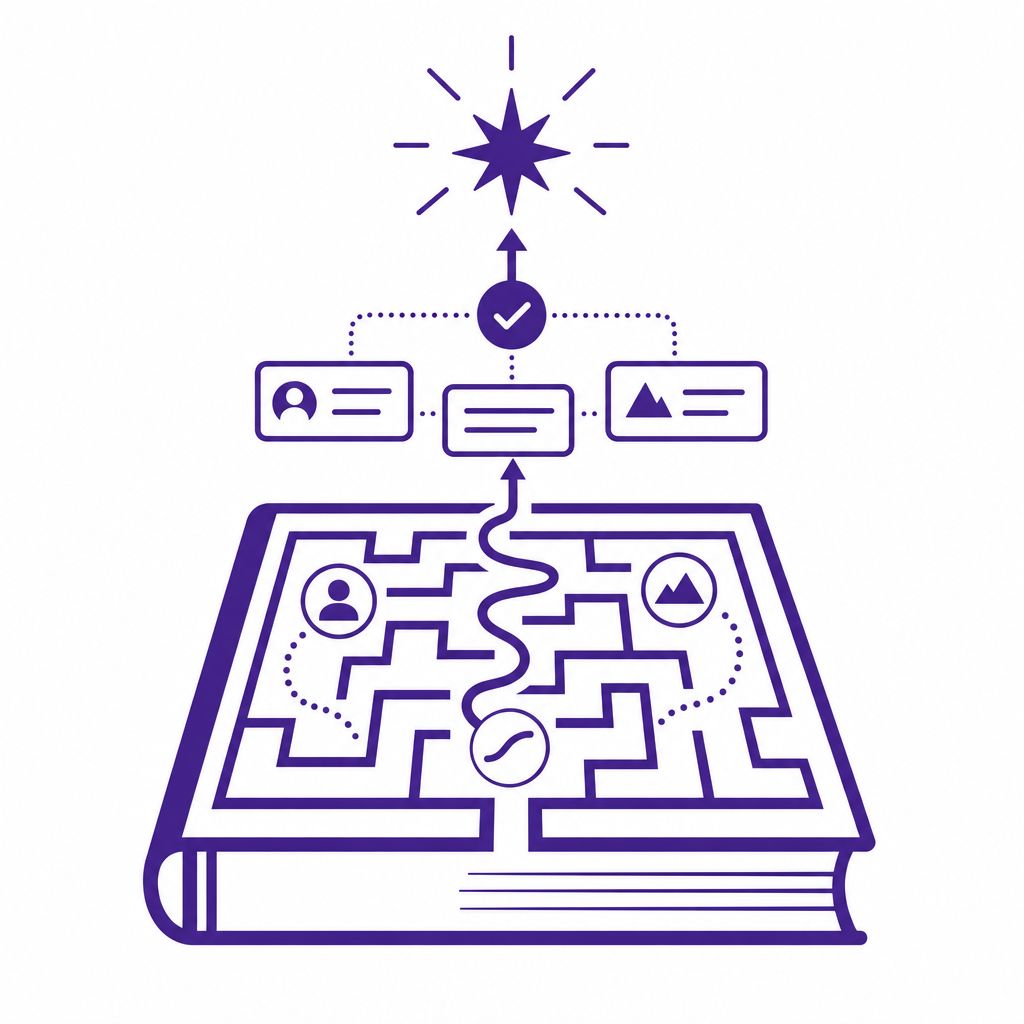
Beyond The End Structuring a Resonant Novel Ending with Plotlyn
The ending of your novel is crucial for reader satisfaction and lasting impact. Learn how to leverage Plotlyn's node-based system and nested canvases to meticulously plan and execute a powerful, satisfying, and memorable conclusion that ties together all your story threads, character arcs, and thematic intentions. Move beyond simply resolving the plot to truly 'sticking the landing' for your readers.
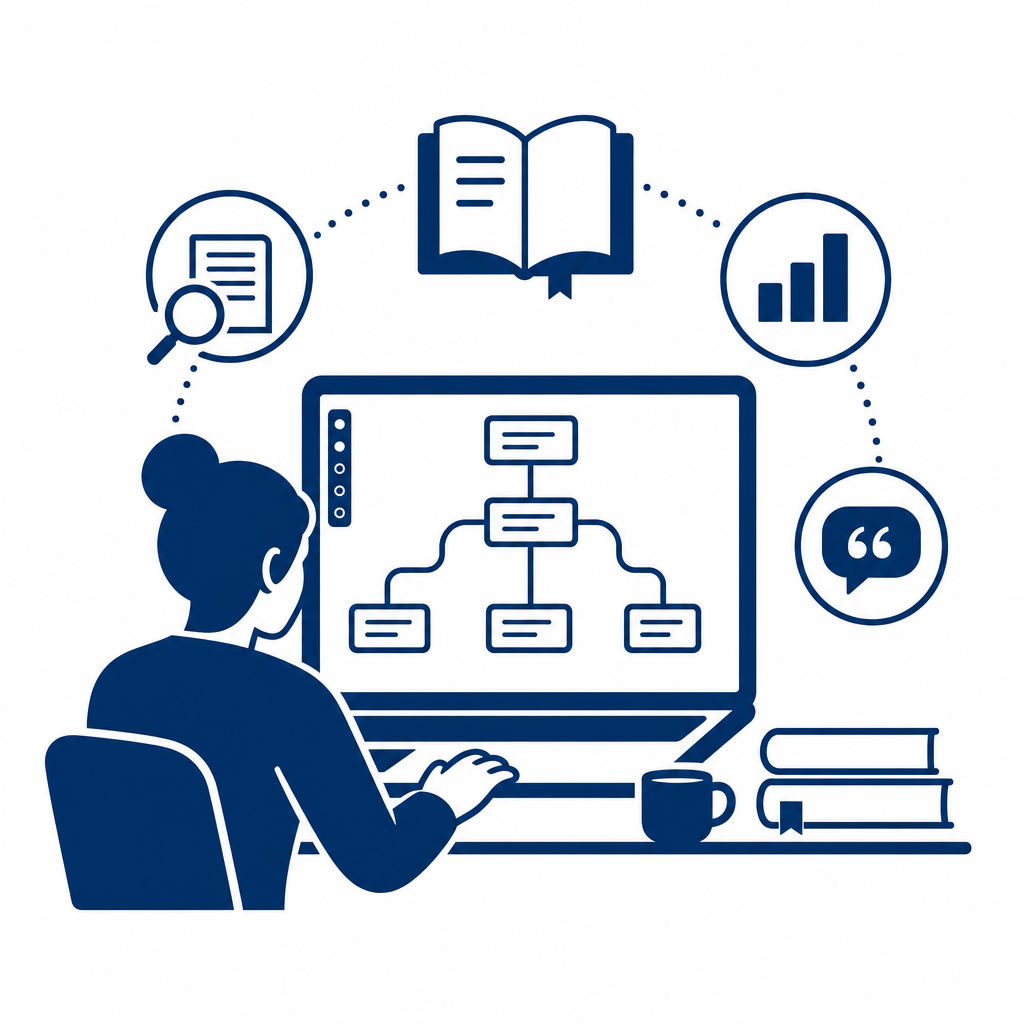
Weaving Evidence into Narrative: Structuring Powerful Nonfiction with Case Studies in Plotlyn
For nonfiction authors, compelling case studies are vital for illustrating arguments, demonstrating impact, and engaging readers. Discover how Plotlyn's node-based writing environment and nested canvases can help you meticulously plan, organize, and integrate diverse case studies into your manuscript. This guide will provide actionable strategies for structuring your research, outlining your narrative, and ensuring each case study enhances your book's overall message and coherence, transforming raw data into impactful storytelling.
Beyond Plotlessness: Using Plotlyn to Weave Meaning and Purpose into Every Scene
Feeling like your story is drifting? Learn how Plotlyn's node-based canvases and nested outlines can help you identify and eliminate plotlessness, ensuring every scene serves the protagonist's journey and contributes to a powerful, meaningful narrative arc that deeply resonates with readers.
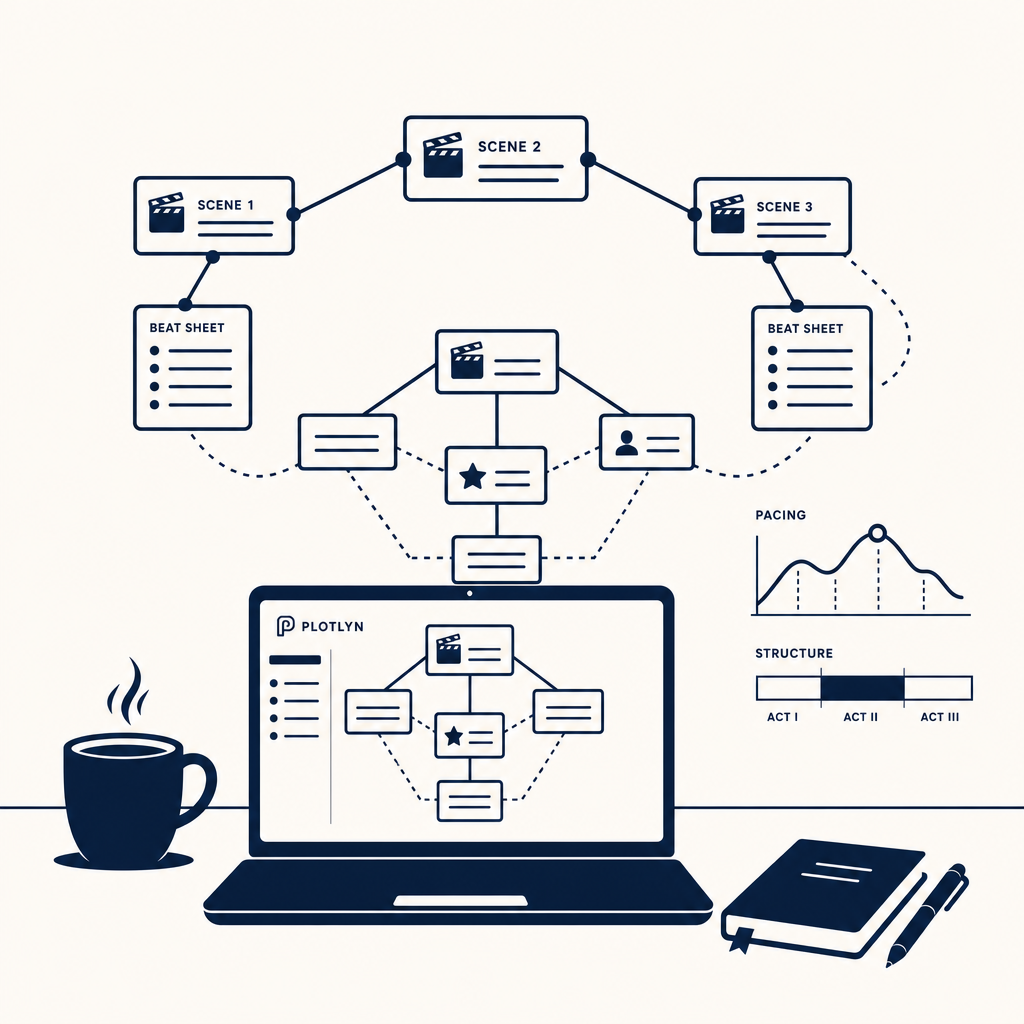
From Screenplay to Novel: Mapping Cinematic Structure in Plotlyn for Pacing and Impact
Explore how screenwriting principles—like beat sheets, three-act structure, and scene sequences—can be effectively adapted by novelists. Learn to visualize and plan these cinematic structural elements within Plotlyn's node-based canvas to enhance pacing, tighten plot, and create a compelling narrative flow for your long-form work.
Planting Seeds for a Saga - Building Your Series Bible Within Plotlyn While Drafting Book One
Discover how to leverage Plotlyn's interconnected nodes and nested canvases to simultaneously draft your standalone novel and develop a robust 'series bible.' Learn strategies for outlining core worldbuilding, evolving character arcs, and seeding overarching mysteries that will effortlessly expand into a multi-book saga, ensuring consistency and long-term vision from the very start.

Future-Proof Your Novel - Structuring a Standalone Book with Series Potential in Plotlyn
Learn how to design your novel to function as a complete, satisfying story on its own, while simultaneously laying the groundwork for a compelling series. Explore Plotlyn's nested canvases and node system to map out core plot arcs, character developments, and worldbuilding elements that can expand gracefully without sacrificing the integrity of your initial standalone narrative.
Seamlessly Blending Genres: How Plotlyn Helps You Weave Diverse Story Elements Without Losing Your Reader
Explore five practical strategies for combining different genres in your novel or long-form project. Learn how Plotlyn's node-based canvases and nested outlines allow authors to map out disparate genre conventions, maintain narrative cohesion, and ensure a unified reading experience even in complex, multi-genre works.
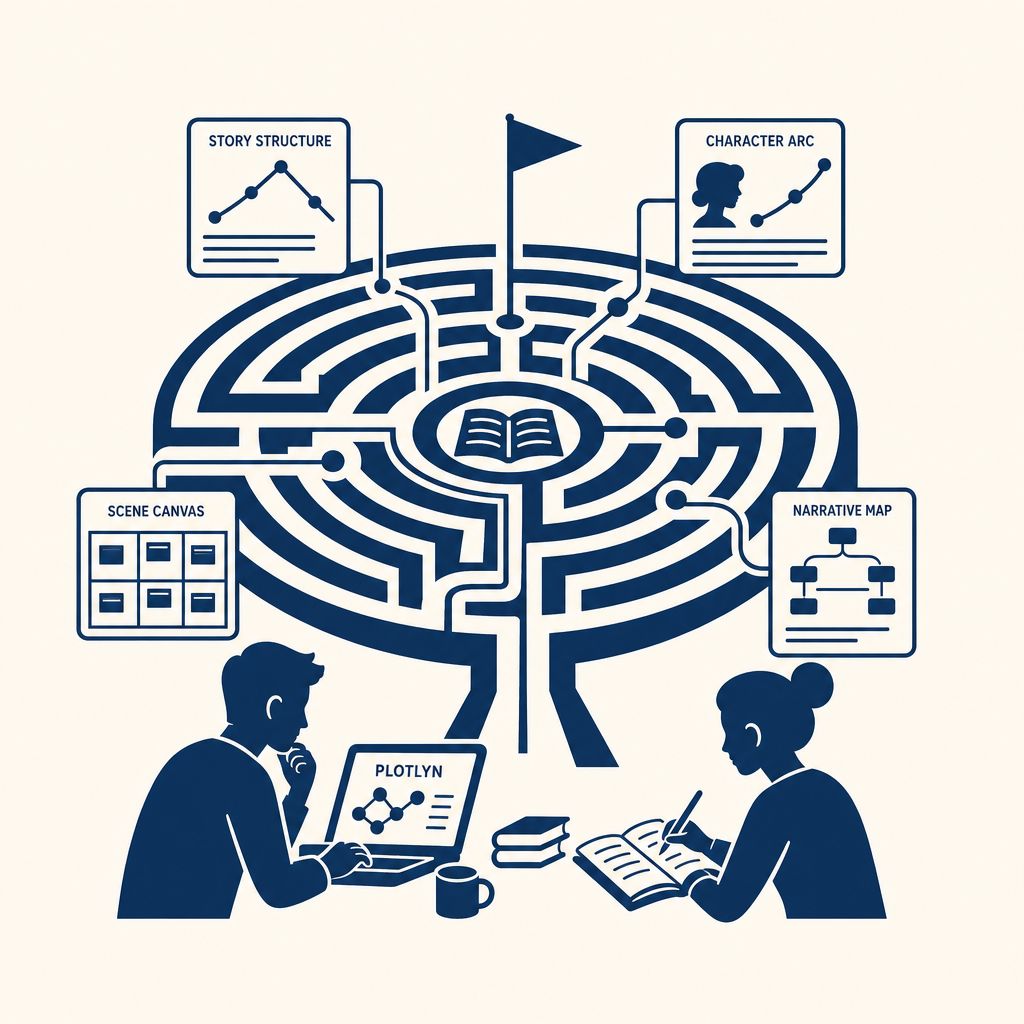
Navigating the Labyrinth: Plotlyn Strategies for Charting Your Course Through a Complex Novel
Writing a complex novel can feel like navigating a labyrinth. This article will show Plotlyn users how to strategically map their entire novel's journey using nested canvases and node-based planning, breaking down intricate plots and character arcs into clear, manageable paths. Learn to chart your course, anticipate challenges, and ensure a cohesive narrative from big picture to individual scene.
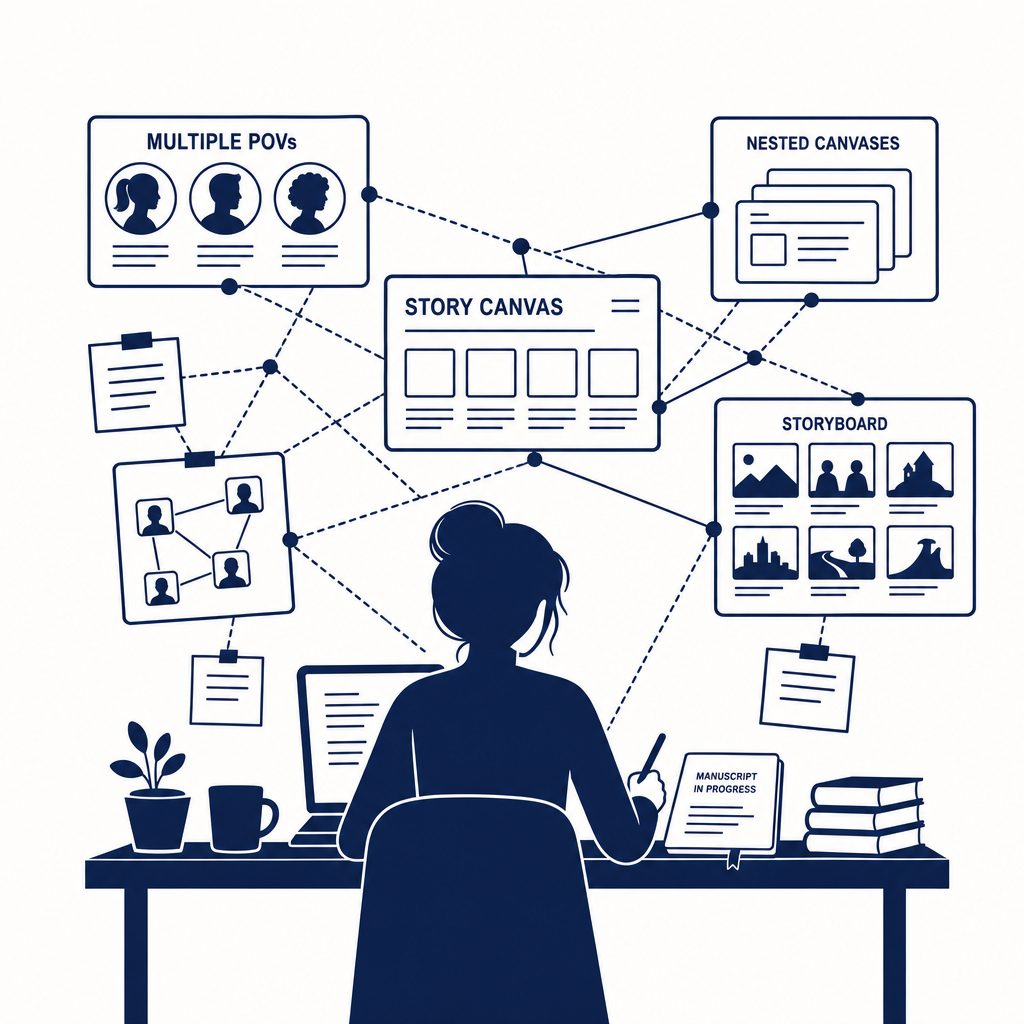
Untangling the Web: Strategies for Managing Complexity in Your Novel with Plotlyn
Explore how Plotlyn's node-based structure and nested canvases provide a powerful framework for authors tackling complex novels—whether they feature multiple POVs, intricate subplots, non-linear timelines, or large casts of characters. Learn actionable strategies to break down complexity, maintain clarity, and ensure every structural element serves your overarching narrative.
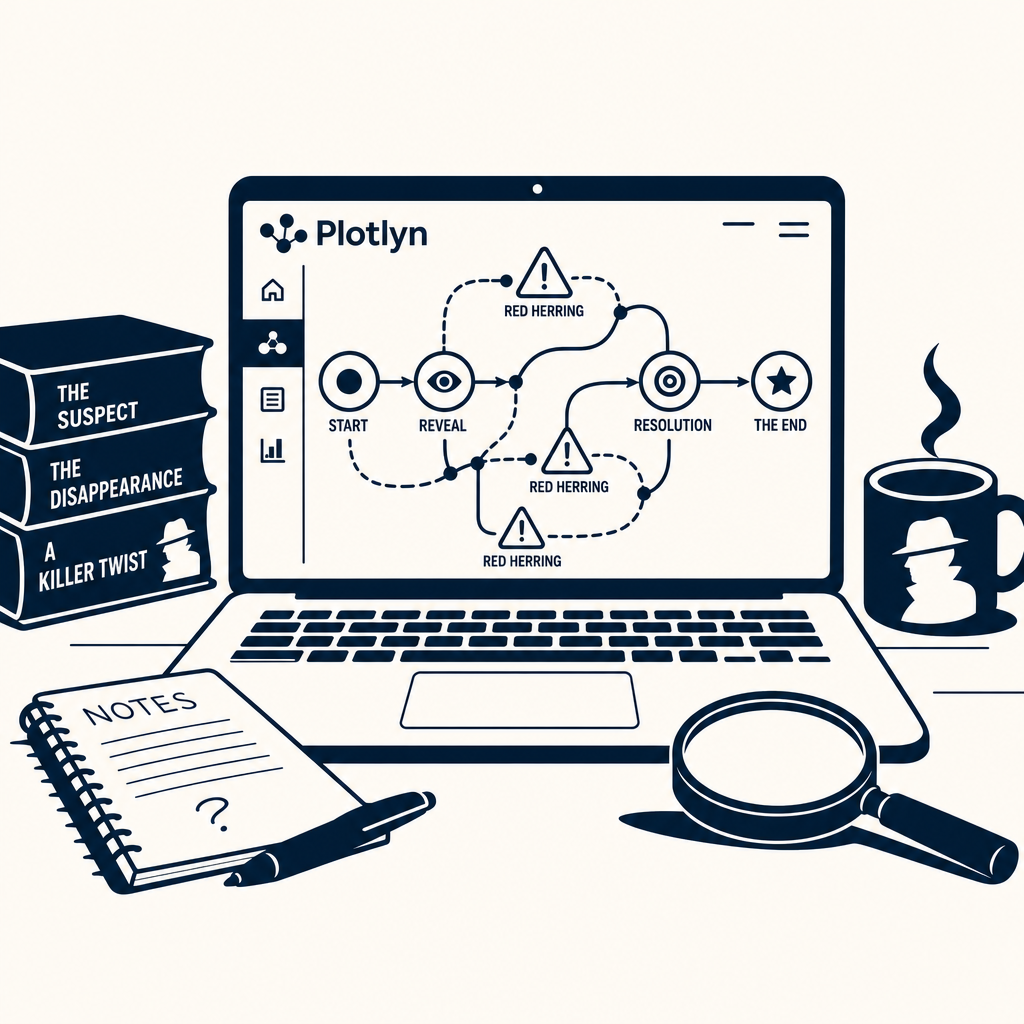
Plotting Unputdownable Mysteries Using Plotlyn to Master Reveals Red Herrings and Resolution
Dive into the structural secrets of compelling mysteries, thrillers, and suspense novels. Learn how Plotlyn's node-based canvases and nested outlines can help you meticulously plan crucial reveals, strategically place red herrings, and build satisfying, logical resolutions that keep readers guessing until the very end.

Mastering Narrative Scale: How Plotlyn's Nested Canvases Keep Your Epic Novels On Track
Large-scale novels, multi-book series, and sprawling sagas often overwhelm authors with their complexity. This article explores how Plotlyn's unique nested canvas structure and hierarchical node system empower authors to manage vast narratives, maintain consistency, and ensure every plot thread and character arc contributes to the grand vision without losing sight of the details. Learn to break down your epic into manageable, interconnected parts, from overarching series arcs to individual scene beats.
Weaving the Circle: Structuring Your Novel with Chiastic Storytelling in Plotlyn
Explore the ancient, powerful technique of chiastic storytelling, where the ending mirrors or answers the beginning. Learn how to map and execute this cyclical narrative structure effectively using Plotlyn's canvas to create profound thematic resonance and a deeply satisfying reader experience.

Weaving a Tapestry of Deception: How to Plot Complex Lies and Red Herrings with Plotlyn
For authors crafting thrillers, mysteries, or character-driven dramas, building a convincing 'web of lies' requires careful planning. Discover how to use Plotlyn's node-based canvas to map out character motivations, secret agendas, false clues, and escalating deception, ensuring your intricate plot threads never unravel. Learn to track multiple timelines of truth and fabrication, ensuring a cohesive and compelling narrative that keeps readers guessing.