
From Screenplay to Novel: Mapping Cinematic Structure in Plotlyn for Pacing and Impact
Explore how screenwriting principles—like beat sheets, three-act structure, and scene sequences—can be effectively adapted by novelists. Learn to visualize and plan these cinematic structural elements within Plotlyn's node-based canvas to enhance pacing, tighten plot, and create a compelling narrative flow for your long-form work.
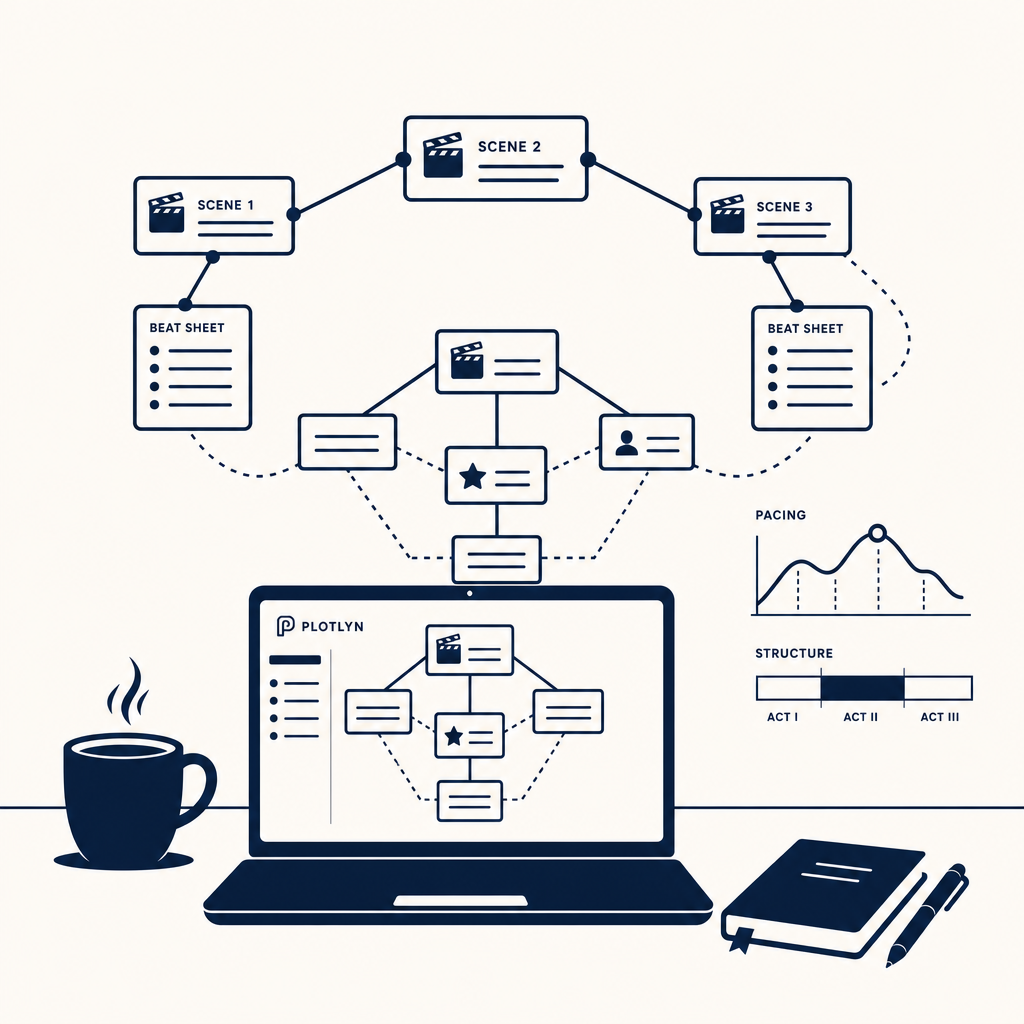
Embarking on the journey of writing a novel requires a keen understanding of structure and pacing. This article delves into screenwriting principles that can seamlessly transition into novel writing, offering authors insights on utilizing Plotlyn’s unique formatting capabilities to enhance narrative flow and impact.
Understanding the Core of Screenwriting
Understanding the Core of Screenwriting
At the heart of compelling screenwriting lies an intricate blend of character arcs, thematic elements, and structural integrity. Character arcs bring depth to protagonists and antagonists alike, allowing readers and viewers to invest emotionally in their journeys. These arcs demonstrate personal evolution, whether through growth or realization, enriching the narrative experience. Thematic elements serve as the underlying messages of the story, connecting with audiences on a deeper level. They provide a framework within which the characters operate, enhancing emotional resonance and engagement.
The significance of structure cannot be overstated; it functions as the backbone of any screenplay. Classic frameworks like the three-act structure create a roadmap for pacing and tension, guiding audiences through the narrative. Each act presents specific expectations, with pivotal moments that shift the character's trajectory. For novelists, understanding these screenwriting principles can fundamentally transform their storytelling. By adapting character arcs and thematic nuances into their narratives, novelists can craft multifaceted stories that maintain reader interest. Moreover, employing structural frameworks enriches their writing, assuring that the narrative flow is both dynamic and impactful, ultimately enhancing the reader's emotional connection.
The Beat Sheet Unpacked
A beat sheet serves as the backbone of a screenplay, allowing writers to outline story beats and emotional arcs in a condensed format. In screenwriting, a "beat" signifies a moment of change or a shift in the narrative, reflecting character decisions or plot developments. The purpose of a beat sheet is to ensure that each beat effectively contributes to the emotional journey of the audience while maintaining narrative momentum.
For novelists, adopting the beat sheet approach can enhance story pacing and clarity. Writers can create a beat sheet by identifying key moments in their narrative—critical plot points, character revelations, and moments of tension. This can be achieved by organizing beats into a simple list, typically structured around thematic elements and character goals.
For example, a novelist might outline beats such as “protagonist faces a setback,” “new ally introduced,” or “climactic confrontation occurs.” By visualizing these beats within Plotlyn’s node-based canvas, novelists can manipulate the arrangement of scenes, ensuring a balanced emotional arc that resonates throughout the story. This visual representation also facilitates quick adjustments to pacing, tightening the plot without losing the richness of the narrative flow.
Navigating the Three-Act Structure
Navigating the three-act structure provides novelists with a tried-and-true framework that resonates with readers, ensuring they remain engaged throughout the narrative. The three acts—setup, confrontation, and resolution—each serve a distinct purpose in crafting a compelling story.
In the setup, novelists introduce the protagonist, their world, and the central conflict that will drive the narrative. This act should establish stakes that capture interest, much like in screenwriting. Employing Plotlyn, writers can visualize character arcs and plot points during this phase, ensuring that each node effectively links back to the overarching narrative.
Transitioning to the confrontation, this act thrives on conflict. Here, obstacles intensify, creating tension that propels characters into critical choices. Crafting this act demands careful pacing—novelists should escalate stakes and introduce subplots that intertwine with the main narrative. Within Plotlyn, scene nodes can help map these climactic moments, allowing writers to see the ripple effects of character decisions.
Finally, the resolution ties together all narrative threads. It’s essential to satisfy the reader by addressing major conflicts and character arcs while leaving space for reflection. Plotlyn's node-based canvas can aid in visualizing how events culminate and impact characters, ensuring a rewarding payoff that resonates long after the final page.
Scene Sequences and Their Importance
Scene sequencing is crucial for building tension and advancing the plot in both screenwriting and novel writing. Screenwriters meticulously structure scenes to maximize emotional impact, often using techniques like escalating stakes or placing characters in increasingly challenging situations. Each scene must serve a purpose, whether to introduce conflict, reveal character motivations, or propel the narrative forward.
Novelists can learn from this approach by creating strategic scene flows. Start by identifying the primary goal of each scene: does it build tension, provide exposition, or lead to a moment of revelation? Arrange scenes to create a rhythm, alternating between high-stakes confrontations and quieter, introspective moments to maintain reader engagement.
Utilizing Plotlyn's node-based canvas, writers can visualize their scene sequences and experiment with different arrangements. Here are some tasks to enhance your scene sequencing:
- Map Each Scene: Create a node for each scene, summarizing its purpose and emotional arc.
- Visualize Tension Peaks: Use color coding to indicate scenes that build tension versus those that provide relief.
- Experiment with Order: Drag and drop scene nodes to assess how different sequences impact pacing and tension.
- Connect Themes: Ensure thematic continuity by linking related scenes, highlighting character growth or recurring motifs.
By implementing these techniques in Plotlyn, novelists can create dynamic and impactful narratives that resonate with readers.
Pacing Your Narrative Effectively
Pacing is a fundamental aspect of narrative that dictates the rhythm and flow of your story, influencing reader engagement and emotional investment. In writing, pacing isn't merely a matter of speed; it is about the manipulation of tension, conflict, and resolution within the narrative arc. Controlling pacing effectively can mean the difference between a gripping story and a meandering one, where readers might lose interest.
One strategy for maintaining pacing is to vary scene lengths. Short, punchy scenes can create urgency, ideal for action sequences or intense emotional moments, while longer, more contemplative scenes allow for character development and world-building. Creating a balance between these types invites readers deeper into your narrative.
Using Plotlyn’s node-based canvas, you can visualize this dynamic interplay. By color-coding nodes to represent scene length or pacing level, you can ensure that transitions feel natural and maintain reader engagement. Mapping out tension build-up through visual connections can help you pinpoint where the narrative may lag or rush, allowing for a more controlled and impactful reader experience. Maintaining an awareness of pacing while utilizing these tools can keep your novel as compelling as any cinematic experience.
Drafting, Revising, and Finalizing Your Manuscript
Drafting your manuscript is just the beginning of a transformative journey that hinges on revisions. Embracing the screenwriting principles of structure and pacing, this phase should focus on refining the narrative arc to ensure coherence and grip. Start by revisiting your beat sheet; examine how each beat aligns with the overall three-act structure. Here, Plotlyn shines as it allows you to visualize these connections, making it simple to spot any disconnects or pacing issues.
As you move through revisions, consider the sequencing of your scenes. Using Plotlyn’s node-based canvas, you can rearrange scenes effortlessly, experimenting with their order to enhance tension and emotional impact. This flexibility aids in ensuring that the narrative flows logically, maintaining reader interest throughout.
Refinement is not merely an afterthought; it's a continuous process of engagement with your manuscript. Focus on tightening plotlines, eliminating unnecessary scenes, and enhancing character development. Each revision cycle should bring you closer to a seamless narrative, reinforcing your story’s core while enhancing pacing. By the time you finalize your manuscript, the structural integrity will shine through—creating a compelling read that resonates with your audience.
Conclusions
Incorporating screenwriting structures such as the beat sheet and three-act framework into your novel-writing process can dramatically enhance pacing and coherence. By leveraging Plotlyn's tools, you can visualize and organize your narrative more effectively, ultimately leading to a finished manuscript that captivates readers.