
From Spark to Blueprint: Crafting a Bulletproof Story Premise with Plotlyn's Node-Based System
Explore how a compelling story premise serves as the bedrock of your novel, guiding every structural decision. This article will show Plotlyn users how to ideate, test, and integrate their core premise throughout their narrative using nodes and nested canvases, ensuring thematic consistency and driving reader engagement from concept to conclusion.
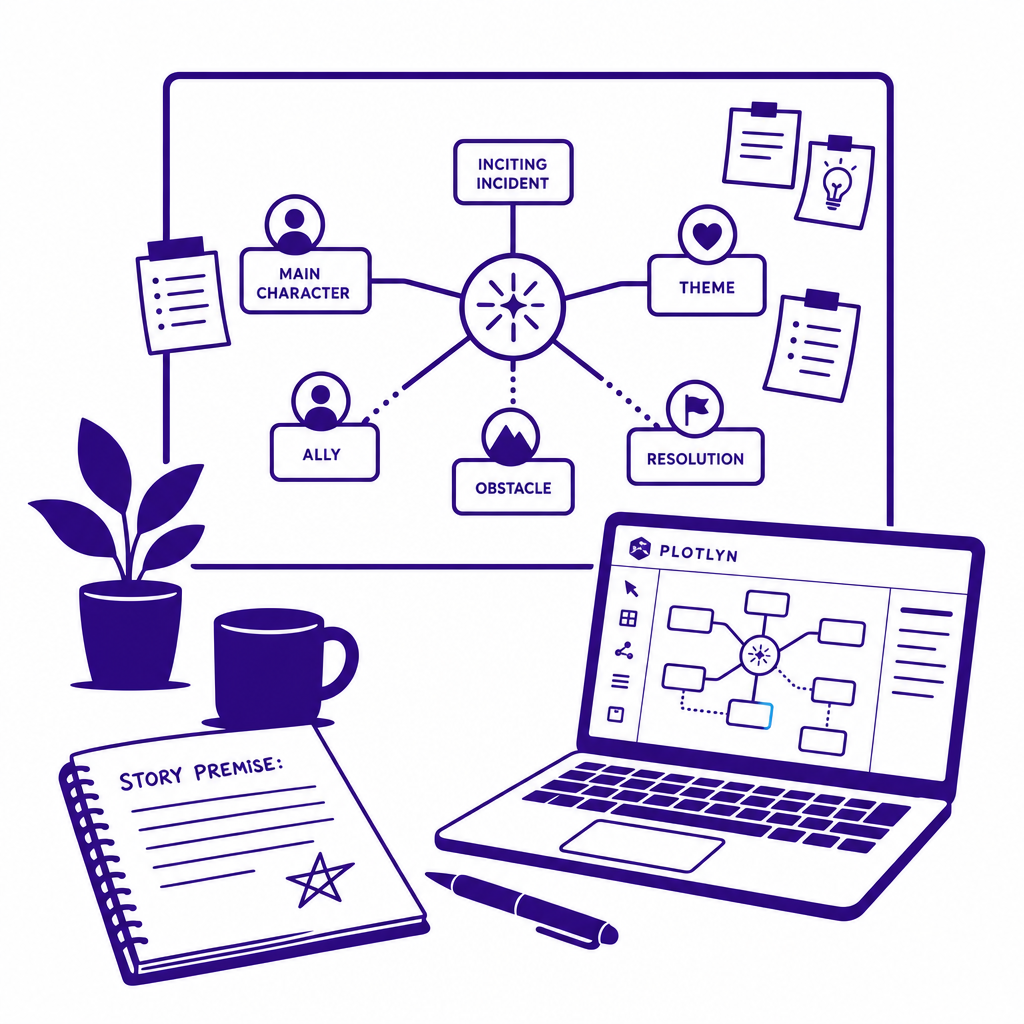
In the realm of storytelling, the premise is paramount. It acts as the foundation upon which novels are built, influencing every decision from character arcs to plot twists. This article delves into how Plotlyn's node-based system can assist writers in developing, testing, and weaving their story premise throughout the narrative, ensuring structural integrity and thematic coherence.
Understanding Story Premise
A story premise is more than a mere seed of an idea; it is the cornerstone on which narratives are built. A well-defined premise encapsulates the essence of a story, hinting at its central conflict, theme, and the journey of its characters. For instance, consider George Orwell’s 1984: the premise of a totalitarian surveillance state creates a profound sense of dread, guiding character motivations and shaping plot developments throughout the novel.
The significance of a well-crafted premise lies in its ability to streamline plot development and character arcs, consistently aligning them with the thematic undercurrents of the story. When writers anchor their narratives around a strong premise, they gain clarity in navigating character decisions and plot twists, ensuring that every narrative element reinforces the core idea.
Examples of compelling premises, like in J.K. Rowling’s Harry Potter and the Sorcerer’s Stone, showcase how a young boy’s journey from an oppressed existence to discovering his magical heritage underpins the book's structure and character growth. By grounding connective tissue between the premise and every facet of the narrative, writers cultivate an engaging reader experience that resonates on multiple levels.
The Role of Structure in Storytelling
The intricate relationship between a story's premise and its narrative structure is essential for effective storytelling. A strong premise not only lays the groundwork for your plot but also influences the trajectory of your characters and themes. Traditional story arcs, such as the three-act structure and the hero's journey, rely heavily on a clear and engaging premise to propel them forward.
In the three-act structure, the first act introduces the premise, setting up the stakes and character motivations. This establishes a sense of anticipation and emotional investment that carries through to the climax. Similarly, the hero's journey outlines a transformative process for the protagonist, starting with a call to action rooted in the premise. The story evolves through challenges and growth, and the clarity with which the premise is articulated will shape how those experiences resonate with the reader.
Using Plotlyn's node-based system, writers can visually map out these structures, enhancing their understanding of how a solid premise can inform each narrative beat. By integrating your premise at every level—through pivotal nodes and nested canvases—you reinforce thematic integrity, ensuring that every twist and turn remains tethered to your original concept, ultimately delivering a cohesive and compelling reading experience.
Ideation: Birth of Your Premise
In the quest to cultivate a compelling story premise, ideation is the spark that ignites creativity. Techniques like mind mapping allow writers to visually explore connections and relationships between ideas, helping to uncover hidden possibilities. Start by placing your core idea at the center and branch out themes, characters, and pivotal moments. This method can yield a wealth of concepts that serve as potential premises.
Free writing is another powerful tool that encourages unfiltered expression. Set a timer, pour out your thoughts, and don't stop until the time is up. This technique can reveal unexpected angles and emotional depths, often leading to insights that resonate deeply with the writer's vision.
Utilizing Plotlyn’s node-based tools elevates the ideation process further. Create nodes for each idea, exploring factors like setting, conflict, and character arcs. Nesting these nodes allows for a multifaceted view of potential premises. As you analyze each node, consider its depth and clarity; the strongest premises will resonate emotionally and thematically throughout your narrative.
By diligently cultivating your ideas through these methods, you’ll refine your premise into a robust foundation that harmonizes with your narrative structure, ultimately driving reader engagement from the first page to the last.
Testing Your Premise with Plotlyn
After crafting your story premise, the next essential step is to rigorously test and refine it using Plotlyn's node-based features. This process not only helps solidify your premise but also illuminates how it interrelates with various elements of your narrative.
Begin by creating exploratory nodes for different aspects of your premise—theme, conflict, and character motivations being key focus areas. For instance, under a theme node, you might explore sub-nodes for specific values or messages you wish to convey. Under conflict, consider both internal struggles for your characters and external challenges they face, linking these back to your core premise to ensure alignment.
As you populate these nodes, encourage feedback from each facet. Ask questions: Does the theme resonate? Is the conflict compelling? Shape character motivations that bolster your premise by consistently referring back to it in each node, promoting structural integrity.
Iterate on your ideas within Plotlyn by adjusting these nodes based on insights gained. If a particular angle feels weak or unengaging, explore alternatives in separate nodes, fostering an environment of creativity and critical thinking. This iterative process not only validates your premise but also primes it for seamless integration across your narrative in the subsequent phase of your writing journey.
Integrating Premise Across Narrative Elements
To effectively integrate your core story premise throughout your narrative, leverage Plotlyn's node-based planning tools, particularly its nested canvases for chapters and scenes. Start by identifying specific elements of your premise and linking them to character arcs, subplots, and themes. For instance, if your premise is centered on personal redemption, ensure that your protagonist's journey reflects this through their choices and transformations.
As you develop characters, create nodes that highlight how their individual goals interconnect with the overarching premise. Regularly revisit these nodes to assess whether character decisions resonate with the thematic foundation. Subplots can serve as micro-explorations of your main premise; utilize nested canvases to chart their progression and ensure they enhance rather than detract from the primary narrative arc.
Moreover, thematic elements should echo throughout your scenes—use Plotlyn’s visualization features to track instances where the premise is reinforced. This system enables you to weave thematic consistency deep into the fabric of your story, enhancing reader engagement and maintaining structural integrity. Create a dynamic roadmap that not only illustrates plotlines but also emphasizes the emotional throughline established by your premise.
Revising for Consistency and Engagement
Revision plays a crucial role in reinforcing your story's premise as you refine your narrative. It’s not just about correcting typos or tightening prose; it's about revisiting the core elements that sustain your plot development, thematic integrity, and overall structural soundness. During the revision process, consistently ask yourself how each scene and character arc resonates with your story’s foundational premise.
One effective strategy is to use Plotlyn’s node-based system to visually assess your narrative. Create a dedicated node for your story premise and ensure every plot point links back to it. If you find disjointed threads or inconsistent thematic beats, it may indicate a need for reevaluation.
For practical application, export your nodes into a comprehensive outline. This format allows for easy toggling between elements and provides a holistic view of your narrative. Share this structured outline with beta readers to solicit targeted feedback that focuses on thematic consistency and engagement.
Incorporating this feedback and continuously refining your nodes will ensure that by your final draft, your story's premise remains the guiding light, infusing coherence and emotional resonance into your novel’s structure.
Conclusions
A strong story premise is essential for creating a compelling narrative. By utilizing Plotlyn's node-based planning tools, writers can ensure their premise not only drives the story but also remains consistent and engaging throughout. Embracing the techniques discussed will empower authors to create well-structured novels that captivate readers from beginning to end.