
Mastering Narrative Time: Structuring Non-Linear Storytelling with Plotlyn's Canvas
Explore how Plotlyn's node-based canvases empower authors to intricately map non-linear narratives, from flashbacks and flashforwards to parallel timelines and fragmented perspectives. Learn strategies to maintain clarity, build suspense, and ensure emotional impact when your story doesn't follow a straight line.
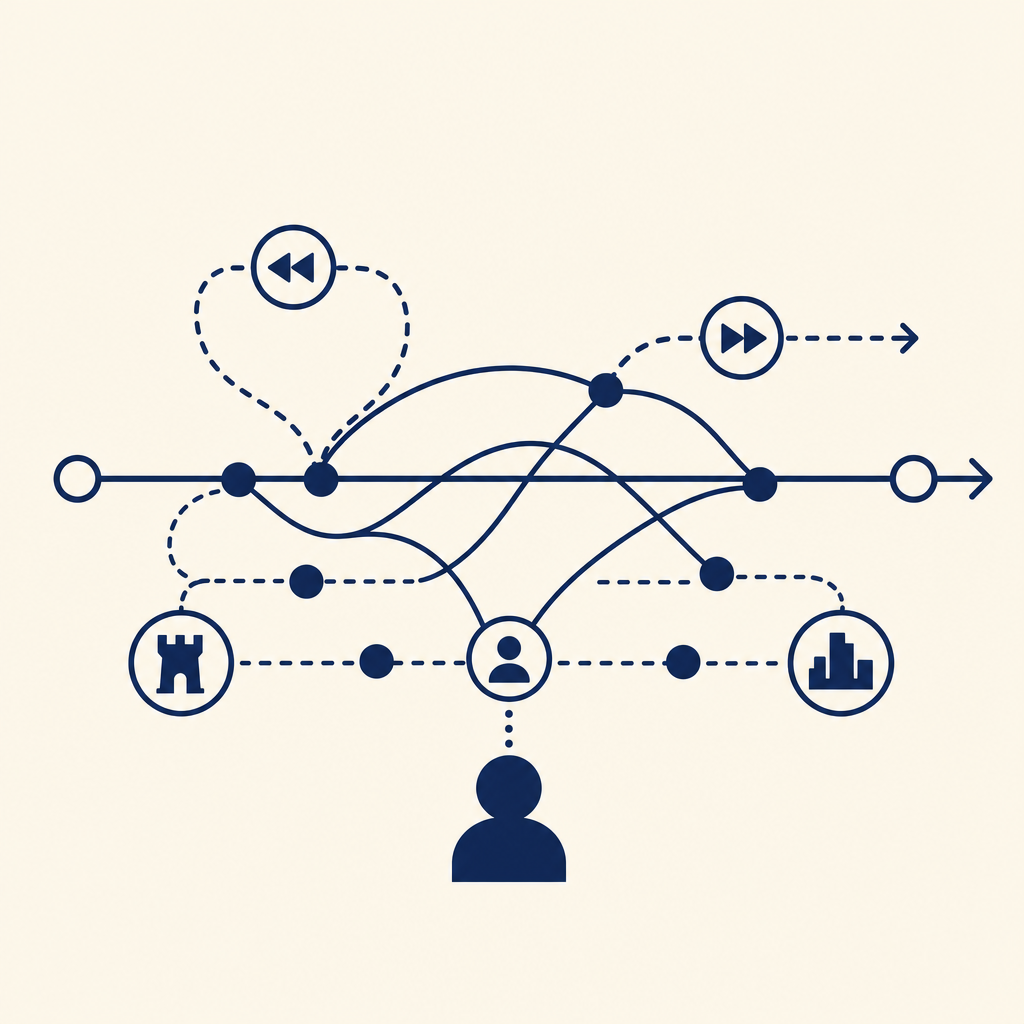
In the world of storytelling, the manipulation of narrative time can transform a standard plot into a riveting journey. This article delves into the art of non-linear storytelling, showcasing how Plotlyn's unique canvas can be utilized to structure complex narratives effectively. By exploring techniques like flashbacks and parallel timelines, writers can craft emotionally impactful stories that engage readers deeply.
Understanding Narrative Time
Understanding Narrative Time
Narrative time refers to the way in which a story's chronological framework is structured and presented to the reader. Its significance in storytelling lies in how it shapes character development and plot progression, influencing emotional engagement. Linear narratives present events in a straightforward, chronological order, whereas non-linear narratives disrupt this flow, allowing for a more complex exploration of themes and characters.
In understanding narrative time, writers can manipulate the audience's perception. For instance, chronological structures offer clarity, while retrospective structures, such as flashbacks, allow authors to delve into characters' histories, presenting motivations for their current actions. Conversely, prospective structures, like flashforwards, create dramatic irony, leaving readers yearning for resolution that their characters have yet to experience.
Different forms of narrative time continually tug at reader emotions. A flashback might elicit nostalgia or sympathy, while a flashforward can stir anticipation or dread. Mastering these temporal elements enhances tension and enriches the reader's experience, transforming the narrative into a multilayered journey that resonates deeply and lingers long after the final page is turned. Understanding these nuances is essential in leveraging Plotlyn’s canvas, allowing authors to efficiently navigate and visualize their story's temporal landscape.
The Art of Non-Linear Storytelling
Non-linear storytelling captivates readers by intertwining narrative threads that defy conventional timing, allowing for richer emotional experiences and heightened suspense. In literature and film, this technique has been effectively harnessed by creators like Gabriel García Márquez in One Hundred Years of Solitude and Christopher Nolan in Inception. These works exemplify how non-linear timelines can evoke intrigue and depth, immersing audiences in complex narratives that reveal character motives and thematic nuances over time.
Utilizing flashbacks, flashforwards, and parallel timelines can augment character development, providing insights into motivations and consequences that shape their journeys. This layering of time enriches the reader's understanding and fosters a deeper emotional connection, as conflicting timelines can create a sense of urgency and anticipation. Conversely, such narrative techniques pose challenges; authors must strike a delicate balance to maintain clarity. Too many jumps can lead to confusion, undermining the plot’s cohesion.
To craft compelling non-linear stories, writers should keep pacing in mind, ensuring that each fragment enhances tension without overwhelming readers. The art lies in the craftsmanship of fragmented perspectives that beckon readers to piece together the story, thus engaging them more actively in the narrative journey.
Utilizing Plotlyn's Canvas for Structure
Plotlyn's canvas offers a revolutionary approach for writers daring to craft non-linear narratives. This node-based writing environment empowers authors to visualize the intricate web of story arcs and character timelines effectively. Each node on the canvas can represent a scene, an emotion, a key moment, or even an overarching theme, allowing writers to manipulate these elements freely. By connecting nodes, writers can track the interplay of events across different timelines, clearly mapping the relationships and consequences that ripple through a non-linear plot.
To make the most of Plotlyn's capabilities, begin by sketching out your main plot points and character journeys. Group related scenes into thematic clusters, which can then unfold in various orders. This not only helps maintain clarity but also enhances pacing by revealing how different timelines intersect and influence one another.
Use colors or symbols to differentiate between timelines or perspectives, making it easier to navigate complex structures. Additionally, as you add notes or dialogue within nodes, consider including emotional beats that tie each scene together. This ensures that, despite the narrative's complexity, the emotional impact remains consistently powerful for the reader.
Incorporating Flashbacks and Flashforwards
Flashbacks and flashforwards are powerful narrative tools that allow authors to manipulate time, adding depth and layers to their storytelling. When incorporating these elements, strategic placement is essential. A well-timed flashback can illuminate a character's motivations or provide crucial context, while a flashforward can create anticipation or suspense by hinting at future events.
To maximize their impact, consider the following guidelines:
-
Purpose-driven integration: Use flashbacks to deepen character development or clarify plot points. Flashforwards should serve to build tension or foreshadow critical events.
-
Maintain clarity: Clearly signal temporal shifts to your readers, perhaps through visual cues in Plotlyn’s canvas. Color-coded nodes or symbolic icons can denote time changes, ensuring readers stay oriented throughout the narrative.
-
Emotional resonance: Ensure that these temporal shifts enhance the emotional experience. A flashback should evoke empathy, while a flashforward can generate anxiety or excitement about what's to come.
-
Pacing: Balance the rhythm of your story by interspersing flashbacks and flashforwards with present action. This keeps the narrative dynamic and prevents confusion.
By thoughtfully employing these techniques, authors can craft intricate narratives that resonate emotionally and keep readers engaged, enriching the overall reading experience without sacrificing clarity.
Creating Parallel Timelines and Fragmented Perspectives
Creating parallel timelines and fragmented perspectives adds a rich layer to storytelling, allowing authors to explore complex narratives that resonate with readers on multiple levels. These techniques engage readers by offering varied viewpoints, juxtaposing experiences that deepen character development and plot intricacy. Effective use of parallel timelines can illuminate how different characters perceive pivotal events, enhancing the emotional stakes of the narrative.
To weave these elements seamlessly, begin with a clear thematic thread that links your timelines. Utilize Plotlyn’s node-based canvas to visualize connections, mapping out how each timeline interacts with one another. This clarity prevents confusion, ensuring readers can navigate between perspectives without losing track of the narrative flow.
When constructing fragmented perspectives, consider shifting narrative voices to reflect distinct experiences and emotions. Incorporating stylistic variations—like tone and language—between viewpoints can also emphasize differences, enriching the reader's understanding.
As you develop these narratives, maintain coherence by alternating timelines strategically, allowing readers to piece together information like a puzzle. This intricate dance not only fuels engagement but also invites readers into a deeper contemplation of the characters' choices, ultimately creating a more immersive storytelling experience.
Pacing and Emotional Impact in Non-Linear Narratives
In non-linear storytelling, pacing becomes the heartbeat of the narrative, guiding readers through a labyrinth of time and perspective. Unlike traditional narratives, where time flows linearly, non-linear structures can create moments of tension and release, enabling deeper reader engagement and emotional resonance. To effectively harness pacing, authors must master the rhythm of their narrative.
One key technique is to strategically place flashbacks or flashforwards, allowing them to punctuate emotional peaks. For example, a flashback can unveil a character's motivation just when the reader feels most connected. This not only enriches the character's journey but also serves to amplify the narrative's emotional weight. Similarly, employing Plotlyn's node-based canvas can facilitate the visualization of these time shifts, ensuring they align seamlessly with the overall flow of the story.
When revising drafts, focus on timing. Consider if moments of tension are balanced with quieter, contemplative scenes that allow readers to digest the emotional experiences. Ask whether the emotional beats align with pivotal plot developments, enhancing their impact. Adjusting pacing thoughtfully will ensure that even in a complex narrative, the emotional journey remains clear and poignant, enhancing the reader's investment in the story.
Conclusions
By harnessing the power of non-linear storytelling through Plotlyn's innovative canvas, writers can craft layered narratives that captivate and resonate. Understanding how to expertly weave various narrative techniques—like flashbacks and parallel timelines—ensures that your story not only unfolds but also deeply engages your audience. Embrace these strategies to elevate your writing craft.