Navigating the Labyrinth: Plotlyn Strategies for Charting Your Course Through a Complex Novel
Writing a complex novel can feel like navigating a labyrinth. This article will show Plotlyn users how to strategically map their entire novel's journey using nested canvases and node-based planning, breaking down intricate plots and character arcs into clear, manageable paths. Learn to chart your course, anticipate challenges, and ensure a cohesive narrative from big picture to individual scene.
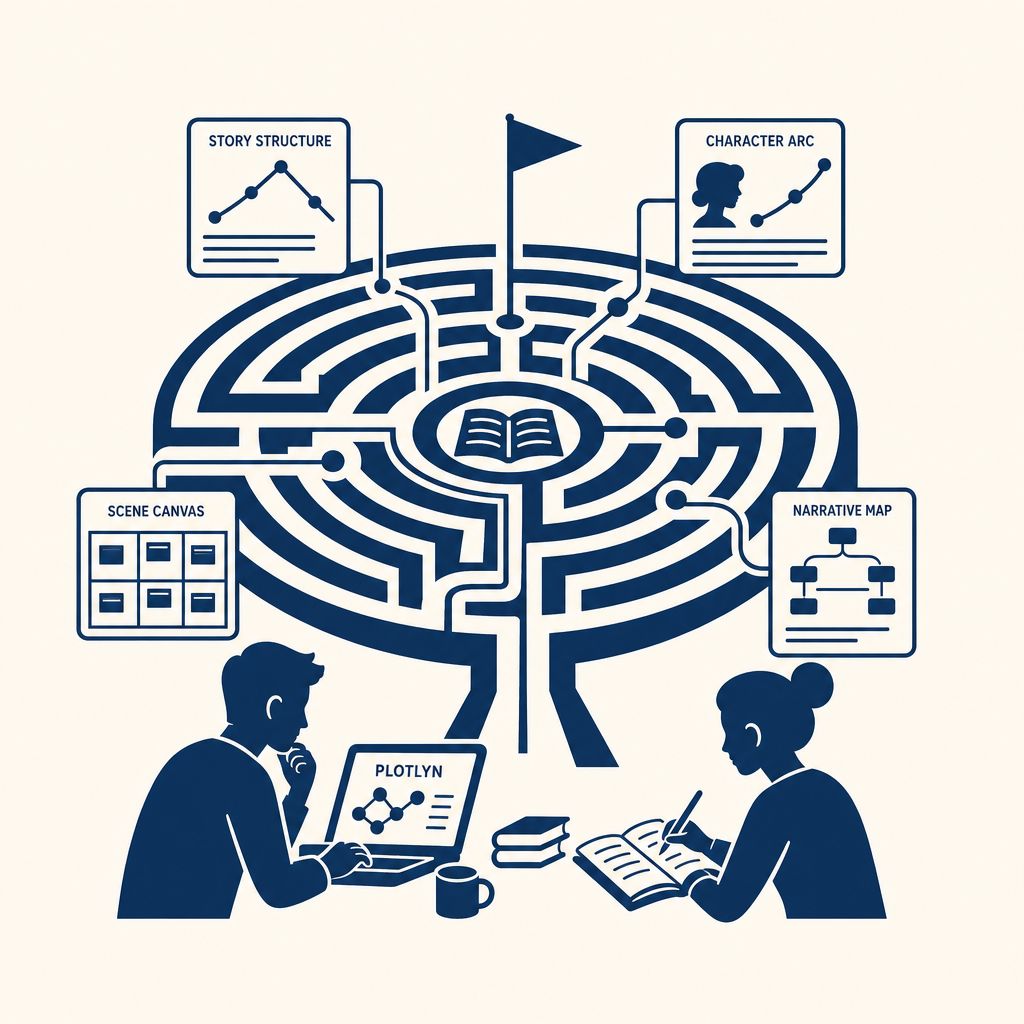
Crafting a complex novel can often resemble navigating a labyrinthine structure. This article explores how Plotlyn users can effectively utilize nested canvases and node-based planning to create strategic maps for their narratives. Discover the tools you need to outline intricate plots and character arcs while maintaining clarity and coherence throughout the writing process.
Understanding Complex Novel Structure
Understanding the structure of a complex novel is crucial for any writer embarking on this intricate journey. Complex novels often weave together multiple plotlines, each character arc rich with development, set in intricately crafted settings. Utilizing established frameworks, such as the three-act structure or the hero's journey, can provide a skeleton to which the flesh of your narrative can be attached.
The three-act structure breaks the story into setup, confrontation, and resolution, guiding the reader through escalating tension. Similarly, the hero's journey outlines a relatable path of transformation that can effectively ground your protagonist's multitude of experiences. Renowned novels like “Cloud Atlas” by David Mitchell showcase how multiple narratives can interconnect deeply, enriching the overarching theme while maintaining each plotline’s integrity.
When planning a complex novel, consider how these story structures can facilitate not only plot development but also character motivations and thematic elements, ensuring that each thread ultimately contributes to a cohesive narrative tapestry. Mapping your novel's structure can aid in visualizing the connections between characters, settings, and events, setting you up for a deliberate and engaging writing process.
Introducing Narrative Mapping
Narrative mapping is a powerful technique that allows authors to visualize and structure their stories, making the writing process more approachable and organized. By defining the relationships between plot points, character developments, and thematic elements, narrative mapping helps ensure that intricate plots maintain coherence. Utilizing Plotlyn’s visual tools to draft your narrative can significantly enhance your ability to manage complexity while maintaining clarity.
To effectively map your novel, start by outlining character arcs. Identify each character's journey, motivations, and how their paths intertwine. This not only helps in tracking character development but also aids in identifying potential conflicts and resolutions. Next, focus on thematic elements. What overarching themes are present in your story? Visualize how these themes connect to specific plot points, enriching the reader's experience.
While diving into these complexities, it’s crucial to strike a balance between detail and clarity. Use concise annotations and color-coding to distinguish between various narrative elements. By doing so, you can navigate the labyrinth of your novel effortlessly, ensuring each chapter contributes to the grand design while preserving a cohesive narrative flow. Embrace narrative mapping as your guide; it can illuminate the path through the intricacies of your writing journey.
Utilizing Nested Canvases Effectively
Utilizing nested canvases in Plotlyn enables authors to compartmentalize their complex narratives into digestible segments. By creating a canvas for each chapter, writers can further subdivide these into scenes, allowing for a clear organization of story elements. This structure not only aids in visualizing the overarching arc but also ensures that every subplot and character development aligns with the overall narrative flow.
To efficiently navigate nested canvases, authors should adhere to a logical hierarchy. Begin with a high-level overview outlining major plot points, then drill down into individual chapters—each serving as a strategic waypoint. Within each chapter, further detail scenes, noting significant character interactions and thematic elements. This layered approach promotes clarity and aids in maintaining a cohesive narrative.
One of the tangible benefits of this step-by-step methodology is the ability to track character arcs alongside plot progression. As you map out scenes, consider how each event influences character development and motivation. This tight integration fosters a story where character growth is not an afterthought but an essential thread. Such meticulous planning ultimately transforms a daunting writing process into a structured journey, guiding authors through the labyrinth of their own stories.
Node-Based Planning for Character Development
In the labyrinth of crafting a complex novel, character development is as crucial as the overarching plot. Using node-based planning, authors can map character arcs in distinct nodes, each representing significant traits, growth stages, or pivotal moments in their journey. This method allows for a visual representation of character evolution, where individual nodes capture the essence of a character's personality, motivations, and transformations throughout the narrative.
To effectively connect character nodes to the primary plot, consider the following strategies:
-
Identify Core Traits: Begin with nodes that encapsulate core characteristics. As the narrative progresses, link these nodes to various plot points where these traits are challenged or reinforced.
-
Illustrate Growth Stages: Create nodes for each developmental stage of your character. For instance, a "Crisis of Identity" node could connect to a plot event that forces the character to confront who they truly are.
-
Intertwine Arcs and Plotlines: Ensure that character nodes are not isolated. Connect them to major scenes or turning points in the plot, demonstrating how changes in character directly influence narrative progression.
For instance, mapping a character like Jane, a conflicted hero, might involve nodes representing her initial reluctance, a critical decision point, and her ultimate acceptance of her role as a leader. Each connection to plot points reinforces the integral relationship between character growth and the unfolding story, ensuring a cohesive and impactful narrative.
Anticipating Challenges in Your Narrative
Crafting a complex novel often presents unique challenges, particularly in maintaining pacing and ensuring that subplots enrich rather than detract from the main narrative. As intricacies unfold, writers may find themselves lost in the layers of their own story, struggling to connect various threads. This is where Plotlyn’s powerful tools come into play, guiding you through potential pitfalls.
Using nested canvases, you can isolate subplots, visualizing their interactions with the primary narrative. By creating distinct nodes for each subplot, you can track their development and timing, ensuring that they align with the overall pacing of the narrative. This visual roadmap can help you anticipate where a subplot may feel rushed or where additional depth is needed.
When faced with challenges, revising becomes essential. Plotlyn’s interface allows for easy adjustments; you can move nodes around, merge ideas, or even remove elements that no longer serve your narrative. Regularly revisiting your maps with a critical eye ensures that as challenges arise, they are met with solutions that promote coherence rather than chaos.
By being proactive in your planning and utilizing Plotlyn's robust features, you’ll find the writing process becomes not just manageable, but an exhilarating journey through your story's labyrinthine passages.
From Planning to Drafting: Finalizing Your Vision
As you finalize your vision for your complex novel, the transition from planning to drafting is a pivotal moment. Here, the structures you've painstakingly mapped out in Plotlyn become your blueprint. Before you dive into the writing process, take a moment to review and refine your narrative mapping. This ensures that your carefully plotted arcs remain intact as you begin to put words on the page.
Balancing structure and creativity is essential in this stage. While your mapped narrative provides direction, don’t shy away from the organic flow of creativity. Allow your characters to breathe; they may lead you down unexpected paths. Use your nested canvases to keep track of these spontaneities while ensuring they align with your overarching plot.
Once you are ready to draft, Plotlyn offers efficient strategies for exporting your manuscript. Consider how each scene feeds into the larger narrative tapestry and pay attention to the transitions between scenes to maintain coherence. Embrace this journey as a chance to bring your complex story to life, where every revision adds depth, and every drafted page moves you closer to your vision.
Conclusions
In conclusion, navigating the complexities of novel writing is an essential skill for authors. By employing Plotlyn's nested canvases and strategic node-based planning, writers can effectively map out their journeys, ensuring both structure and creativity. Embrace these techniques to conquer your labyrinth of storytelling and produce a cohesive, engaging narrative from start to finish.