Plotting Unputdownable Mysteries Using Plotlyn to Master Reveals Red Herrings and Resolution
Dive into the structural secrets of compelling mysteries, thrillers, and suspense novels. Learn how Plotlyn's node-based canvases and nested outlines can help you meticulously plan crucial reveals, strategically place red herrings, and build satisfying, logical resolutions that keep readers guessing until the very end.
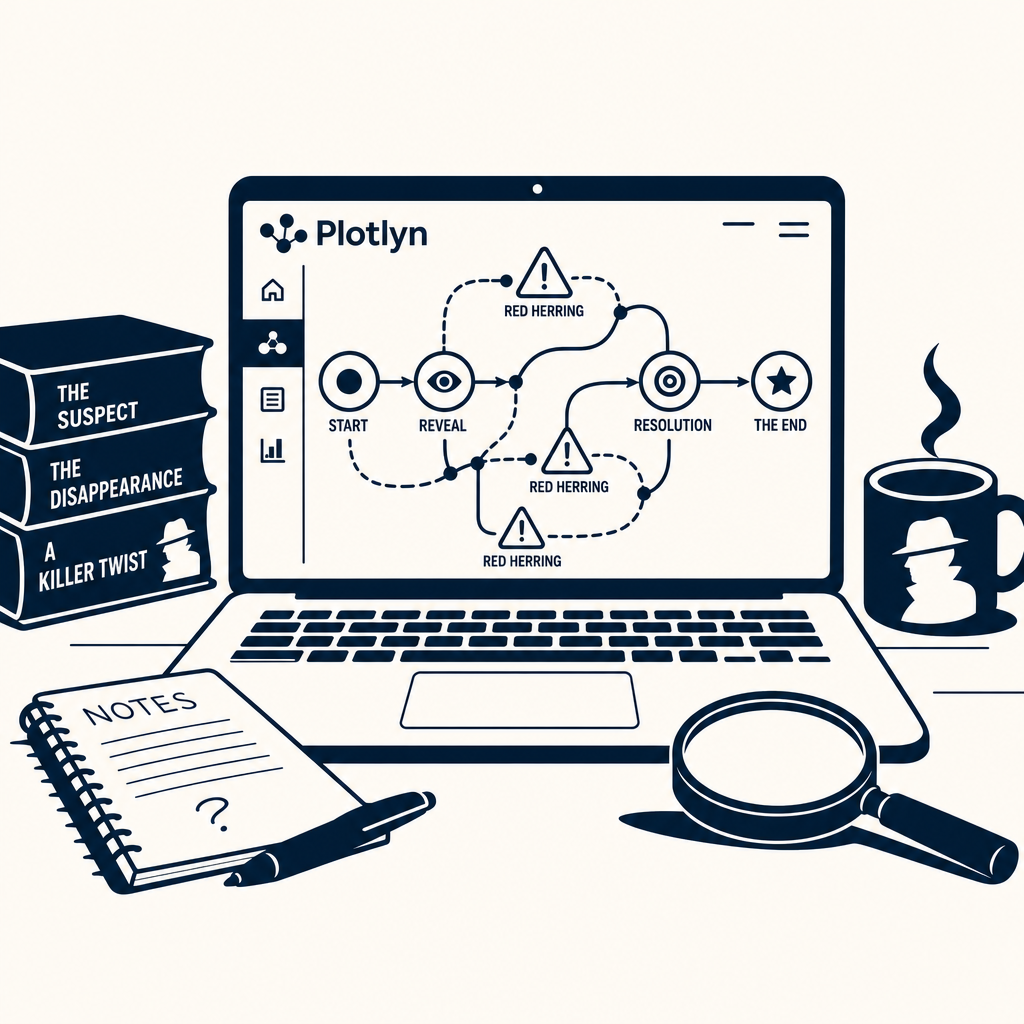
Crafting a gripping mystery involves mastering elements like reveals, red herrings, and resolutions. This article delves into how Plotlyn empowers writers to systematically map these elements, ensuring every twist and turn keeps readers engaged. By exploring the structural dynamics of compelling narratives, you can elevate your storytelling and create unputdownable mysteries.
Understanding the Mystery Structure
In mystery writing, reveals are the lifeblood of tension and intrigue, capable of transforming a straightforward narrative into a riveting experience. There are various types of reveals that can elevate your story, such as character motivations, plot twists, and shocking confessions. Each type serves a distinct purpose and can significantly impact the reader's engagement and emotional investment.
Timing is pivotal; reveals must be strategically placed to stoke suspense without overwhelming or confusing the audience. A poorly-timed reveal can derail carefully constructed tension, making it essential to consider pacing and foreshadowing beforehand. For example, a subtle hint early in the story can lead to a satisfying twist later on, while an abrupt revelation may leave readers feeling manipulated rather than surprised.
Using Plotlyn’s node-based canvases can greatly assist in orchestrating these pivotal moments. By visually mapping out potential reveals, you can gauge their impact on your story's flow. Nesting reveals within your outline allows you to see how they connect to character arcs and plot points, ensuring that each twist and turn enhances the overall narrative rather than detracts from it.
Mastering Reveals
Mastering reveals is a crucial aspect of mystery writing that can elevate your narrative from mundane to mesmerizing. Different types of reveals play pivotal roles: character motivations can shed light on their actions, plot twists can pivot the entire storyline, and shocking confessions can create unforgettable moments of tension. Each reveal has the potential to enhance the reader's experience, but they must be timed and placed meticulously.
Effective timing is key. A well-timed reveal can shift the trajectory of the plot, leaving readers breathless and eager to turn the page. However, mismanaged reveals can confuse rather than clarify, leading to frustrated readers. To avoid this, consider the pacing and build-up of information throughout your narrative. Each reveal should feel like a natural progression, not a forced surprise.
Utilizing Plotlyn can significantly aid in this process. The platform's node-based canvases allow you to visualize where reveals fit within your story arc. You can create nested outlines to keep track of character arcs and plot twists, ensuring that each reveal impacts not just the immediate scene, but also the overall narrative coherence. By plotting these pivotal moments clearly, you enable a powerful storytelling experience that keeps readers guessing until the final page.
Strategically Placing Red Herrings
In the realm of mystery writing, red herrings serve as essential tools for crafting suspense and intrigue. By misleading readers and diverting attention from the core mystery, they create a feeling of uncertainty that keeps the audience engaged and guessing. Effective red herrings can take many forms—misleading clues, suspicious character behavior, or even subplots that seem significant but ultimately lead nowhere.
When incorporating red herrings, clarity must remain a priority to avoid confusion. Utilize techniques such as suggests the presence of hidden motives or orchestrating small untruths that correlate with the overarching narrative. For instance, a character might appear suspicious due to their history but may are later revealed to be a mere innocent bystander. Such placements not only create tension but also invite readers to form incorrect assumptions, deepening their investment in the mystery.
To maintain suspense, be mindful of your clues, ensuring that they interact meaningfully with the actual resolution. Use Plotlyn's node-based system to map out these deceptive elements visually. By plotting red herrings alongside genuine clues, you cement coherence across your narrative, allowing you to weave a complex tapestry that both intrigues and surprises your readers.
Building Logical Resolutions
Crafting resolutions in mystery writing is an art that balances surprise with inevitability. A well-executed resolution should not only tie up loose ends but also feel like a natural culmination of the story's progression. It’s critical for readers to experience that 'aha!' moment when everything clicks into place, yet they shouldn’t feel manipulated or railroaded into accepting the outcome. Different styles of resolution can greatly influence reader satisfaction.
A classic reveal often involves unveiling a hidden truth about the perpetrator, creating an exhilarating twist that is both unexpected and logical. Conversely, ambiguous endings can leave readers pondering the implications long after they’ve turned the last page, which can be equally satisfying if done right.
To ensure that all plot threads are tied up coherently, utilize Plotlyn's nested outlines to visualize interconnections between various elements. This allows for a systematic approach to check that every subplot is resolved and every clue is revisited. Creating a flow from the climax to the resolution will not only enhance coherence but also reinforce thematic depth, ensuring that readers leave the narrative fulfilled yet craving more.
Integrating the Workflow with Plotlyn
Incorporating Plotlyn into your writing workflow transforms the chaos of brainstorming into a structured narrative that captivates your audience. From the outset, leverage Plotlyn’s intuitive node-based canvases to organize your ideas, making it easy to visualize connections between characters, clues, and red herrings. This holistic view allows you to see not just the story arc but the intricate web of suspense elements that keep readers guessing.
As you transition from brainstorming to drafting, utilize Plotlyn's nested outlines to lay out scenes strategically. Each node can represent not just a plot point but also how it interacts with reveals and red herrings, ensuring you maintain momentum throughout your narrative. During this stage, focus on ensuring that each scene fulfills its purpose—advancing the plot, deepening character development, or reinforcing thematic elements.
When it’s time for revisions, utilize Plotlyn's features to track changes and flag areas needing further refinement. This ensures consistency while you tighten the plot and enhance suspense. Keeping your workflow organized with Plotlyn aids in maintaining clarity, helping you weave together a compelling mystery that resonates with readers at every twist and turn.
Final Touches and Refinements
Final Touches and Refinements
Revising and refining are critical steps in crafting an unputdownable mystery. Once the initial draft is complete, it’s essential to heighten suspense and deepen emotional impact through careful revision. This is where many writers stumble, often overlooking subtle clues or failing to ensure that red herrings and reveals work harmoniously within the narrative structure.
To avoid common pitfalls during the editing phase, consider the pacing of key reveals. Are they too rushed, leaving the reader confused? Or too slow, diminishing tension? Striking the right balance requires meticulous attention to detail. Utilize feedback from trusted beta readers; they offer fresh perspectives on plot clarity and character motivation. Their insights can illuminate biases you may be blind to in your own writing.
When self-editing, leverage Plotlyn’s node-based canvases to visualize connections between plot points and characters. Track changes, making it easier to experiment with different versions of your mystery’s structure. This will help you refine the overall impact of your resolution, ensuring that every revelation feels earned and satisfying to the reader. Aim for a polished finale that leaves them not just guessing, but thoroughly engaged until the very last page.
Conclusions
In conclusion, effective plotting is essential for crafting unforgettable mysteries and thrillers. With the right tools, like Plotlyn, writers can seamlessly integrate reveals, red herrings, and resolutions into their narratives. Embrace this structured approach to enhance your storytelling, engage your readers, and bring your writing to new heights.