Seeding Your Saga - Transforming Unused Ideas & Loose Ends into Plot-Driving Lifelines with Plotlyn
Discover how to harness the power of your initial brainstorming and drafting process by identifying "loose ends" — seemingly discarded ideas, minor subplots, or unresolved character threads — and strategically reweaving them into your novel's core structure. Learn how Plotlyn's node-based canvas helps you visualize these connections, turn forgotten elements into vital plot twists, character motivations, or future series hooks, and enrich your narrative beyond its first pass.
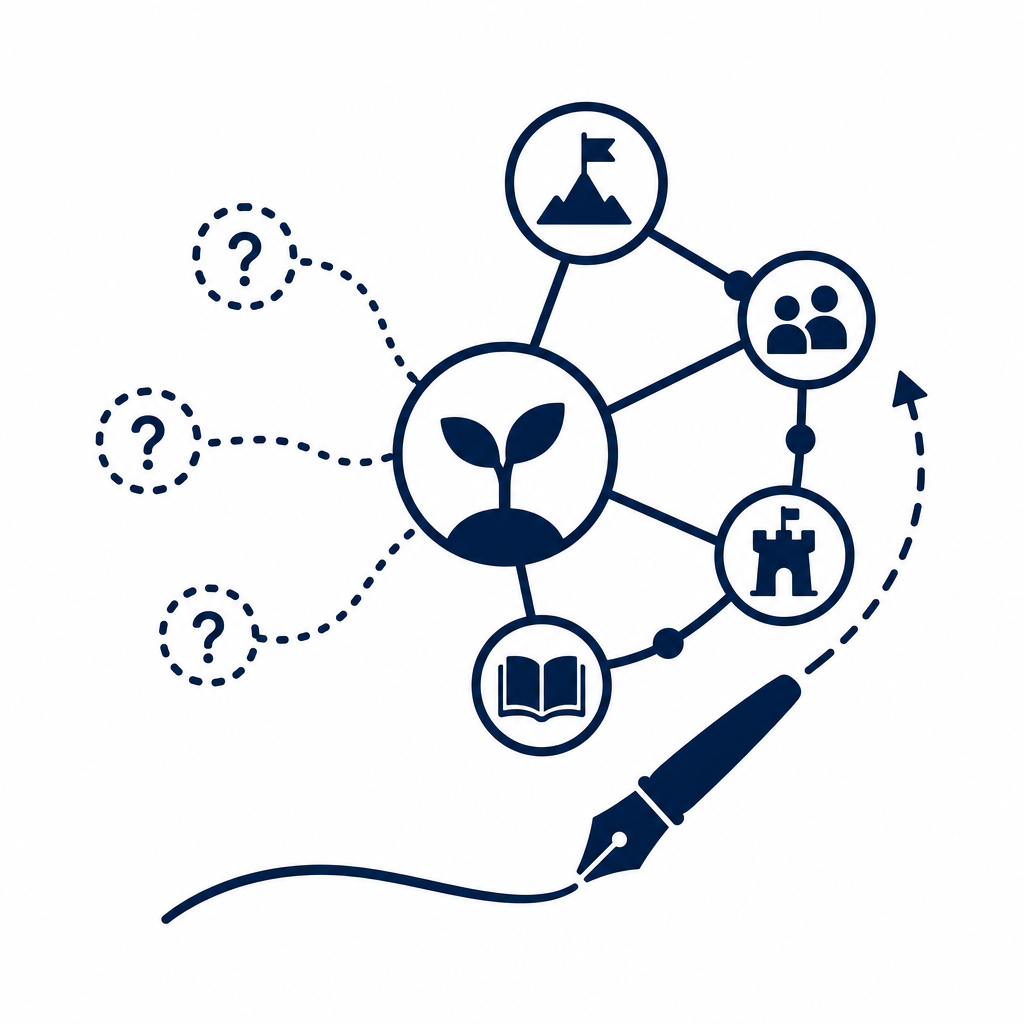
Every writer has experienced the challenge of loose ends and plot holes during the drafting process. This article will explore how to identify these overlooked components and integrate them strategically into your writing. By utilizing Plotlyn's innovative tools, you'll learn to strengthen your narrative and enhance your storytelling capabilities.
Understanding Loose Ends
Understanding Loose Ends: Within the narrative context, loose ends refer to those elements of a story that remain unresolved or inadequately explored. These can include unresolved plot points, minor character arcs, and subplots that linger without closure. While they may initially feel like distractions, loose ends hold potential value for later plot development—the key is to recognize and reweave them into the main narrative.
Common types of loose ends include:
- Unresolved plot points, such as a mystery that has yet to be solved or questions regarding a character’s past that remain unexplored.
- Minor character arcs that hint at deeper motivations or transformations but do not receive sufficient attention during the story’s progression.
- Subplots that begin with promise but fade away, lacking the narrative heft to offer a satisfying conclusion or connection to the main plot.
When left unaddressed, loose ends can detract from the reader’s experience, contributing to a feeling of incompleteness. For instance, in George R.R. Martin's A Song of Ice and Fire, certain character arcs may meander without resolution, leaving readers yearning for clarity. By revisiting these elements during revision, writers can breathe new life into their narratives, turning forgotten threads into vital connections that enrich the story's overall structure and flow.
Identifying Plot Holes
Plot holes are critical inconsistencies in a narrative that can disrupt a reader’s immersion and belief in the story. Unlike loose ends, which may provide opportunities for later exploration, plot holes signify gaps in logic that can undermine the story's integrity. These inconsistencies often stem from careless continuity errors, character decisions that lack motivation, or story developments that are abruptly introduced without proper setup.
To effectively spot plot holes during the drafting phase, writers should adopt several strategies:
- Read Aloud: Experience the narrative as a reader would, which can reveal awkward transitions or contradictory statements.
- Character Consistency Checks: Ensure that character actions align with established traits and motivations lest they feel forced or implausible.
- Timeline Review: Keep a detailed timeline of events to confirm that actions and outcomes logically follow one another.
Addressing plot holes is essential for maintaining a strong narrative structure, as they can detract from thematic resonance and character arcs. For instance, the infamous plot hole in “Harry Potter and the Goblet of Fire,” where Harry's participation in the Triwizard Tournament appears unsubstantiated, highlights how unresolved issues can dilute the tension and coherence of a narrative. Identifying and rectifying these flaws fortifies your story, ensuring that all elements cohesively support the intended journey of the characters and plot.
Exploring Narrative Structure
Understanding narrative structure is crucial for creating a compelling story. The components of exposition, rising action, climax, and resolution work together to forge a cohesive narrative. However, the presence of loose ends and plot holes can severely disrupt this delicate balance. Loose ends can emerge as unresolved character arcs or discarded ideas, while plot holes represent gaps that defy logic or consistency within your world.
In a well-structured narrative, each element must intertwine seamlessly; loose ends can transformed into enriching subplots, adding depth and intrigue. For example, a minor character introduced in the exposition might later reveal a hidden agenda during the climax, introducing a thrilling twist that elevates the stakes.
Conversely, narrative structure becomes vulnerable when plot holes go unaddressed. Characters may act inconsistently, or story arcs lack clarity, leading to reader frustration and disengagement. By effectively weaving loose ends back into the story's fabric, you not only fortify the structure but also enhance emotional engagement. The key is recognizing how these seemingly minor details contribute to the overall journey, thereby transforming them into vital plot-driving lifelines that propel your narrative forward.
The Art of Revision
Revising a manuscript is akin to sculpting: you chip away excess material to reveal the form beneath. In this phase, focusing on loose ends and plot holes is crucial for enhancing narrative cohesion. Begin with a thorough review of your draft, scrutinizing each scene for unresolved threads or contradictions that disrupt the flow.
Create a revision checklist prioritizing key elements such as character arcs, thematic consistency, and setting accuracy. This list serves as both a guide and a benchmark to ensure nothing falls through the cracks. Pay special attention to character motivations—does each arc resolve satisfyingly, or do you find any threads that dangle ineffectually?
Engaging beta readers or writing groups can provide invaluable perspectives. Their fresh eyes can uncover overlooked plot holes or confusion, highlighting areas where a loose end might lead to a more powerful twist. Encourage specific feedback by asking targeted questions about character actions and plot progression.
Ultimately, embracing the revision process and pinpointing loose ends will fortify your narrative structure, enabling you to transform these seemingly insignificant elements into the lifelines that enrich your story’s depth and enhance its appeal.
Building a Plot Development Strategy
Building a Plot Development Strategy
Developing a plot strategy that incorporates loose ends and unused ideas can breathe new life into your narrative. Start by compiling a list of these elements—forgotten subplots, minor characters, and past threads that didn’t quite fit into your original draft. With Plotlyn's node-based canvas, you can visually map these components, allowing you to see connections you may have overlooked.
For instance, consider an unused character who was intended to serve a small role. By placing them on your canvas, explore how their motivations might intersect with your protagonist's journey. Perhaps they hold the key to a crucial plot twist or serve as a catalyst for character development.
As you manipulate the nodes, you can organically weave these pieces back into the main storyline, creating a richer narrative tapestry. Likewise, identifying plot holes becomes a strategic endeavor. By assessing how loose ends can be repurposed, you invite fresh plot developments that enhance the story's flow.
Think of unseen opportunities for conflict or resolution that can elevate the stakes. Integrating these forgotten elements fosters a cohesive narrative that resonates with readers on multiple levels.
Series Planning and Future Hooks
When planning a series, addressing loose ends becomes paramount to establish a cohesive narrative that flows seamlessly across multiple installments. Introducing hooks and unresolved threads not only enhances the current plot but also lays fertile ground for future stories, keeping readers engaged and eager for more.
Incorporating strategic elements, such as unresolved character arcs or mysterious events, allows you to thread a needle between closure and curiosity. This duality ensures that each installment satisfies while simultaneously ticking off narrative breadcrumbs for subsequent entries. For example, a minor character introduced in the first novel may harbor a secret that becomes pivotal in a later book; by dropping hints that lead to larger revelations, you create a sense of anticipation and depth.
Moreover, when you use Plotlyn's node-based canvas, you can visualize these elements and their connections throughout your narrative. Mapping out potential sequels not only aids in maintaining continuity but also provides opportunities for deepening character loyalty and exploring fresh themes. Each loose end can evolve into a lifeline, pulling readers deeper into the saga as they anticipate resolutions across volumes, ensuring that your series becomes an interconnected tapestry rather than a series of standalone tales.
Conclusions
In conclusion, revisiting loose ends and integrating them into your narrative structure can significantly enrich your writing. By employing Plotlyn's node-based approach to organization, you can transform discarded ideas into impactful story elements, ensuring that your manuscript is cohesive and compelling. Embrace this method to elevate your drafts and connect with your readers on a deeper level.