Untangling the Web: Strategies for Managing Complexity in Your Novel with Plotlyn
Explore how Plotlyn's node-based structure and nested canvases provide a powerful framework for authors tackling complex novels—whether they feature multiple POVs, intricate subplots, non-linear timelines, or large casts of characters. Learn actionable strategies to break down complexity, maintain clarity, and ensure every structural element serves your overarching narrative.
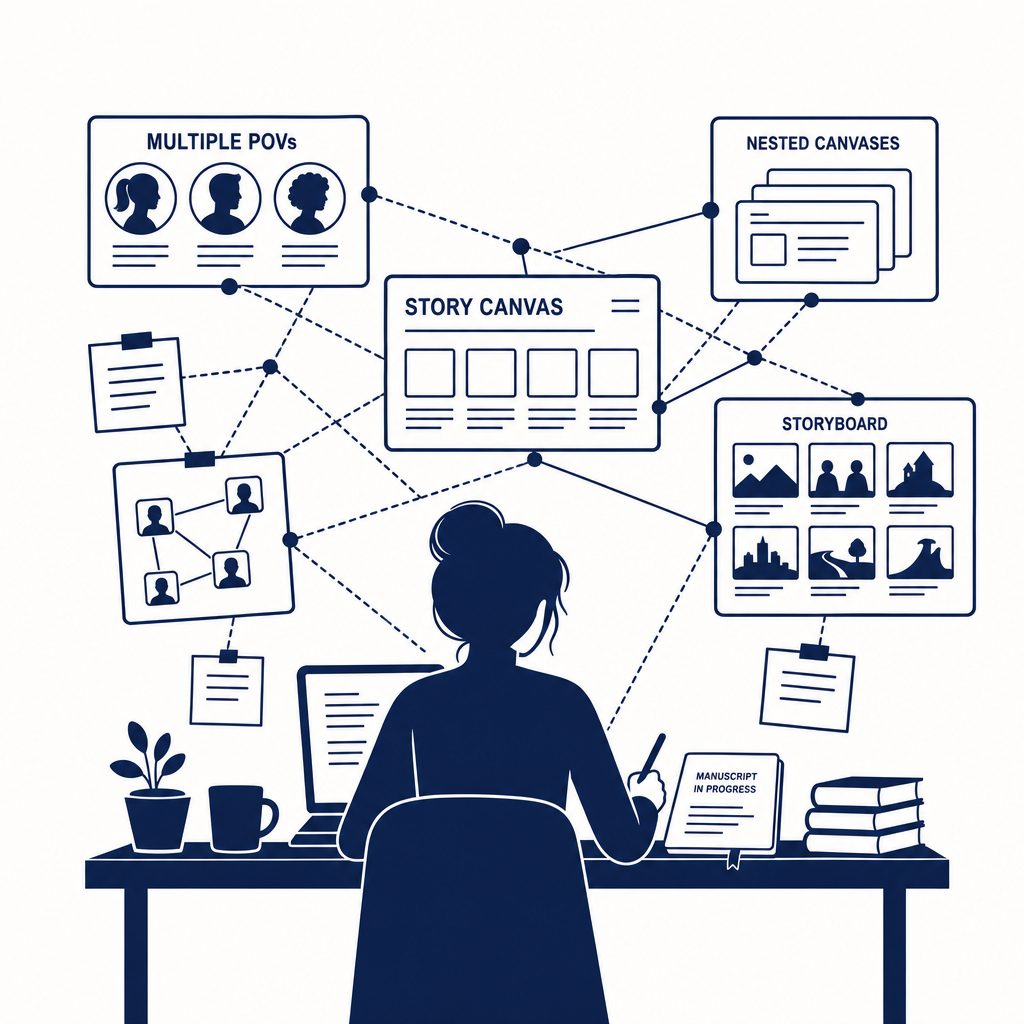
Navigating the complexities of novel writing can be challenging, especially with multiple POVs and intricate subplots. This article delves into how Plotlyn's unique node-based structure and nested canvases offer authors innovative strategies to manage complexity effectively, ensuring clarity and coherence in your narrative as you draft your manuscript.
Understanding Complexity in Novels
Understanding complexity in novels involves navigating the intricate layers of storytelling that come from multiple perspectives, subplots, and non-linear timelines. Each of these elements adds depth to the narrative, providing readers with rich tapestries of character experiences and thematic explorations. However, the inclusion of multiple POVs—like in George R.R. Martin's A Song of Ice and Fire series—can lead to confusion if not adequately structured. Each viewpoint must not only be unique but should also intertwine meaningfully with others.
Similarly, intricate subplots, as seen in novels like The Night Circus by Erin Morgenstern, can enhance the main narrative but risk overshadowing it if they are not carefully managed. Non-linear narratives, exemplified by Catch-22 by Joseph Heller, can create a captivating puzzle, but they require meticulous planning to ensure coherence and clarity.
Authors must embrace these complexities while remaining vigilant about their narrative thread. Strategies such as thematic mapping, character arc tracking, and clear timeline diagrams can serve as valuable tools in maintaining focus amidst multifaceted storytelling. Balancing these elements becomes key, allowing the rich layers of the novel to shine without overwhelming the reader.
The Power of Node-Based Structure
Plotlyn's node-based structure is a revolutionary tool for authors grappling with the complexities of crafting a novel. At its core, this framework enables writers to break down their narratives into discrete, manageable elements or "nodes." Each node may represent a character, setting, event, or subplot, allowing for a granular view of the narrative landscape.
One of the standout benefits of this structure is the ease with which writers can manipulate these nodes. Want to shift a subplot into a different chapter? Simply drag and drop its node to the desired location. This fluidity promotes a dynamic writing process where ideas can change without extensive rewriting.
Clear visualization of relationships emerges as another significant advantage. Authors can easily map connections between characters and subplots, ensuring that the intricate web of narratives does not become a tangled mess. For instance, in a novel with multiple POVs, each character can have their node, showcasing how their threads interlace and contribute to the overarching narrative.
Finally, the node-based approach enhances brainstorming capabilities. Writers can freely add, remove, or tweak nodes, fostering creativity and helping to generate new ideas that strengthen the novel's core. By allowing authors to untangle their complex stories, Plotlyn's structure empowers them to maintain clarity and focus throughout their writing journey.
Utilizing Nested Canvases for Structural Planning
Incorporating nested canvases into your Plotlyn workflow can transform the way you approach chapter and scene planning. This unique feature allows you to create distinct spaces for different layers of your narrative, making it easier to manage complex elements such as multiple POVs or non-linear timelines. Each nested canvas serves as a micro-universe, where you can dive deeper into character arcs, plot points, or thematic elements without cluttering your overall view.
When planning a chapter, consider breaking it down into specific scenes within a nested canvas. Here, you can map out key events, character interactions, and transitions, all while maintaining a clear connection to the broader narrative structure. This focused approach allows you to examine each scene's contribution to the overarching story while ensuring that every detail is intentional and purposeful.
For authors tackling intricate subplots, nested canvases provide a powerful mechanism to overlay these stories onto your primary narrative. This layered approach not only aids in structural planning but also facilitates an in-depth analysis of how each subplot resonates with your main storyline, enhancing clarity and coherence throughout your complex novel. By leveraging nested canvases, you maintain both oversight and intricacy, ensuring your narrative remains engaging and well-structured.
Managing Subplots Effectively
In complex novels, subplots can either enrich your narrative or muddle it, depending on how well they are managed. Using Plotlyn, authors can visualize the relationship between subplots and the main storyline, ensuring that every element serves a purpose. Here are some actionable strategies for effective subplot management:
-
Identify Core Themes: Start by defining the central themes of your main narrative. Each subplot should echo or contrast these themes, adding depth and resonance without diverting attention from the primary storyline.
-
Use Nodes to Connect: In Plotlyn, create nodes for each subplot and link them to the main plot node. This visual representation allows you to examine how subplots interplay with your main narrative, ensuring they enhance, rather than detract from, the overarching story.
-
Allocate Space in Nested Canvases: Dedicate specific nested canvases to individual subplots. This organizational method facilitates a focused exploration of each subplot's impact on character development and thematic progression.
-
Check for Integration: Regularly assess how subplots intersect with character arcs and key events in the main narrative. Each subplot should push the story forward, offering new stakes or complications to heighten tension.
-
Iterate and Revise: Embrace the iterative process. As you refine your narrative, keep checking subplot relevance, ensuring they consistently align with and enhance the foundational elements of your complex novel.
Crafting Non-Linear Timelines
Crafting non-linear timelines can elevate the complexity and intrigue of your narrative, but it also requires careful planning to ensure clarity for your readers. With Plotlyn’s node-based structure, authors can visually map out time shifts, allowing for a clearer understanding of how disparate events connect.
Start by identifying your key timelines; consider how they interweave with your main plot and each other. Using Plotlyn's nested canvases, you can create separate layers for each timeline, enabling you to maintain visual organization as you add and refine details. Color-code nodes representing different time periods or POVs to enhance clarity at a glance.
When managing transitions, use visual markers, such as arrows or thematic icons, to indicate shifts in time. This simple strategy helps maintain coherence and reminds you of the connections between timelines. Additionally, consider echoing motifs or lines of dialogue across time shifts to create emotional resonance, thereby guiding readers through the narrative's complexity.
Regularly review the flow between timelines, ensuring that each transition serves both the plot and character development. By adopting these techniques within the Plotlyn workflow, your non-linear narrative can remain engaging and comprehensible, enriching your overarching story while keeping readers invested.
Finalizing Your Manuscript with Clarity
Finalizing your manuscript is the crucial step where clarity becomes paramount. Using Plotlyn effectively during this phase can transform a tangled narrative into a coherent and engaging story. Start by revisiting your node-based structure and nested canvases. Each node represents a crucial plot point or character development. Ensure that these nodes clearly connect, illustrating how every subplot and character arc contributes to the overarching narrative.
When revising, focus on three key strategies:
-
Identify Core Themes: Go through each subplot and multiple POVs. Ask yourself, does this serve the main theme? If not, consider simplifying or removing it.
-
Streamline Characters: With complex novels, large casts can clutter the story. Use Plotlyn to filter out characters that might lack depth or relevance. This helps maintain reader investment and clarity.
-
Implement Feedback Wisely: After self-editing, gather feedback. Use Plotlyn’s visual layout to map out suggestions, ensuring they align with your primary narrative goals.
By concentrating on these strategies, you'll create a refined manuscript where every element harmonizes with your story’s core, leading to a more satisfying reading experience.
Conclusions
In summary, embracing Plotlyn's features empowers authors to tackle complex narratives with confidence. By breaking down intricate story elements and maintaining clarity through structured planning, writers can enhance their storytelling and create more engaging, cohesive novels. Use these strategies to refine your creative process and elevate your writing journey.