Weaving Alternate Fates: Structuring Parallel Realities and 'Counterlives' in Your Novel with Plotlyn
Explore how Plotlyn's node-based system and nested canvases can help authors intricately map out divergent timelines, 'counterlives,' and parallel realities common in speculative fiction, ensuring narrative coherence and emotional impact across multiple story paths.
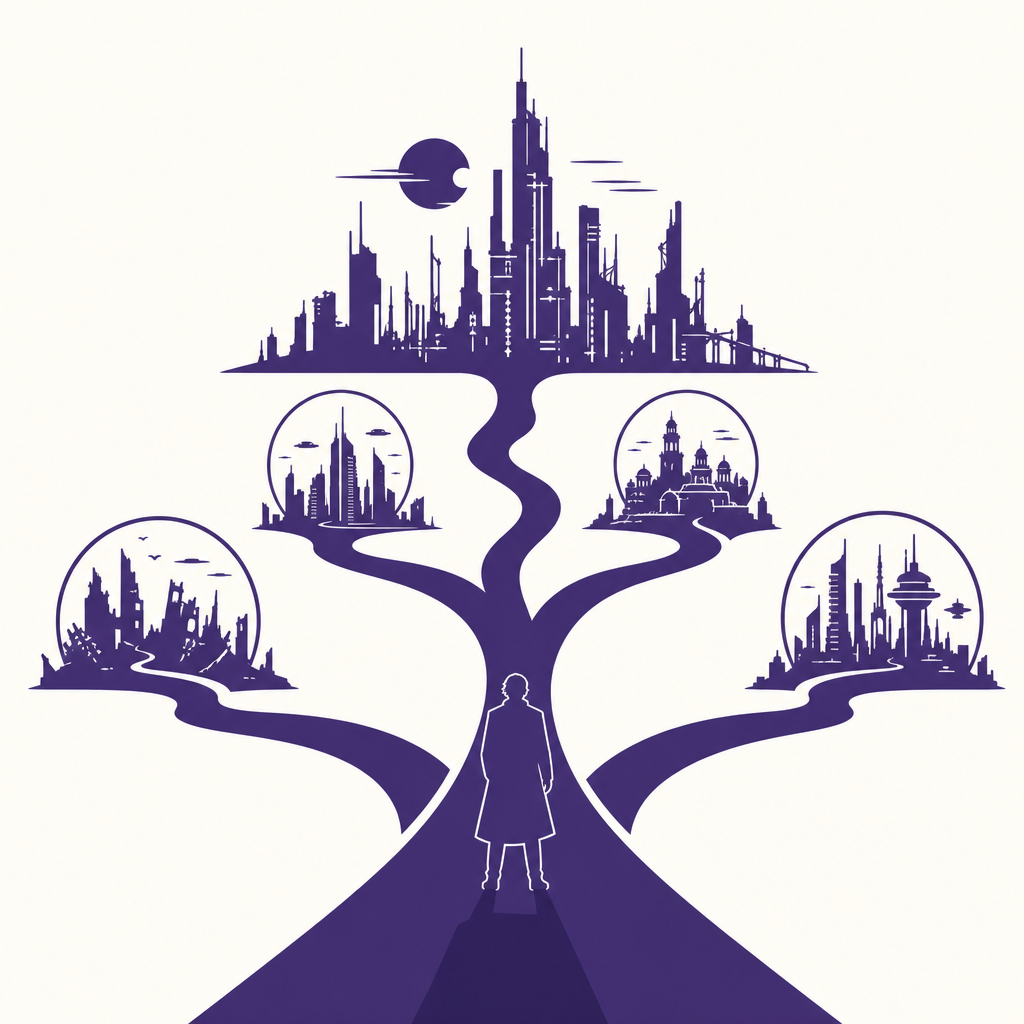
In speculative fiction, crafting parallel realities and alternate timelines presents a unique challenge for writers. Utilizing Plotlyn’s innovative node-based structure, authors can seamlessly navigate these complex narratives. This article delves into how to effectively map out divergent storylines, ensuring emotional depth and narrative cohesion across various pathways.
Understanding Parallel Realities and Counterlives
In speculative fiction, parallel realities and counterlives offer a rich tapestry for exploring how choices can shape destinies. These concepts highlight alternate pathways and potential outcomes, enabling authors to delve into “what if” scenarios that scrutinize human nature and societal structures. Characters navigating multiple timelines face crucial decisions, revealing the complexity of their motivations and the weight of their choices.
For instance, in Philip K. Dick's "The Man in the High Castle," the narrative unfolds in a world where the Axis powers won World War II, leading to an examination of a dystopian reality filled with oppression and disillusionment. The characters’ divergent paths illustrate how fragile fate can be, and how individual actions can ripple across different timelines. Similarly, Octavia Butler's "Kindred" intricately weaves time travel with choices surrounding identity, where the protagonist's experiences affect her understanding of her ancestry and the consequences of history.
Utilizing the framework of parallel realities and counterlives, authors can portray expansive emotional landscapes. This complexity, when effectively mapped out using tools like Plotlyn, allows for a cohesive narrative that maintains engagement, deepening reader investment in the multifaceted journeys of characters.
The Role of Narrative Structure
The significance of narrative structure in speculative fiction, particularly when dealing with multiple realities, cannot be overstated. Different structural approaches—linear versus non-linear narratives—profoundly influence both reader engagement and comprehension of complex plots.
Linear narratives may appeal through simplicity, providing a straightforward progression that allows readers to focus on the evolution of characters and themes. However, such a structure can inadvertently limit the exploration of counterlives and parallel realities, reducing the rich potential for thematic depth inherent in these narratives.
In contrast, non-linear structures invite readers on a more intricate journey. Techniques like fragmented timelines or alternating perspectives can emphasize how divergent choices create ripple effects across realities. Though complexity can lead to reader confusion, deliberate tactics—like spatial indicators or character labeling—help maintain clarity.
Using visual tools such as Plotlyn’s node-based system can be indispensable here. By allowing authors to map out relationships between events and timelines, writers can visualize how each choice branches into alternate paths, ensuring readers remain anchored despite the narrative's complexity. Ultimately, the choice of narrative structure not only affects engagement but also enhances the emotional resonance of the multifaceted stories often found in speculative fiction.
Utilizing Plotlyn for Mapping Divergent Timelines
Utilizing Plotlyn for Mapping Divergent Timelines:
To effectively map divergent timelines within your novel using Plotlyn, start by harnessing its node-based system. Nodes represent pivotal moments or decisions, making it easy to visualize alternate realities and counterlives. Each node can encapsulate a key plot point—like a character's choice or a significant event—that branches into multiple outcomes.
-
Creating Nodes: Begin with a central node that outlines your main storyline. From this, create branches that signify major decisions or shifts in the narrative. For example, if a character chooses to rebel against a dystopian regime, generate a node for "Rebellion" and link it to the subsequent paths this decision might lead to.
-
Nesting Canvases: To maintain clarity, use nested canvases for each timeline. Each canvas can represent a different parallel reality, containing nodes specific to that thread. This structure allows for comprehensive world-building while isolating complexities inherent in each reality.
-
Mapping Progression: As you grow each canvas, ensure that nodes evolve logically, keeping emotional stakes consistent across timelines. This will help you maintain coherence in narrative arcs while exploring the implications of each choice, thus enriching your story's depth and engaging your readers fully in your speculative fiction.
Creating Emotional Resonance Across Multiple Paths
Creating emotional resonance in stories featuring multiple timelines is essential to maintaining reader engagement and ensuring the narrative's emotional weight endures across divergent paths. Although each timeline may unravel under different conditions or choices, the emotional throughline must remain steady, anchoring the reader to the characters' journeys.
One technique to foster this emotional connection is to develop universal character arcs that speaking to shared experiences—loss, resilience, love, or fear. For instance, in a dystopian setting where a character grapples with the impact of their choices across alternate timelines, presenting the same core conflict (like a parental relationship) in various contexts allows readers to feel the weight of that character's struggles deeply.
Creating intimate internal monologues can also help convey emotions consistently across narratives. By using Plotlyn's node-based system, authors can craft character nodes that explore emotional stakes, enabling layers of depth within parallel paths.
Consider a protagonist whose alternate selves face vastly different consequences of their decisions. Even as their circumstances diverge, a shared sense of regret can be a constant emotional bracelet weaving through each narrative, ensuring readers feel not just the weight of their choices but also a universal connection to human experiences.
Revising and Refining Your Narrative
Revising narratives woven from parallel realities demands a keen eye and an empathetic heart. As you delve into complex structures, remember to identify overlapping themes and emotional threads that tie your divergent timelines together. When revising, assess each timeline with a focus on how character decisions in one reality impact lives in others, maintaining coherence while amplifying emotional stakes.
Engage with peer feedback regularly; outside perspectives can highlight inconsistencies you might overlook. Use Plotlyn’s node-based system to visualize connections—each node can represent a critical decision or event, allowing you to track how choices resonate across timelines.
Iterative writing is paramount. Revisit your work multiple times, and don’t shy away from restructuring events if they no longer serve your narrative's emotional core.
Look for crucial defining moments that elicit emotional responses and ensure they are clearly articulated across all realities. Techniques like character diaries or timelines can further clarify essential connections, enhancing reader immersion. As you refine your narrative, keep a focus on clarity and emotional impact, setting the stage for a compelling resolution that respects the complexity of your crafted worlds.
Bringing It All Together: Finishing Your Novel
As you approach the conclusion of your novel, weaving together the intricate threads of parallel realities and counterlives is vital for delivering a satisfying resolution. Each divergent path must feel purposeful, contributing to the overall narrative in a way that resonates emotionally with your readers. To achieve this, consider how the experiences shaped by each timeline impact the characters and the overarching themes of your story.
Utilizing Plotlyn’s node-based system can help visualize these connections effectively, ensuring that every timeline aligns with the central narrative. Create a clear trajectory for each character's arc, keeping track of how their choices differ across realities while maintaining a consistent voice that binds them together. As you draft, reflect on the emotional stakes for each storyline—what do characters stand to lose or gain? This can enhance the overall impact and ensure that every thread feels complete.
To maintain momentum as you finish, set precise goals for each writing session, focusing on one timeline or counterlife at a time. Regularly review your plotted nodes to ensure coherence and consider seeking feedback on how well the narratives converge. Remember, a well-crafted resolution can elevate your speculative fiction into a memorable journey, leaving readers contemplating the fragile nature of fate long after they turn the final page.
Conclusions
By harnessing Plotlyn’s capabilities for structuring parallel realities, writers can more effectively bring their imaginative worlds to life. As you craft your narratives, remember that emotional impact and coherence are key to engaging your readers. Embrace the challenge of divergence, and let your creativity flourish in a landscape of infinite possibilities.